
Flooring Tips
Why Is My Floor Squeaking?
Why is my floor squeaking? Usually it's movement, loose fasteners, or Florida humidity. Here's how to diagnose the noise and when to call a pro.
- Published
- July 13, 2026
- Author
- Blackburn's Interiors, Winter Haven, FL
- Updated
- August 4, 2026
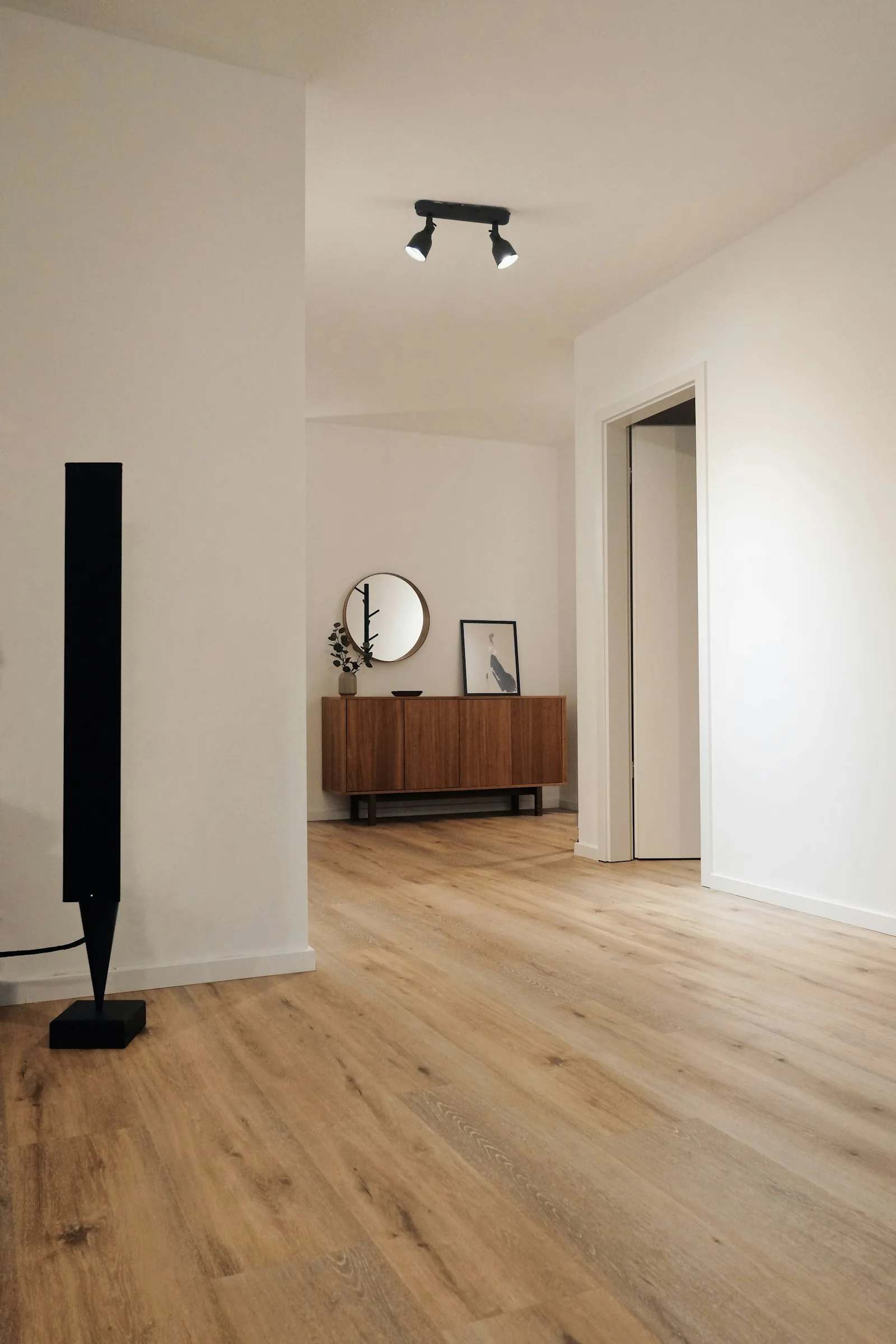
Why is my floor squeaking? It's one of the most common questions we hear at our Winter Haven showroom, and the answer almost always comes down to one thing: movement. Somewhere under your feet, two materials are rubbing together. A nail slides against wood. A plank shifts against the subfloor. The friction makes that sharp, annoying chirp. Here in Polk County, where nearly every home sits on a concrete slab and the summer air stays thick with moisture, squeaks have a few usual suspects. The good news? Most are fixable. Many you can sort out yourself in an afternoon.
We've installed floors across Winter Haven, Lakeland, Auburndale, and the rest of Polk County since 1973. Three generations of our family have crawled under houses and pulled up planks to chase down squeaks. This post walks you through what causes them, what you can check on your own, and when it's time to call someone in. We'll keep it plain and honest, the way we'd explain it standing in your living room.
What a Squeak Actually Is
A squeak is the sound of friction. That's the whole story. When part of your floor moves and rubs against another part, it makes noise. The trick to fixing it is figuring out which two parts are rubbing.
Think of your floor as a stack of layers. On the bottom is the structure, a concrete slab in most Florida homes, or a wood subfloor over joists in older raised houses. On top of that sits an underlayment or moisture barrier. Then comes the floor you actually see: hardwood, luxury vinyl plank, laminate, or tile. A squeak comes from any one of those layers shifting against the one above or below it.
Once you understand that, the noise stops being mysterious. It's not a ghost. It's not the house settling in some spooky way. It's two surfaces moving when they shouldn't. Find the movement, stop it, and the squeak goes away.
The Most Common Causes of a Squeaky Floor
In our experience, squeaks trace back to a handful of culprits. Here are the ones we run into most.
Subfloor Movement and Loose Fasteners
This is the big one, especially in homes with wood subfloors over joists. Over time, the nails or screws that hold the subfloor down can work loose. The wood pulls up a hair, then drops back when you step on it. That tiny up-and-down motion drags the plank against the nail shaft, and you get a squeak. Hardwood Floors Magazine puts it plainly: losing fastener hold hits the performance of an engineered wood floor that went down right in the first place.
Wood subfloors also shrink a little as they age and dry out. A gap opens between the subfloor panel and the joist beneath it. Step on that spot and the panel flexes down to meet the joist, then springs back when you lift your foot. The fix is usually to re-secure the panel to the joist with a screw. Simple, but you have to find the right spot first.
Humidity Expansion and Contraction
Wood and wood-based floors breathe. They take on moisture from humid air and swell. They give it up in dry air and shrink. Every time they move, the planks shift against each other and against the fasteners below. That cycle is the source of a lot of seasonal squeaks. We cover the moisture side of slab installs in depth in our Florida slab moisture guide, and it's worth a read if your home is on a slab.
Laminate is the most sensitive here. Its core is high-density fiberboard, basically compressed wood pulp, and it swells fast when it meets moisture. We break down exactly how that core behaves against vinyl in our LVP versus laminate in Florida comparison. Solid hardwood moves too, just more slowly.
Gaps Under the Subfloor
Sometimes the squeak isn't in the floor at all. It's in the gap between the subfloor and the joist or beam holding it up. The framing wasn't tight to begin with, or it settled over the years. Now there's a void. Your weight closes the void with a creak, then it opens back up when you walk on. This one usually needs access from below: a crawlspace or an unfinished ceiling underneath.
Improper Acclimation
This is the cause that breaks our hearts, because it's avoidable. Flooring has to sit in your home and settle to your home's temperature and humidity before it goes down. There is no magic number of days. Hardwood Floors Magazine ties readiness to conditions, not the calendar: the wood comes in once the home holds the range NWFA and the manufacturer call for, 30 to 50 percent relative humidity and 60 to 80 degrees. Skip that step and the planks go down at the wrong moisture content. Then they expand or shrink hard in the first few weeks, buckling and squeaking as they fight for room. A rushed install is a squeaky install. We let every floor settle in, and we explain why in our pre-installation tips.
Missing or Worn Underlayment
Underlayment is the thin cushioning layer between your floor and the subfloor. It does a lot of quiet work: it smooths out minor bumps, blocks moisture, and keeps the floor from rubbing directly on the subfloor. Skip it, use the wrong kind, or let it compress over years of foot traffic, and the floor starts talking. On floating floors like LVP and laminate, the right underlayment is the difference between silence and a chorus of clicks.
Why Florida Floors Squeak More
Our climate makes squeaks more likely, and there's no way around it. Polk County rarely drops below 50 percent humidity, and in summer the indoor air can climb to 70 or 80 percent, especially when the AC clicks off for a few days after a storm. That swing pushes wood floors through a hard expand-and-contract cycle every single year.
Then there's the slab. Most homes built around Winter Haven, Lakeland, and Auburndale after 1960 sit on poured concrete. Concrete holds ground moisture and slowly pushes vapor up into whatever floor sits on top. That vapor never stops. If the slab wasn't tested and sealed before install, that moisture works into the underlayment and the floor above, feeding the movement that makes noise.
The lesson we've learned in more than fifty years: a floor that fits this climate squeaks far less. That's a big reason we steer most slab homes toward waterproof luxury vinyl plank and tile, which shrug off humidity that wrecks lesser floors. When customers want the warmth of real wood, we walk them through which species and finishes hold up, which you can explore on our hardwood flooring page.
DIY Checks You Can Do Today
Before you call anyone, do a little detective work. None of this costs money, and it'll help you describe the problem clearly if you do end up needing a pro. Here's where to start.
- Walk the room slowly and mark every squeak with a sticky note. Patterns matter. A single spot points to one loose fastener, while a whole walkway points to a bigger subfloor issue.
- Have someone walk over the noise while you watch from a few feet away. See if the floor visibly dips or moves. Movement you can see narrows down the cause fast.
- Check the humidity. A cheap indoor hygrometer tells you if your home is swinging wet and dry. Aim to keep indoor humidity between 40 and 55 percent year-round.
- Look for gaps at the baseboards or between planks. New gaps that weren't there before mean the floor is shrinking, usually a dry-air or moisture-loss sign.
- If you have a crawlspace, take a flashlight underneath. Look for loose subfloor panels, gaps at the joists, or a fastener that's backed out.
- Press firmly on the squeaky spot with your hand or knee. If pressing it quiets the noise, the fix is almost always re-securing that exact spot.
For a floating LVP or laminate floor, a squeak near the edge of a room is often a sign the floor was installed too tight against the wall, with no room to expand. The fix can be as simple as trimming the gap behind the baseboard. That's a careful job, but a handy homeowner can manage it.
When to Call a Pro
Some squeaks are a five-minute fix. Others are a warning sign. Knowing the difference saves you money and headache. Call in a professional when you run into any of these.
- The whole floor moves or feels spongy underfoot. That points to a subfloor problem, not a single loose board, and it needs proper diagnosis.
- You see cupping, crowning, or buckling: planks lifting at the edges or bowing in the middle. That's a moisture problem, and the squeak is the least of it.
- The squeak came with a leak, a flood, or an appliance overflow. Trapped water under a floor leads to mold and rot. Get eyes on it fast.
- Gaps are opening across the whole floor, not just one spot. Widespread movement means the install or the slab needs a real look.
- You're not comfortable in a crawlspace, or there's no safe access to the area under the noise.
- The floor is still under warranty. A wrong DIY fix can void coverage. Let the installer handle it so your warranty stays intact.
A failing floor is worth a professional's eyes even if the squeak seems small. We've come into too many homes where a minor noise was the first hint of slab moisture or a bad subfloor. Catching it early is always cheaper than catching it late. If you're seeing real damage and weighing a replacement, our guide on the process of buying new flooring lays out what to expect, step by step.
How Different Floors Squeak and How We Fix Them
The cause and the cure depend on what's on your floor. Here's the quick version for the materials we install most.
Hardwood
Solid and engineered hardwood squeak when boards rub against the fasteners or each other. The fix ranges from driving a trim screw through the face of a board (then hiding it with filler) to re-securing the subfloor from below. A pro can usually silence a hardwood squeak without pulling up a single plank.
Luxury Vinyl Plank
A quality LVP floor with the right underlayment is one of the quietest you can install. When it does squeak, the cause is almost always the install: too tight against the walls, a high spot in the subfloor that wasn't leveled, or a missing underlayment. Our full guide to luxury vinyl plank covers how proper prep prevents these noises in the first place.
Laminate
Laminate's clicking joints can creak as the HDF core swells and shrinks with humidity. Underlayment matters more here than almost anywhere. If laminate is squeaking across a slab home, moisture is often the real story underneath. Our look at whether laminate or vinyl is the better choice explains why we lean toward vinyl in this climate.
Tile
Tile itself doesn't squeak, but a hollow or cracking sound under tile means the bond between the tile and the slab is failing. That's a thinset or movement issue, not friction, and it needs a tile pro. You can learn more about the material on our tile flooring page.
What It Costs to Fix a Squeaky Floor
Most squeak repairs are not expensive. We want to set honest expectations, so here are industry-standard ranges. These are not our specific prices, since every floor and home is different.
- A simple fix, like re-securing a few loose boards from a crawlspace, often runs in the low hundreds, roughly $100 to $300 for a handyman or installer visit.
- A larger subfloor repair, where panels need re-screwing across a room or shimming over joists, typically lands in the $300 to $1,000 range depending on access and size.
- If moisture has damaged the floor and planks need replacing, you're into new flooring territory. Quality LVP installed runs about $5 to $11 per square foot, and laminate about $4 to $8.
If the squeak turns out to be the early sign of a bigger problem, replacing the floor with the right product for our climate often costs less over time than patching a floor that keeps failing. You can ballpark a full-room project with our flooring calculator, and if you're early in the process, our flooring quiz helps narrow down which material fits your home and budget.
How to Keep Your Floor Quiet for Good
Prevention beats repair every time. A floor that's installed right, in a home with steady humidity, stays quiet for decades. A few habits go a long way.
- Keep indoor humidity steady between 40 and 55 percent. Run the AC and a dehumidifier in the wet months. Steady air means a steady floor.
- Always let new flooring settle to your home's air before install. Go by the conditions in the house, 30 to 50 percent humidity and 60 to 80 degrees, not by a set number of days. Never let anyone rush that step.
- Insist on a moisture test for any slab install. A sealed slab is the foundation of a quiet, long-lasting floor.
- Use the correct underlayment for your floor type, and don't cut corners to save a few dollars. The cushion layer earns its keep.
- Fix small squeaks early, before the movement loosens more fasteners and the problem spreads.
Doing it right the first time is the whole game. That's why the installers we train and certify, among the best in Florida, test slabs and acclimate every floor, and we stand behind the work with an industry-best residential labor warranty. You can read what our neighbors say about that on our reviews page.
The Bottom Line
A squeaky floor is rarely a disaster. Most of the time it's friction from a little movement, and most of the time it's fixable, sometimes by you, sometimes by a pro, almost always without tearing out the whole floor. The key is figuring out which layer is moving and stopping it before a small noise becomes a big repair. If the squeak comes with cupping, buckling, or water, that's your cue to get a professional's eyes on it soon. We've been chasing down squeaks in Polk County homes since 1973, and we're glad to help you with yours. Come walk through our 8,000-square-foot showroom at 1507 Havendale Blvd NW in Winter Haven, give us a call at (863) 294-7355, or schedule a free in-home measure and we'll diagnose the noise, read your slab, and tell you honestly what it needs. If a new floor turns out to be the answer, we offer special financing, subject to credit approval, so you can pay for the right fix over time. Thank you for considering us. We know you have other choices, and we don't take that lightly.
Sources
- Hardwood Floors Magazine, Squeaking, Popping, and Crunching Engineered Floors (lost fastener holding degrading the performance of an installed floor)
- Hardwood Floors Magazine, Acclimation (acclimating to the home's temperature and humidity before install, and the 30 to 50 percent, 60 to 80 degree range)
More flooring tips
Have a project of your own?
Free in-home estimates across Polk County.