
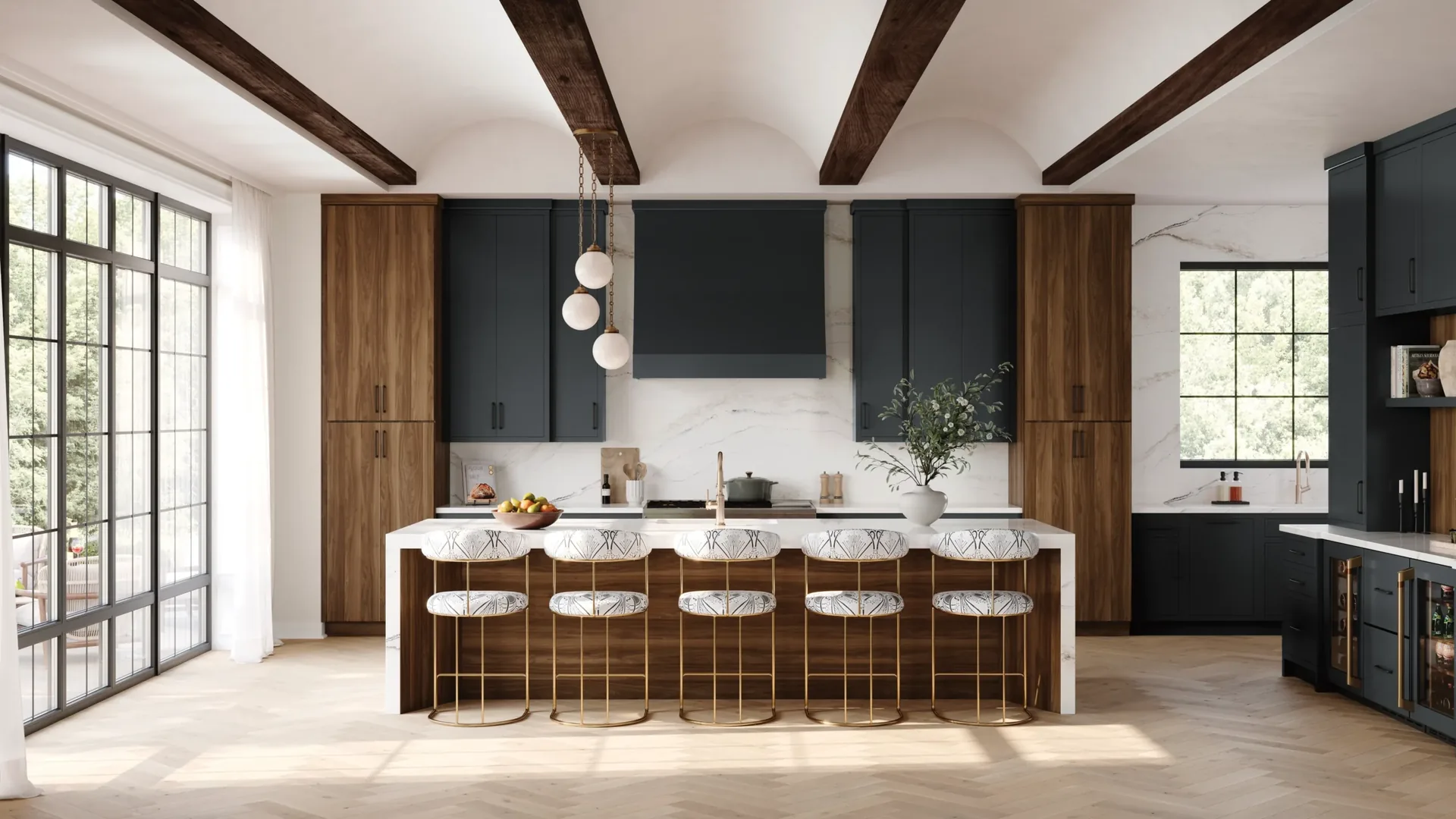
Slab Cabinets in Polk County, FL
Clean lines. Nothing extra. Just the kitchen you've been looking for.
Slab cabinet doors are the flattest, cleanest front we make. No frame, no panel, no profile. Just a single face of walnut, white oak, or painted finish. Designed in our Winter Haven showroom. Installed across Polk County by installers we train and certify.
Slab cabinets are the defining door style of the modern kitchen: a single, uninterrupted face with no rails, stiles, or center recess. If you've been drawn to the crisp, architectural look of European-style kitchens, you're looking at slab cabinet doors. At Blackburn's Interiors, a family business since 1962, we design and install cabinets across Polk County, including the contemporary kitchens and baths that slab doors are built for.
Why Slab
What a Slab Door Actually Is
A slab door is one piece. There's no five-piece rail-and-stile frame like a shaker door, no raised center panel, no beading or casing. The face runs edge to edge, smooth and flat all the way across. That simplicity is the whole point. The door itself steps back and lets the material, the color, or the grain take center stage. Compare that to a shaker door, where the frame and recess are part of the visual language. On a slab, there's no visual language except the surface you chose.
The Right Materials for Slab Doors
Slab doors reward quality material choices because there's nothing to hide behind. The three most common options we work with are walnut veneer, rift-cut white oak, and painted MDF. Walnut brings a dark, warm grain that reads warm and intentional. It pairs well with matte black hardware and light quartz countertops. White oak runs lighter, with a tighter grain and a quality that works in both natural and stained finishes. Painted MDF is the workhorse of the category: an engineered core takes paint evenly, resists humidity better than solid wood, and holds its flat face for years. Florida humidity is real, and an engineered core handles it better than a solid slab. High-gloss lacquer or two-tone configurations (white uppers, walnut lowers) are also popular finishes we order through our cabinet lines.
Where Slab Cabinets Fit Best
Slab doors belong in rooms where the architecture is clean and modern. Open-plan kitchens with tall ceilings, quartz waterfall countertops, and integrated appliances: that's the natural home of a slab door. They also work in contemporary primary bathrooms and butler's pantries where the design calls for a flat, furniture-like face rather than traditional cabinetry detail. They do not belong in every house. A 1960s traditional home in central Polk County with crown molding and raised trim would fight a slab kitchen. The door style has to match the house. When customers come into our showroom unsure, that's the first conversation we have: what does the rest of the room look like?
The Real Tradeoffs
Slab doors show imperfections that a busier door hides. Any warp in the door panel, any dent from a hard knock, or any seam between panels reads clearly on a smooth, flat face. This is why construction quality matters more with slab than with any other door style. Cheap flat-panel doors from a big-box cabinet line can look fine in a photograph and frustrating in person three years later. Slab doors also tend to run toward the higher end of the pricing range within any given cabinet line. The door itself is simple to build, but the materials, finish quality, and hardware choices required to make a slab kitchen look the way it should push the cost up. Expect to invest in better hardware: integrated pulls, edge pulls, or push-to-open hardware fit the design vocabulary. Ornate knobs or traditional cup pulls fight the face.
How Blackburn's Handles Slab Orders
We spec slab doors through our semi-custom and custom cabinet lines, the same suppliers we've worked with for years. A slab door order starts with a material conversation: are you drawn to wood veneer, or do you want a painted finish? From there we talk about sheen level, hardware integration, and how the door interacts with your countertop selection. The showroom at 1507 Havendale Blvd NW in Winter Haven carries door samples so you can hold the actual material before committing. We offer free in-home estimates across Polk County, and our team supervises every install. That matters with slab work because the tolerances are tighter and close supervision makes the difference between a kitchen that looks built-in and one that looks assembled.
Pairing Slab Cabinets with Countertops
The countertop decision hits differently with slab cabinets. Because the door face is clean and unadorned, the countertop carries more visual weight than it does in a shaker kitchen. Waterfall quartz countertops, where the slab wraps down the side of the island, pair naturally with slab doors. Both carry the same unbroken, edge-to-edge line. Quartz in matte white, warm greige, or veined grey all work. A laminate in a warm wood tone adds warmth without fighting the modern door style. What tends to clash is a heavily textured, rustic granite with a slab cabinet. The visual languages pull in opposite directions. See the quartz countertop guide or browse countertop materials to think through the pairing before you commit.
Slab doors up close

Medallion Bella, natural cherry 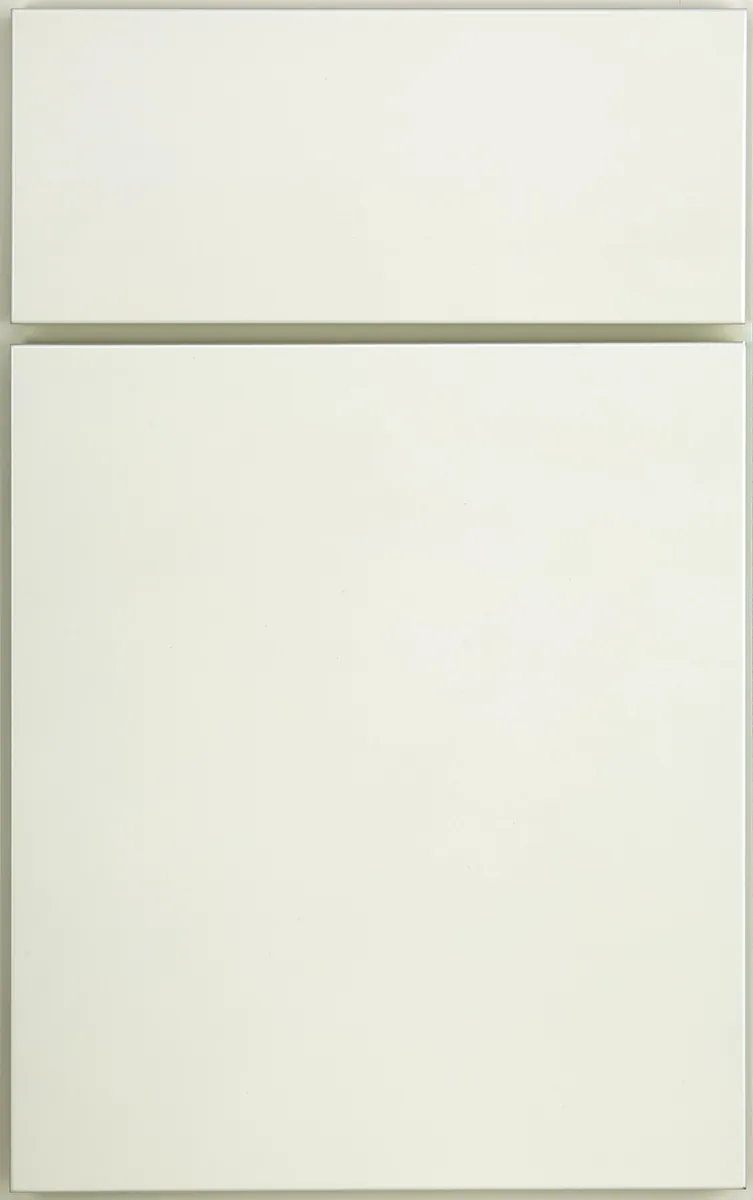
Medallion Bella, painted White Icing 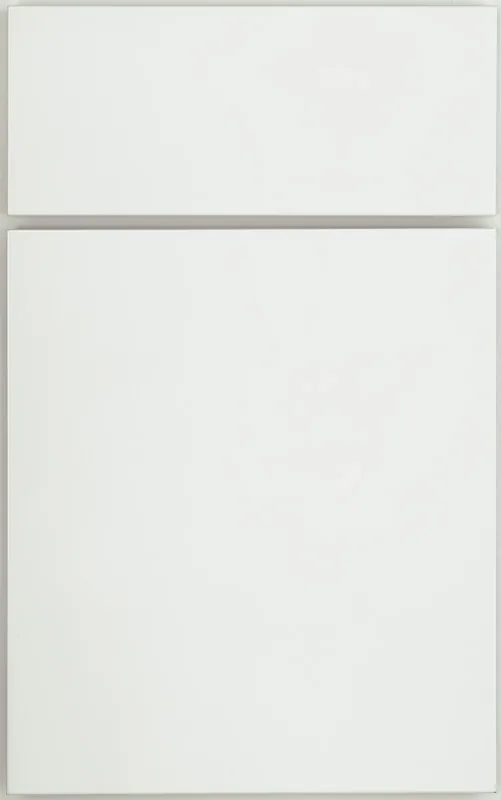
Medallion Greeley, painted Magnolia 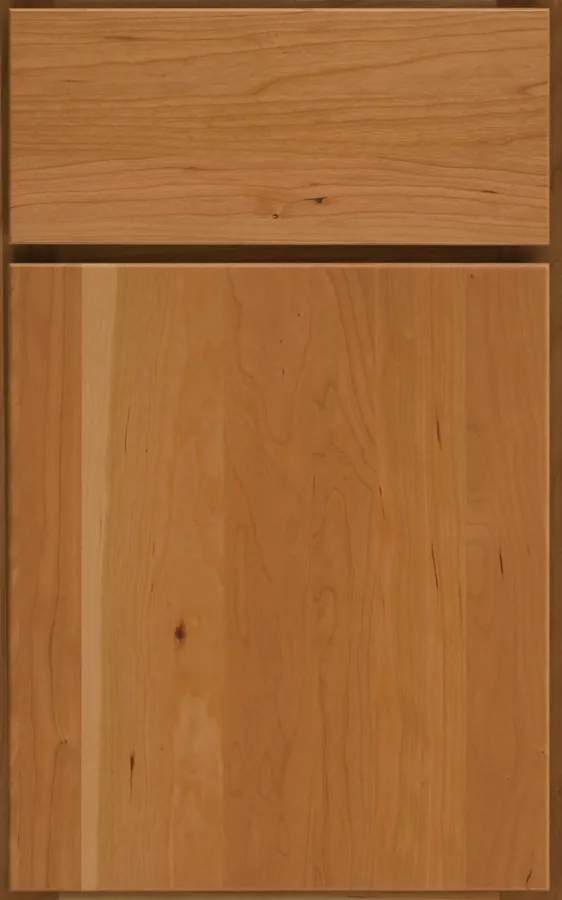
Medallion Glenwood, natural cherry 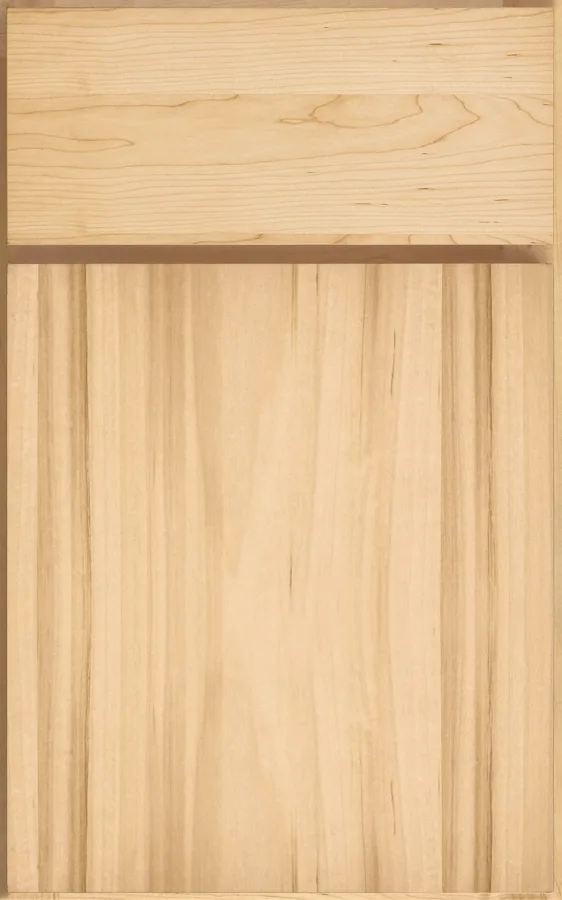
Medallion Avalon, natural maple 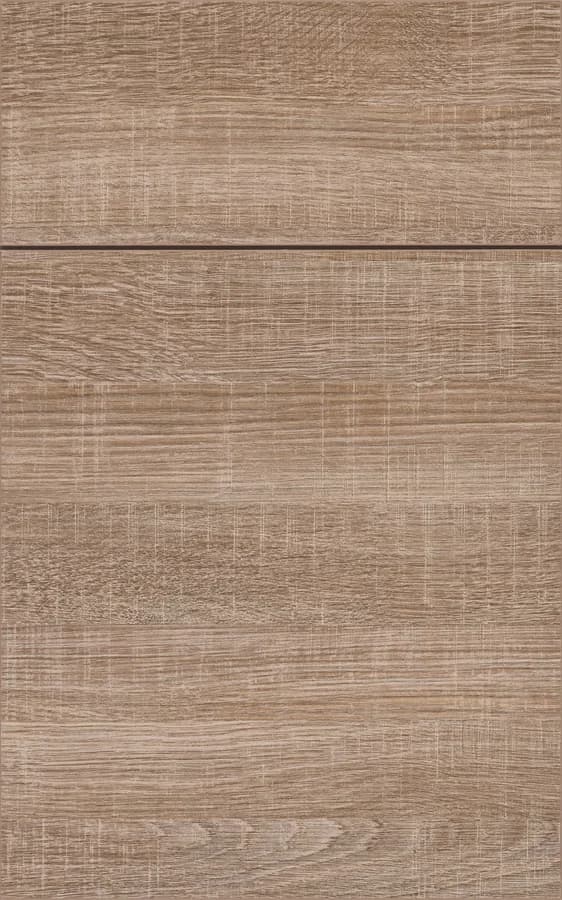
Medallion Horizon Peak, Desert Wood textured melamine 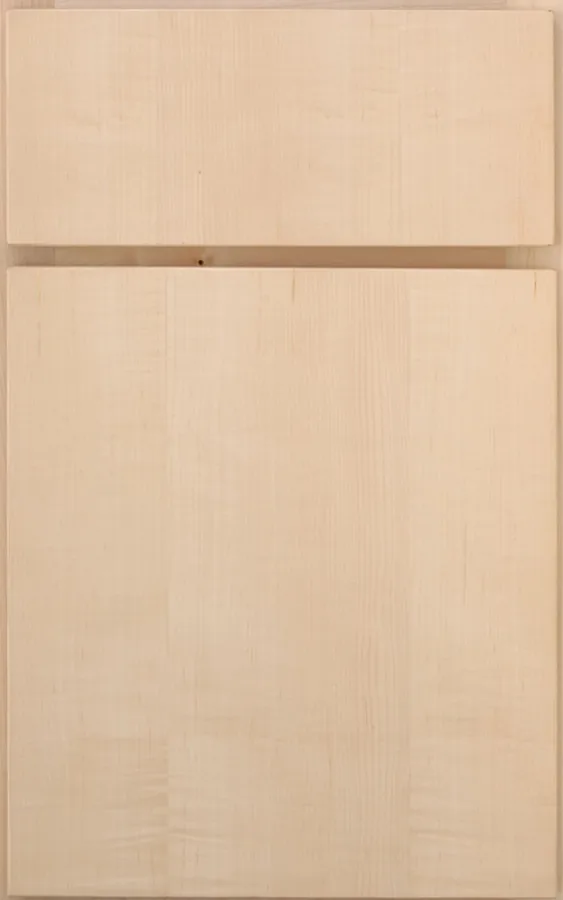
Same door, new finish: Bella in natural maple 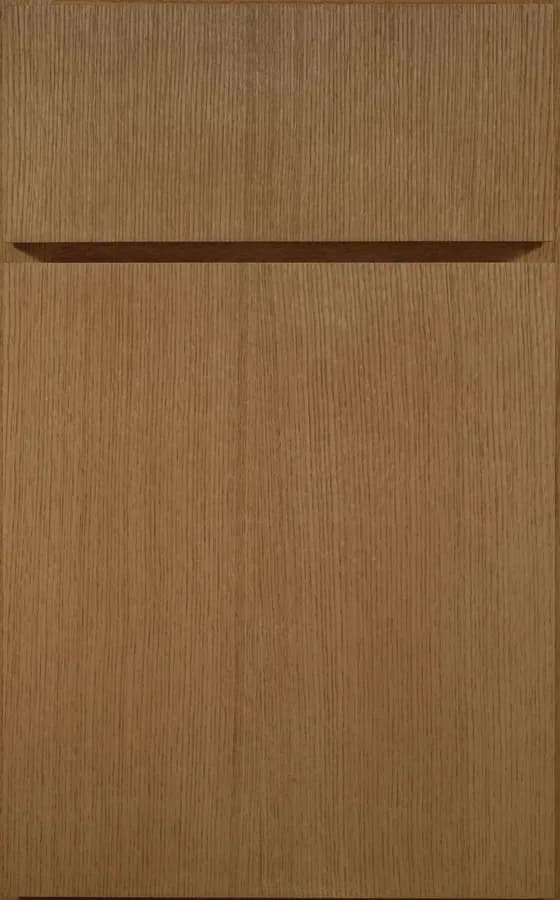
Same door, new finish: Bella in Biscotti on oak
Slab by city
Slab cabinets, city by city.
Questions we hear
What is a slab cabinet door?
A slab cabinet door is a single flat panel with no frame, no rails, no stiles, and no center recess. The face is one continuous surface from edge to edge. It's the defining door style of modern and contemporary kitchens, also called a flat-panel door. The simplicity of the face puts all the visual focus on the material or finish you choose.
Are slab cabinets more expensive than shaker?
It depends on the material and finish, not just the door style. A basic painted MDF slab door can cost less than a shaker door in the same line. But the materials and finishes that make a slab kitchen look the way it should, walnut veneer, rift-cut white oak, high-gloss lacquer, integrated hardware, push the total cost into mid-to-high custom territory. Industry ranges for a full slab kitchen in semi-custom to custom run roughly $15,000 to $50,000 or more depending on size and finish. We give free in-home estimates so you can see actual numbers for your project.
Do slab cabinet doors work in Florida's humidity?
Yes, if the construction is right. Solid wood slab doors expand and contract with humidity, and Florida summers can run 75 to 90 percent relative humidity. That's a wide swing across the year, and a solid panel can warp or gap at the edges if the wood isn't properly conditioned and sealed. Slab doors built over an engineered core, MDF or multi-ply plywood, handle Florida humidity far better. They take paint evenly and hold their flat face across seasons. We spec Florida kitchens with engineered cores by default unless the customer specifically requests solid wood and understands the tradeoffs.
What hardware works with slab cabinet doors?
The hardware has to match the design vocabulary. Integrated pulls, a recessed channel milled into the edge of the door, are the purest choice for a modern slab kitchen. Long linear bar pulls in matte black, brushed nickel, or satin brass also work well. Edge pulls on lower drawers keep the lines clean. What tends to fight the door is ornate hardware: traditional cup pulls, decorative knobs with detail, anything that looks like it belongs on a raised-panel door. Push-to-open hardware (where you press the door to pop it open, no visible pull at all) is a popular option for upper cabinets in sleek European-style kitchens.
Can slab cabinets work in a transitional kitchen?
They can, but it takes deliberate choices. A slab door in a transitional kitchen usually works when you pair it with warm materials that soften the flat face: white oak with a natural stain, warm quartz in a leathered or matte finish, unlacquered brass hardware. That combination reads modern without feeling cold. What makes it harder is pairing a slab door with traditional elements, raised trim, crown molding, ornate light fixtures, because the contrast tends to feel unresolved rather than intentional. Bring inspiration photos to the showroom and we'll tell you honestly whether the pairing works.
How do I maintain slab cabinet doors?
Slab doors are among the easiest cabinetry to maintain because the flat face has no grooves or recesses to trap grease. A damp microfiber cloth handles most daily cleaning. For a painted finish, avoid abrasive scrubbers. They dull the sheen over time. For wood veneer, use a cleaner formulated for finished wood and avoid standing moisture near the edges. The one maintenance point unique to slab doors: because the face is smooth, dents and deep scratches are harder to disguise than on a door with profile detail. Keep them away from hard objects at counter height and they'll look clean for the life of the kitchen.
More cabinets options
Ready when you are
See Slab cabinets in our 8,000 sq ft Winter Haven showroom.