
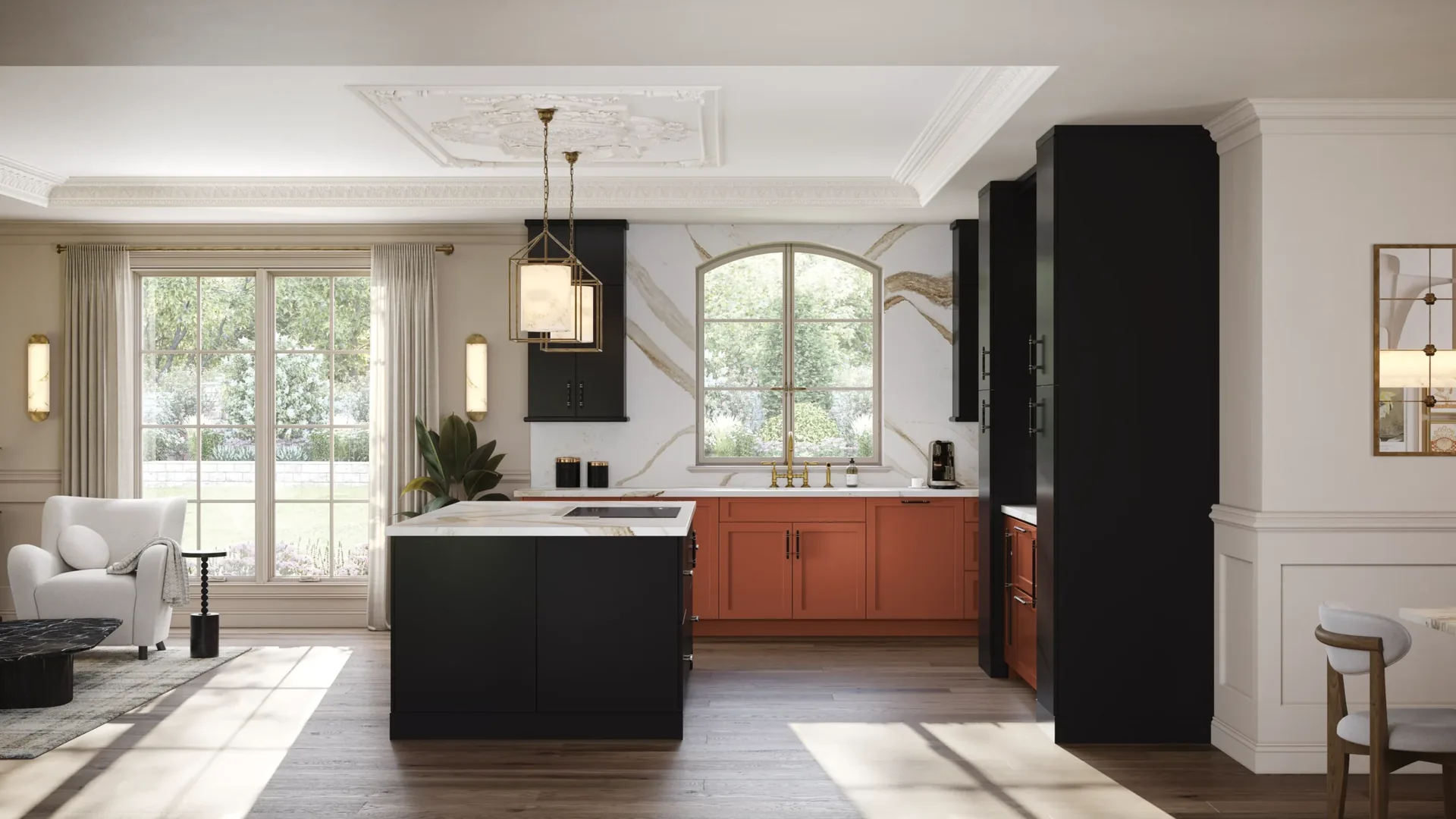
Shaker Cabinets in Polk County, FL
The door style everyone asks for. There's a good reason for that.
Square frame. Flat center panel. No fuss. Shaker works in nearly every kitchen and bath we build, painted white, stained walnut, or anything between. Come see the full range at our Winter Haven showroom.
Shaker cabinets are the most-requested door style we install at Blackburn's Interiors. The reason is simple: a square recessed-panel door with no decorative profiling fits almost every room, paints or stains cleanly, and holds up for decades. If you're deciding between Shaker and another profile, say slab for a more modern feel or raised-panel for traditional weight, this page will help you understand exactly what Shaker is, where it works best, and what the honest trade-offs are.
Why Shaker
Works in almost any room
Shaker's plain geometry doesn't fight your countertops, hardware, or flooring. It reads traditional in a farmhouse kitchen, modern in a minimalist bath, and transitional everywhere in between. That flexibility is why it's our single most-installed door style.
Paints clean, every time
The recessed panel and flat rails give a paint brush or spray gun nowhere to hide. Primed maple and MDF Shaker doors come out crisp with sharp shadow lines. White, off-white, navy, sage: whatever direction the room goes, Shaker takes the color without fuss.
Stains just as well
Natural maple, alder, and cherry Shaker doors show the wood grain through the finish. The simple profile keeps your eye on the material, not the milling. If you want the warmth of real wood, not paint, Shaker stained is the honest choice.
Hardware does the work
Because the door itself is quiet, the hardware becomes the design statement. Brushed brass bar pulls look one way. Matte black bin pulls look another. Oil-rubbed bronze cup pulls land somewhere traditional. Swapping hardware later is inexpensive. You're not fighting a busy door profile.
Holds up over time
The construction is as simple as cabinetry gets: four rails, four stiles, one flat panel. Fewer moving parts means fewer places for joints to fail. With a quality cabinet box behind it, a Shaker door installed correctly should outlast a kitchen renovation or two.
Pairs with almost any countertop
White Shaker with quartz is the dominant Polk County kitchen combination right now, and it sells homes. But Shaker also holds its own under granite slabs, marble, and laminate surfaces. It doesn't compete with the countertop. It frames it.
Shaker doors up close
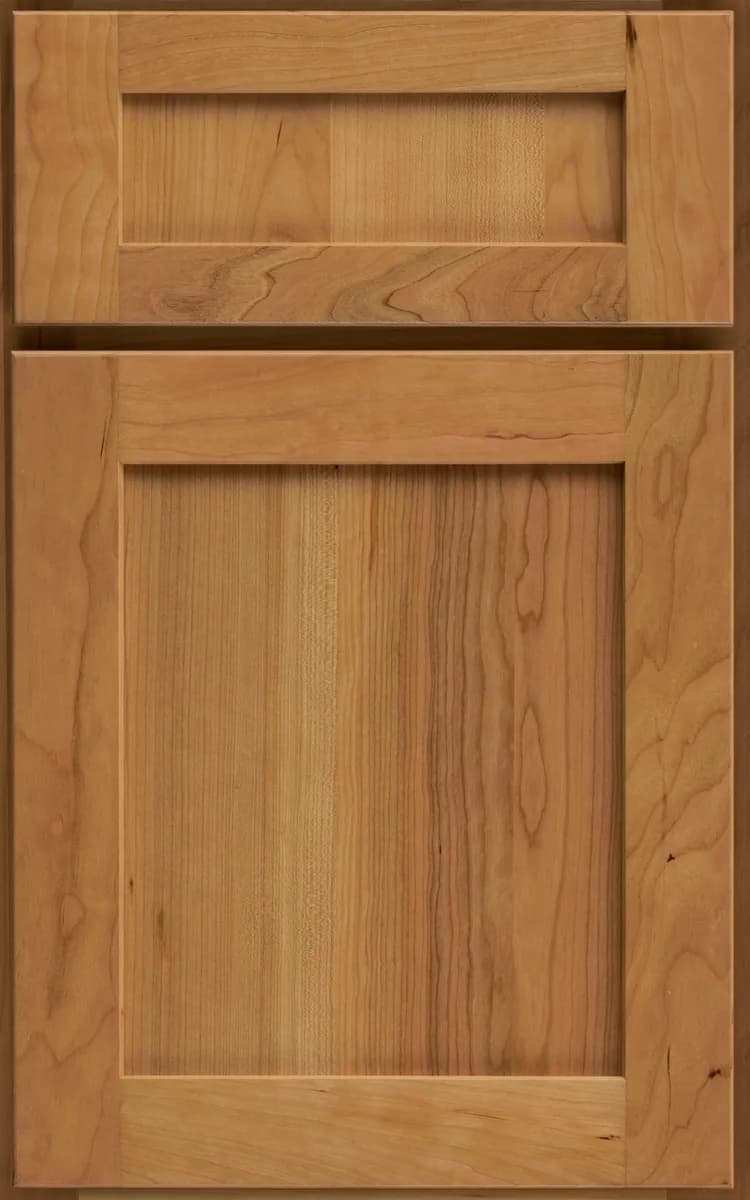
Medallion Potter's Mill, natural cherry 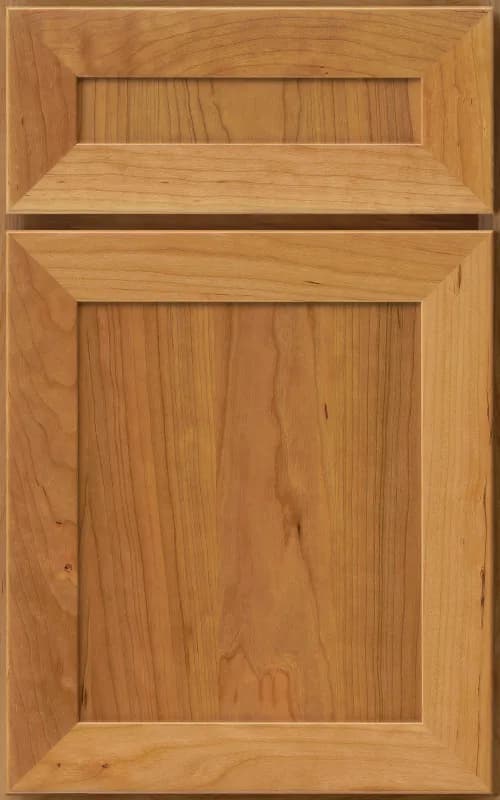
Medallion Harlan, natural cherry 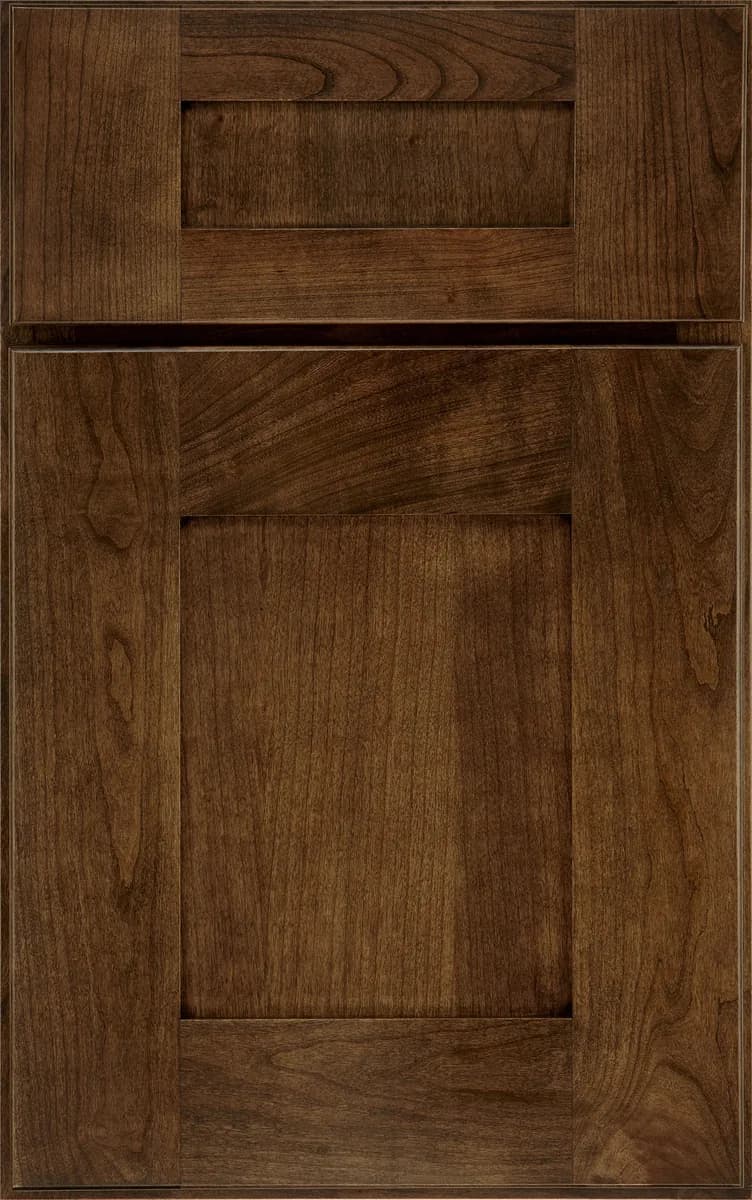
Medallion Sonoma, Eagle Rock on cherry 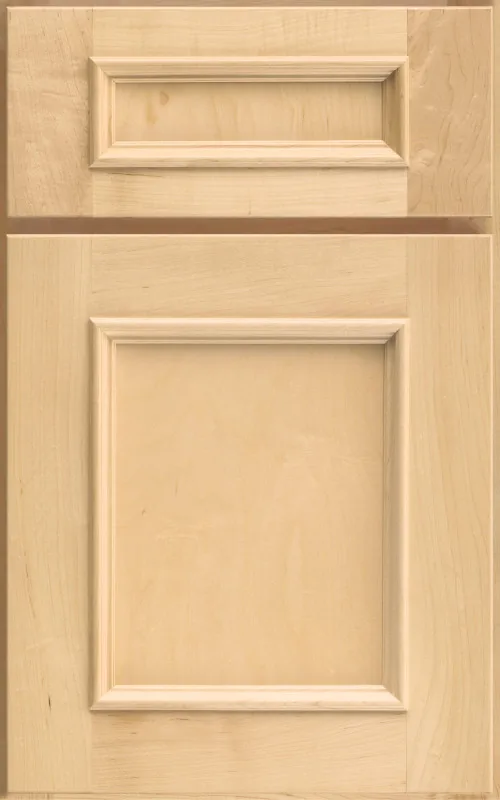
Medallion Devonshire Flat Panel, natural maple 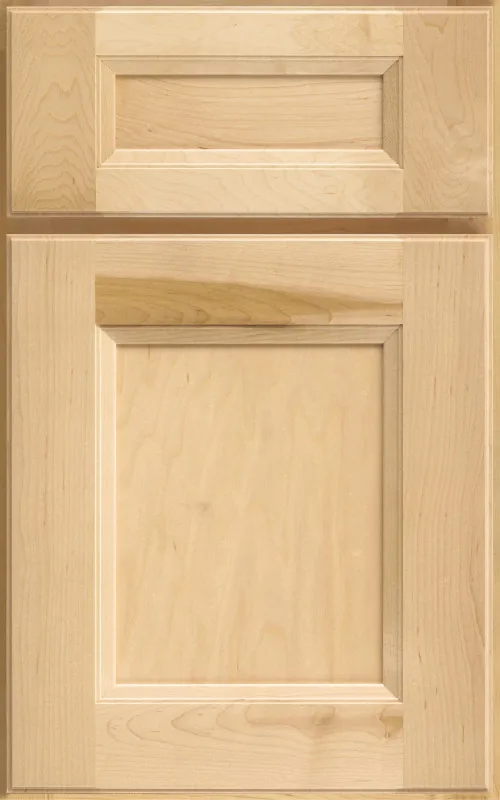
Medallion Ellison Flat Panel, natural maple 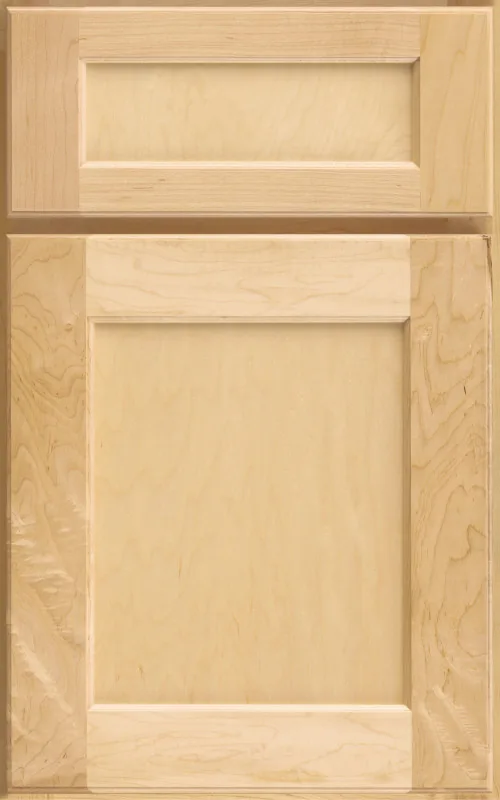
Medallion Dana Pointe Flat Panel, natural maple 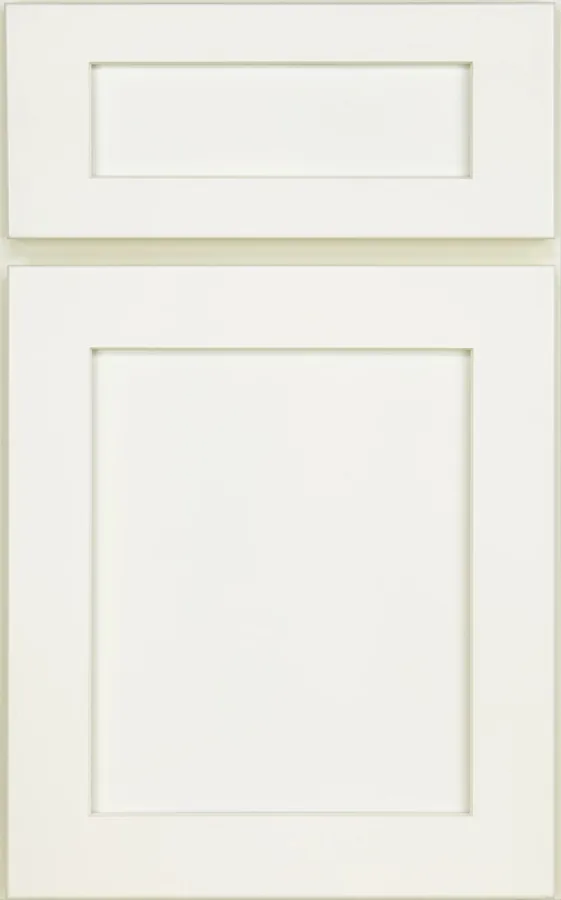
Same door, new finish: Potter's Mill Flat Panel in White Icing paint 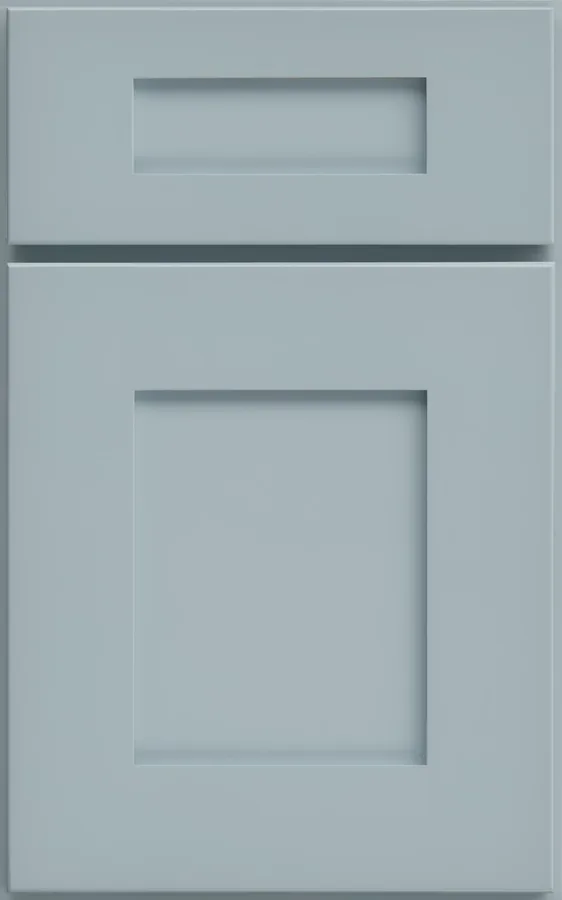
Same door, new finish: Sonoma Flat Panel in Dewpoint paint
Shaker by city
Shaker cabinets, city by city.
Questions we hear
What is a Shaker cabinet, exactly?
A Shaker door has a frame, two vertical stiles and two horizontal rails, with a flat, recessed center panel. No decorative profiling on the frame. No raised center. The construction came from the Shaker religious communities in the 18th century, who built furniture to be honest, plain, and durable. Those values translated directly into cabinetry: nothing ornamental, nothing that doesn't serve a function. That's still why the style works today.
How is Shaker different from a flat-panel or slab door?
Slab doors are a single flat piece: no frame, no panel, no shadow line. They're the cleanest contemporary option. Shaker has a visible frame around a recessed panel, which gives the door a bit more visual depth and a subtle shadow line where the panel meets the frame. If slab reads ultra-modern, Shaker reads transitional, at home in both updated traditional kitchens and cleaner contemporary ones. We break this down further in our guide to Shaker vs. flat-panel vs. inset cabinet doors.
What wood species does Blackburn's use for Shaker doors?
We carry Shaker doors in maple, alder, cherry, oak, and MDF (for painted applications). Maple is the most common for paint. It takes primer and topcoat cleanly and machines to a sharp edge. MDF is the most stable for painted Shaker in Florida's humidity swings. For stained doors, alder and cherry show warm grain. Oak Shaker is popular for a more textured, farmhouse look. We'll walk you through the options in person.
What does a Shaker kitchen cabinet cost?
Cabinet pricing depends on the cabinet box construction, the door species and finish, hardware selection, and whether you're going custom, semi-custom, or stock. Industry-wide, semi-custom Shaker kitchens typically range from a few thousand dollars for a small galley to well above $20,000 for a large full custom project. The spread is wide. The honest answer is that we need to see the room before we can give you a number. Estimates are free, and there's no pressure. See also our guide on custom vs. semi-custom vs. stock cabinets.
Does white Shaker go out of style?
White Shaker has been the dominant kitchen door combination in the United States for over a decade, and it shows no signs of fading. The neutrality is the point. White Shaker doesn't fight the countertop, the backsplash, or the flooring. It sells homes. If you want more personality, consider a two-tone approach: white upper cabinets with a colored or stained lower run, or a painted island against white perimeter cabinets. We cover this in detail in white kitchen cabinets 2026.
Can I see Shaker cabinets in person before deciding?
Yes. Our 8,000 sq ft showroom at 1507 Havendale Blvd NW in Winter Haven is open Monday through Friday 9 AM to 5 PM and Saturday 9 AM to noon. We have door samples in multiple species and finishes, full display kitchens, and the countertop slab library in the same room, so you can see how Shaker pairs with quartz or granite before you commit. No appointment needed, though you're welcome to call ahead if you want a designer at the ready.
More cabinets options
Ready when you are
See Shaker cabinets in our 8,000 sq ft Winter Haven showroom.