
Flooring Tips
What Color Floor Makes Your House Look Bigger?
What color floor makes your house look bigger? Light, cool-neutral tones, wide planks run the long way, and one continuous floor. A Winter Haven take.
- Published
- June 19, 2026
- Author
- Blackburn's Interiors, Winter Haven, FL
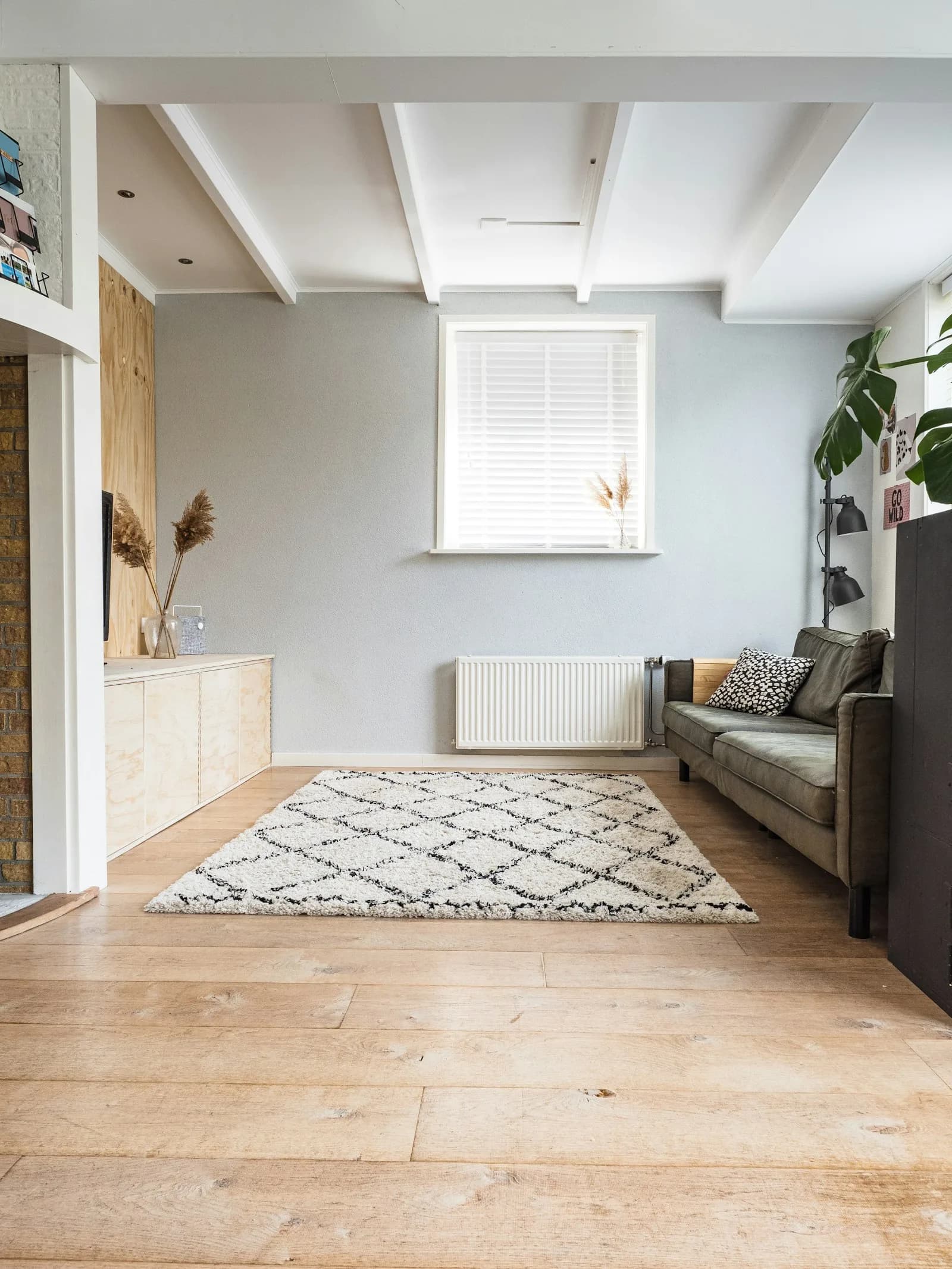
What color floor makes your house look bigger? Light, cool-neutral floors win nearly every time. We install flooring across Polk County every week, and the smaller Florida homes and condos almost always feel roomier the moment a pale, low-sheen floor goes down. Color is the biggest lever. But it works best when you pair it with the right plank width, the right direction, and one continuous floor that flows from room to room.
Most homes we measure in Winter Haven, Lakeland, and Auburndale sit on a concrete slab with 8-foot ceilings. There's no basement to borrow space from. So the floor has to do the heavy lifting. The good news is that the same rules that open up a 1,100-square-foot condo here open up a small home anywhere. Light bounces the same way in Florida as it does in Ohio.
Why Light, Cool Floors Open a Room
A floor is the single largest surface in any room. It's bigger than any wall. So its color sets the mood for the whole space. Light colors reflect light. Dark colors absorb it. When a floor bounces daylight back up toward the ceiling, the room feels airy and open. When it swallows that light, the walls feel closer and the ceiling feels lower.
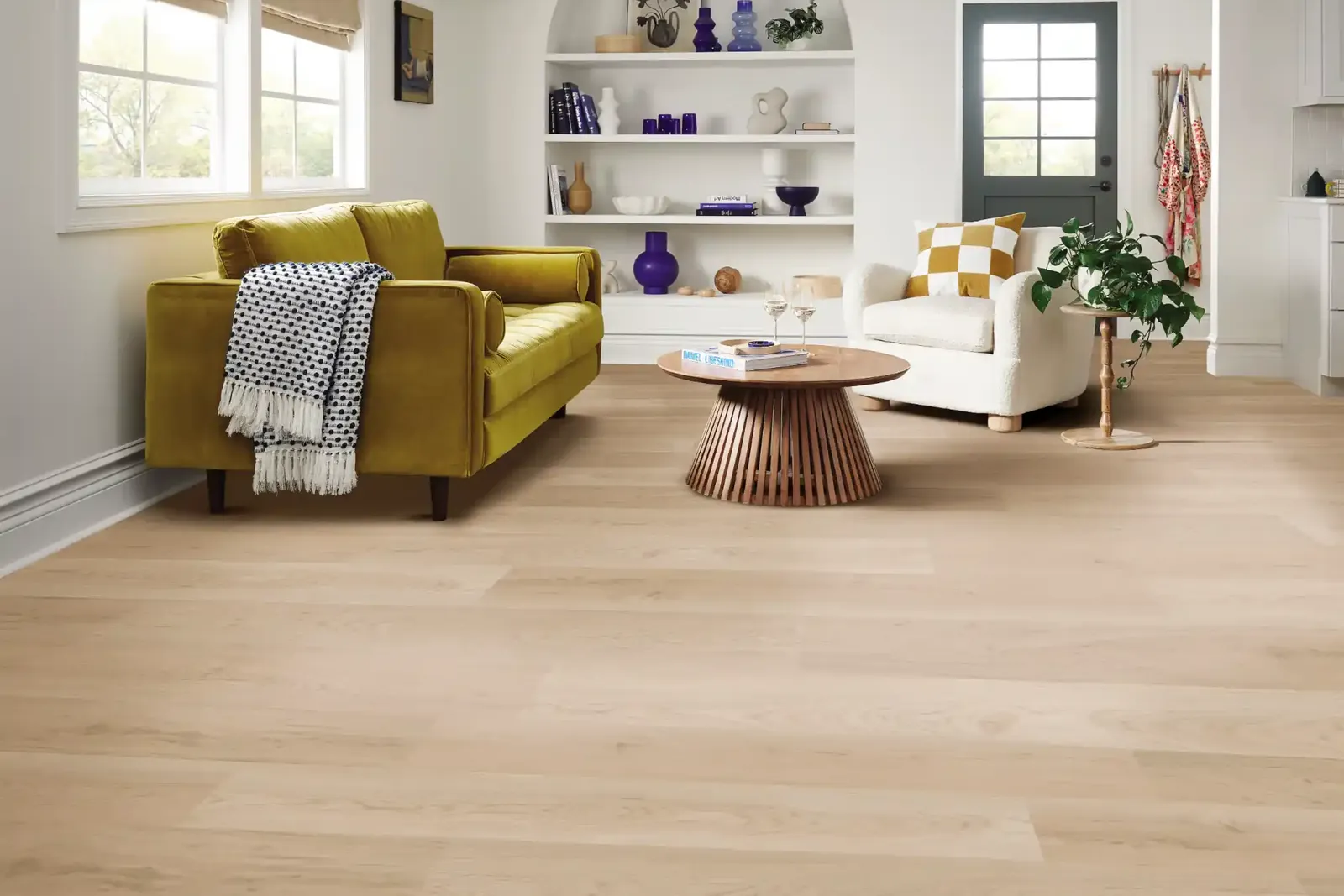
Think about why people paint small rooms white. The same logic runs across the floor. A pale oak, a soft greige luxury vinyl plank, or a light wood-look tile spreads the daylight from your windows into every corner. The boundary between floor and wall softens. Your eye glides instead of stopping. That glide is what reads as space.
Florida helps here. We get strong, bright sun most of the year. A light floor takes that free daylight and multiplies it. A dark floor wastes it. If you've ever walked into a small room with espresso hardwood and felt it close in around you, you've felt this firsthand.
Cool Neutral Beats Warm Yellow
Not all light floors are equal. Cool and neutral tones open a space more than warm, yellow ones. A blond oak with a soft, balanced undertone feels clean and modern. A golden, orange-tinted floor feels heavier and dates fast. We're not talking about the cold gray that peaked years ago and now reads as a tired trend. We mean a true neutral: light, soft, and easy on the eye.
Aim for a light floor with a quiet undertone. Greige, soft taupe, pale natural oak, and warm-neutral blond all work. They read calm. Calm reads big. If you want a deeper look at where floor colors are heading, our latest flooring trends and hardwood flooring trends posts break down the tones gaining ground in 2026.
Run Your Planks the Long Way
Color does most of the work, but direction matters too. Plank floors carry a built-in set of lines. Your eye follows those lines. So point them where you want the room to feel longer. In most homes, that means running the planks along the longest wall, in the direction you walk as you enter.
Picture a narrow hallway or a long, skinny condo living room. Run the planks down the length, and the room stretches. The floor pulls your eye toward the far wall. Run them across the short way, and you chop the room into bands. It looks shorter and choppier. The same trick works with hardwood, luxury vinyl plank, laminate, and even wood-look tile.
When to Break the Rule
There's a catch. On a slab, the subfloor needs to be flat first, and the light from your main windows can change the call. Many installers like to run planks toward the main light source so the seams nearly disappear. When the long wall and the window wall fight each other, we walk the room with you and pick the direction that opens it most. A few rules of thumb:
- Long, narrow room: run planks the long way to stretch it.
- Square room: run planks toward the main window so seams fade.
- Open floor plan: pick one direction and hold it through every room.
- Hallway feeding a room: keep the same direction so the floor flows.
- Always flatten the slab first. Direction can't fix a wavy subfloor.
One Continuous Floor From Room to Room
This is the move that fools the eye more than any other. Use one floor across as much of the home as you can. Same product, same color, same direction, no thresholds in the doorways. When the floor never changes, the rooms blur together. Your brain reads it as one big space instead of several small boxes.
We see this transform small Florida homes all the time. Knock the kitchen, living room, hallway, and bedrooms into one flowing floor, and a 1,200-square-foot house lives much larger. Every threshold strip you remove is a visual wall you tear down. Every color change is a line that says 'this room ends here.' Take those lines away and the home opens up.
Waterproof luxury vinyl plank makes this easy in our climate, because you can run the same floor through the kitchen and baths where water lives. That's a big reason it's so popular here. If you're weighing it against laminate, our guide on whether LVP beats laminate in Florida and the broader guide to luxury vinyl plank lay out the trade-offs in plain terms.
Go Wide With Your Planks
Plank width changes how big a floor feels. Wide planks mean fewer seams. Fewer seams mean a calmer, more open floor. Narrow strips chop the surface into many lines, which busies the eye and shrinks the room. For most homes we'd point you toward a 7-inch plank or wider. It reads modern, and the wider boards make a small room feel more generous.
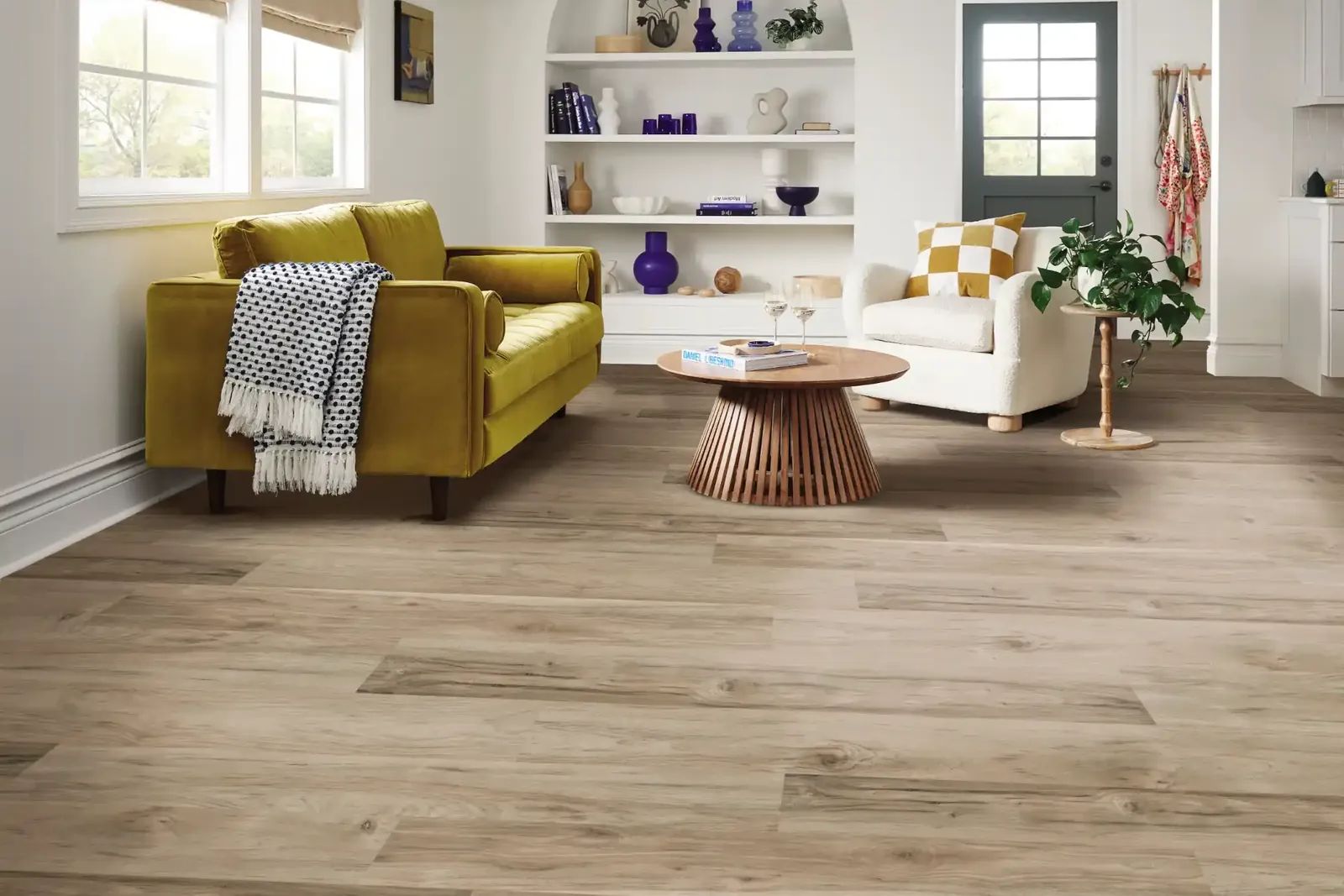
There's a small balance to strike in tight rooms. A very wide plank in a tiny bathroom can look out of scale. But in a living room, hallway, or open kitchen, wider almost always wins. Brands like COREtec, Shaw, Karndean, and Anderson Tuftex all carry wide-plank lines in the light, neutral colors that open a space. You can browse options in our flooring shop before you ever come in.
Pick a Low-Sheen Finish
Gloss level is the quiet detail that makes or breaks the look. A matte or low-sheen floor opens a room. A high-gloss floor fights you. Shiny floors throw glare and bounce harsh hot spots across the surface. They also show every footprint, every speck of dust, and every paw print. That clutter makes a room feel busy and small, not open.
A matte or satin finish spreads light softly and evenly. The floor looks like one calm, continuous plane, which is exactly the feeling you want. It also hides the fine sand we all track in from the lakes and the pool deck. In Florida, low-sheen isn't just about the look. It's about a floor that still looks clean an hour after you mop it.
- Matte or satin: soft, even light, the open-room choice.
- High gloss: glare, hot spots, and every footprint on display.
- Light + matte together: the strongest space-opening combo.
- Bonus in Florida: matte hides tracked-in sand between cleanings.
What About Tile and Carpet?
The same color rules carry across every material. A large-format, light, low-sheen tile opens a floor much like wide planks do, with fewer grout lines and a more continuous surface. Keep the grout color close to the tile color. A dark grout line in a light floor draws a grid that chops the room into squares and shrinks it. A matching grout lets the floor read as one smooth plane.
Carpet follows the rules too. Light, neutral carpet opens a bedroom. A low, dense, even texture beats a busy pattern, because a strong pattern pulls the eye down and makes the room feel smaller. We'd keep carpet in the bedrooms and run a continuous hard surface through the main living areas to keep that open flow. If you're still deciding between materials, our guide for choosing the right flooring walks through it room by room.
Don't Forget the Slab Underneath
Here's the part a lot of color advice skips. None of this matters if the floor fails. Almost every home in Polk County sits on a concrete slab, and slabs hold moisture. Moisture pushes up through the concrete and can ruin a floor that wasn't installed for it. A light, wide, continuous floor only stays beautiful if the slab below it is flat, dry, and prepped right.
That's why the installers we certify test and prep the slab before a single plank goes down, trained to our standard and among the best in Florida. If you want the full picture on what we do under the floor, read up on slab moisture mitigation in Florida and our pre-installation tips. Getting the slab right is what makes that open look last for years instead of months.
A Quick Plan for a Small Florida Home
Put it all together and the recipe is simple. Pick light. Pick wide. Pick matte. Run it the long way. Run it everywhere. Here's the short version we'd give a neighbor with a small home or condo:
- Color: light, cool-neutral. Pale oak, greige, soft taupe.
- Width: 7-inch plank or wider for fewer seams.
- Direction: run the long way, or toward the main window.
- Continuity: one floor, one color, no thresholds in doorways.
- Finish: matte or satin to kill glare and hide sand.
- Foundation: flatten and moisture-prep the slab first.
Quality light floors land in a wide range depending on the product. Entry luxury vinyl plank runs around $4 to $7 per square foot installed, while engineered hardwood and large-format tile often fall in the $8 to $15 per square foot range. To estimate your own project, try our flooring calculator, or take the flooring quiz for a quick read on what fits your home. If you want help thinking through the bigger cost picture, our post on the cost to do 1,000 square feet of flooring breaks it down.
The Bottom Line
A light, cool-neutral floor in a wide plank, with a matte finish, run the long way and carried without a break through the whole home: that's how you make a house look bigger. Color leads, and continuity seals it. We've used this same recipe to open up small homes and condos all over Winter Haven, Lakeland, Bartow, Haines City, and the rest of the areas we serve since 1973. Come see it in person at our 8,000-square-foot showroom on Havendale Blvd, where you can walk the samples in real light. Contact us or call (863) 294-7355 for a free in-home measure, and ask about financing if you'd like to pay over time. It's subject to credit approval. We'd be glad to help you open up your home.
More flooring tips
Have a project of your own?
Free in-home estimates across Polk County.