
Cabinet Tips
Where to Put Cabinet Knobs and Pulls, and How to Install Them
Where to put cabinet knobs and pulls on upper doors, lower doors, drawers and pantry doors, plus how to drill for them without a crooked row.
- Published
- October 13, 2026
- Author
- Blackburn's Interiors, Winter Haven, FL
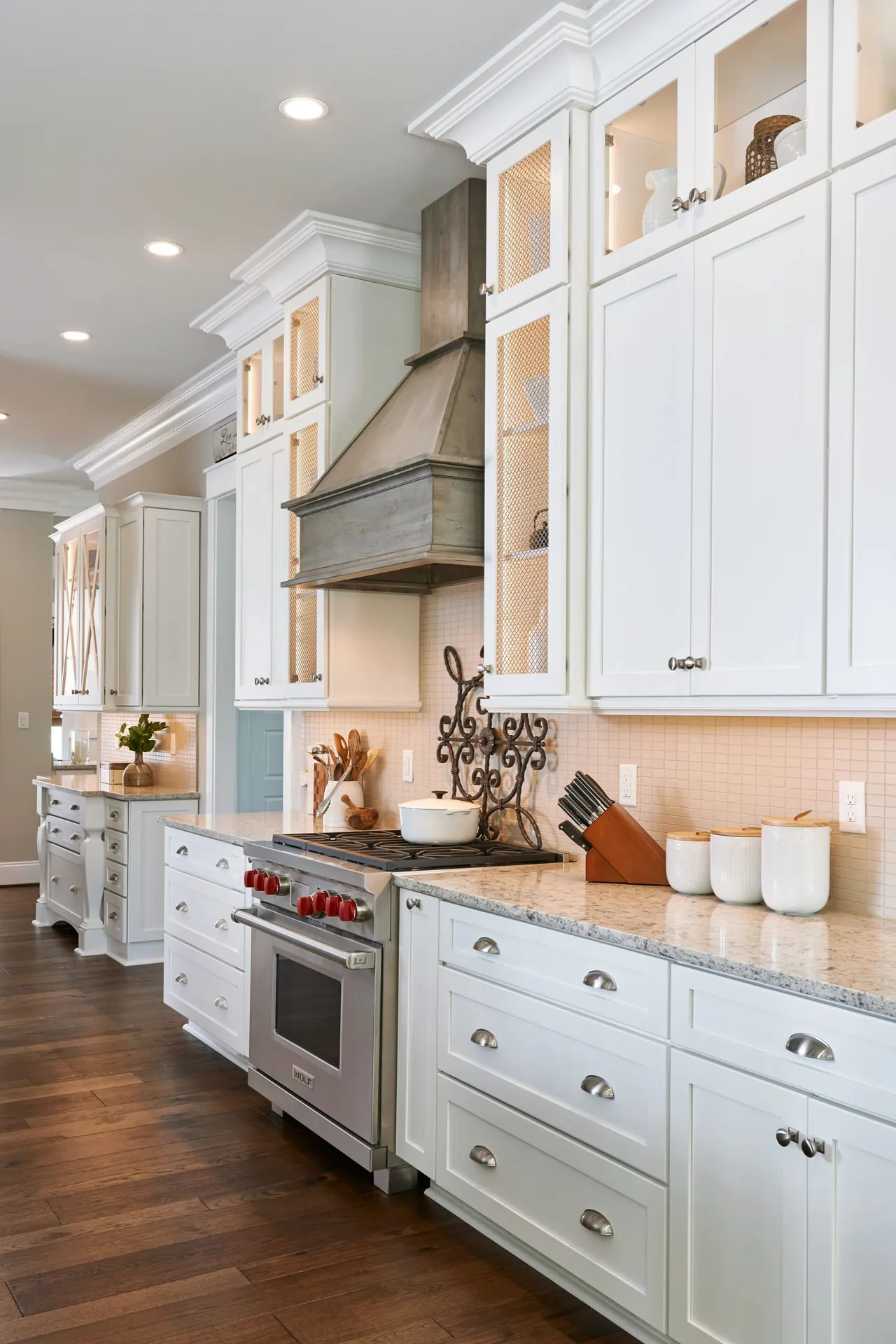
You have a box of new pulls, a drill, and a cabinet door with nothing on it. This is the moment the project gets real, because a hole in a cabinet door does not un-drill. Nobody wants to look at a pull that sits half an inch off every morning for fifteen years.
This job is mostly measuring, and the measuring is not hard. Blackburn's has been family-owned in Winter Haven since 1962, and we sell and install cabinets across Polk County. Here is where knobs and pulls usually go, and how to put them on so the whole row lines up.
The Short Answer
On a door, the knob or pull goes on the side opposite the hinges. Put it near the bottom corner on an upper door and near the top corner on a lower door. On a drawer, center it left to right.
- Upper doors: bottom corner, on the side that opens.
- Lower doors: top corner, on the side that opens.
- Drawers: centered left to right.
- Distance from the corner: hardware makers say about 2 to 4 inches. Pick one number and use it on every door.
There Is No Single Rule, and the Makers Say So
People search for the correct measurement as if a code book has one. It does not. Amerock's own installation guide, dated 2014, opens by saying there are no hard, fast rules for where a knob or pull goes on a door. Top Knobs says there are no strict rules to follow. The cabinet maker KraftMaid, in a guide posted in 2024, says there is not really a right or wrong way to do it.
So every number on this page is a maker's guideline, and part of it is taste. What matters more is using the same spot on every door. Liberty Hardware calls that consistency essential. A pull that sits a little high on every door looks like a choice. On one door, it looks like a mistake.
Where Hardware Goes on Upper and Lower Doors
Start with the side. Liberty says to mount a knob or pull on the stile opposite the hinges. The stile is the upright part of the door frame. Your hand ends up as far from the hinge as it can get, where a door opens easiest.
Then the height. On an upper cabinet, hardware goes at the bottom corner, because that is the part you can reach. On a lower cabinet it goes at the top corner, so you bend less. Amerock says most cabinet makers set it about 3 to 4 inches from that corner. Liberty gives 2 to 4 inches from the top or bottom edge, depending on the height of the cabinet.
| Cabinet part | Common spot | Who says so |
|---|---|---|
| Upper door | Bottom corner, opposite the hinges | Amerock, Liberty |
| Lower door | Top corner, opposite the hinges | Amerock, Liberty |
| Distance from corner | 3 to 4 inches, or 2 to 4 inches | Amerock, then Liberty |
| Flat slab door | 2 to 3 inches from both edges | KraftMaid |
| Drawer | Centered left to right | Liberty |
| Drawer over 30 inches | Two pulls | Liberty |
| Tall pantry door | A long pull, set up and down | Liberty |
How the Door Style Moves the Spot
A door with a frame around a center panel, like a shaker door, gives you lines to work from. KraftMaid describes two ways to use them. For a traditional look, mark the middle of the upright stile and the middle of the cross rail, and put the knob or the end of the pull where those two lines cross. For a more updated look, keep it centered on the stile but line it up with the edge of the rail.
A flat slab door has no frame to guide you. For those, KraftMaid says to set the knob or the end of the pull two to three inches from both edges. Our guide to shaker, flat-panel and inset doors covers which kinds of hardware suit each door style.
Where Hardware Goes on Drawers
Left to right is easy. Liberty says drawer hardware should be centered horizontally, so the weight pulls evenly.
Up and down, you have a choice. On a framed drawer front, KraftMaid gives two options: the middle of the center panel, or centered on the top rail. On a slab drawer, it says to center the hardware top to bottom, or to keep it two to three inches from the top of every drawer. That second way is worth a look on a stack of deep drawers, because you reach less for the bottom one.
One Pull or Two on a Wide Drawer?
This is where the makers split. Liberty says that once a drawer is wider than 30 inches, a single pull no longer does it and you should use two. Top Knobs draws the line much lower. It says a drawer from 16 to 32 inches wide can take two smaller pulls or one larger one, and that a drawer wider than 16 inches should get two knobs.
They also space the pair differently. KraftMaid says to divide the drawer into thirds and center a pull on each of the two lines. Top Knobs says to divide it into thirds and set a knob in the middle of each outer third, which lands them farther apart. Tape the hardware to the drawer both ways and stand back before you choose.
How long a pull to buy is a sizing question, and our post on what size cabinet hardware to use walks through the one-third rule.
Tall Pantry Doors
A tall door is the one place a corner spot stops making sense. Tall cabinets run 84, 90, or 96 inches, and nobody opens a seven-foot door from its bottom corner. Liberty suggests long, vertical pulls on tall pantry doors because they are easy to operate.
None of the makers we read gives a height for that pull, so this part is our advice. Stand in front of the door, reach for it the way you would with groceries on one arm, and mark where your hand lands. Then check that mark against the hardware on the cabinets beside it.
Knobs, Pulls, or Both
You can mix them, and most kitchens do. KraftMaid lists two common ways: knobs on every door and pulls on every drawer, or knobs on the cabinets above the counter and pulls on everything below.
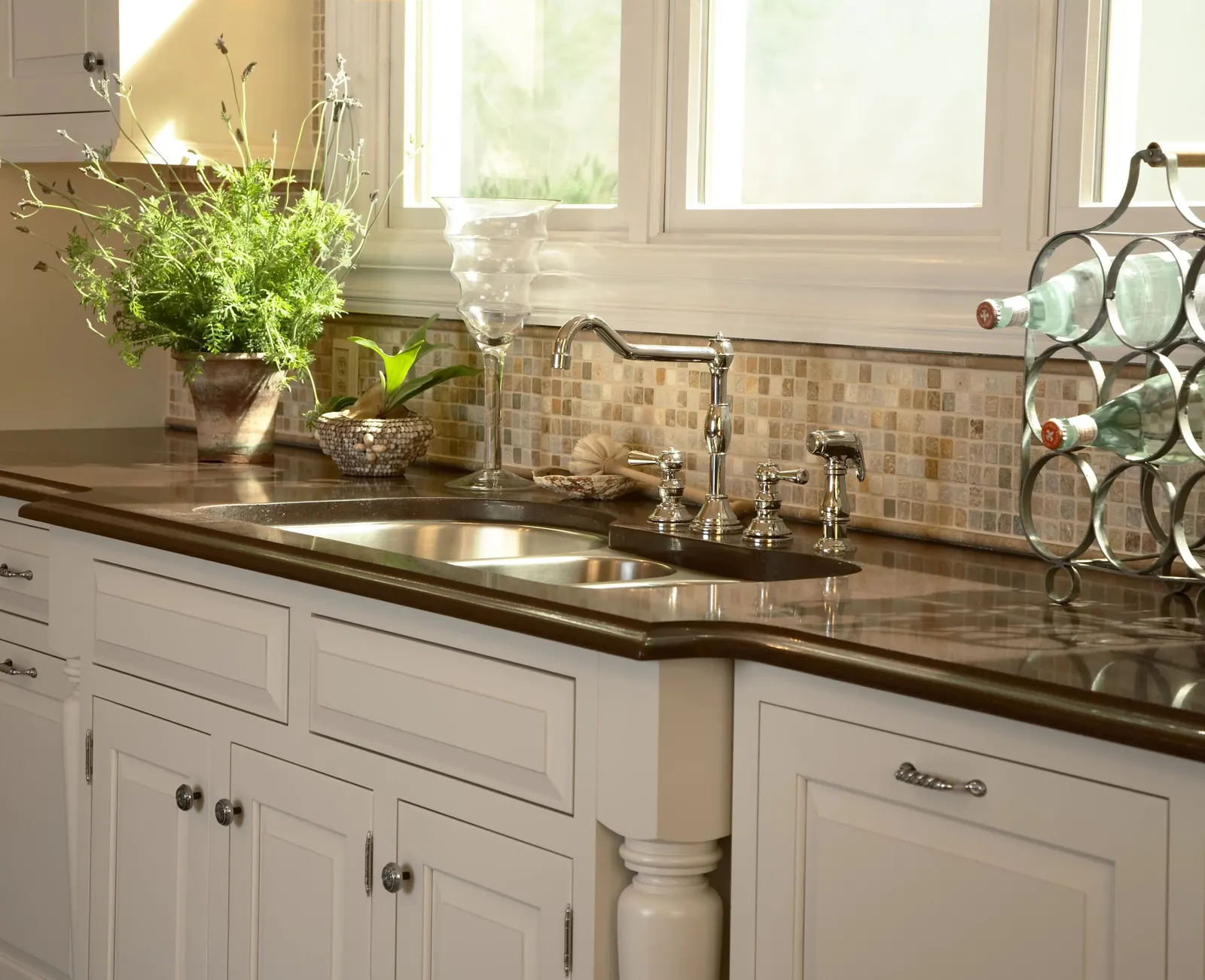
Knobs are easier for a first-timer. A knob needs one hole. A pull needs two, the right distance apart and dead level. If you are still deciding, our longer cabinet hardware sizing guide goes through pulls everywhere, knobs everywhere, and the mix.
How to Install Cabinet Knobs and Pulls
Before you drill anything, make sure the doors hang straight. Hardware set square to a crooked door ends up crooked the day somebody levels the door. A cabinet door and drawer troubleshooting guide is coming to this blog soon. It shows which hinge screw moves a door which way.
- Get a template or a jig. Amerock suggests making or buying a durable template before you drill. It says a template keeps pull holes parallel with the door edge and at the same height on every cabinet.
- Measure the pull. Liberty's instruction sheet, dated 2010, says to measure between the holes on the back of the pull to find the hole spacing.
- Tape, then mark. The same sheet says to put masking tape over the rough spot before you measure, to protect the finish while you drill. Mark the hole on the tape with a pencil. On drawers, it suggests measuring down the same distance on both sides, drawing a light line, and checking it for level.
- Drill from the front. Liberty's article says to use a small bit first and drill from the front through to the inside, to keep the wood from splintering. Its instruction sheet says to go slowly with very little pressure. A scrap block held tight against the back of the door helps too.
- Use the right bit. Amerock recommends a 3/16 inch hole for most styles, and Liberty's sheet lists the same bit. Amerock's one exception is a pull with studs, the short posts around the screw holes, which needs a 1/4 inch hole.
- Screw it on by hand. Push the screw through from the back and turn the knob or pull onto it. Liberty's sheet says to be careful not to overtighten.
Getting the Screw Length Right
Amerock says it packs 1 inch screws with most knobs and pulls, because the typical door or drawer front is 3/4 inch thick. Its rule is that the screw should be 1/4 inch longer than the wood it goes through.
Amerock notes that many drawers have a 3/4 inch front fastened to a 3/4 inch drawer box. The screw has to pass through both, which is 1-1/2 inches of wood, so you need a 1-3/4 inch screw. Measure a door and a drawer before you start. They are often not the same thickness.
How to Avoid a Crooked Row
One hole a little off is hard to see. Twenty holes, each off in a different direction, are easy to see. The cure is to measure every hole the same way.
- Measure from the same edge every time. On upper doors that is the bottom edge and the opening side. Do not measure one door from the top and the next from the bottom.
- Remember that left and right doors are mirror images. Flip the template over for the other hand and check it against the hinges before you drill.
- Do one door completely, screws and all. Close it, step back across the room, and look. Then drill the rest.
- On a stack of drawers, check that the pulls line up one above the other.
Common Questions
Should cabinet pulls be vertical or horizontal?
Vertical on doors and horizontal on drawers is the usual way, and it is what Liberty Hardware recommends. It is partly taste, so long as every door matches.
How far from the edge should a cabinet knob be?
There is no single number. Amerock says most cabinet makers land about 3 to 4 inches from the corner. Liberty says 2 to 4 inches. KraftMaid says 2 to 3 inches from both edges on a flat slab door. Choose one and repeat it.
What size drill bit do I need for cabinet knobs and pulls?
A 3/16 inch bit fits most cabinet hardware. Amerock recommends that size for most styles, and Liberty lists it in its tools. A pull with studs on the back needs a 1/4 inch hole, by Amerock's guide.
Can I reuse the old holes when I change hardware?
Yes, if the new pull has the same hole spacing as the old one. Measure from the center of one hole to the center of the other. If the new pull is a different length, Amerock suggests reusing the bottom hole on an upper door and the top hole on a lower door, and drilling one new hole. A backplate can cover a hole left behind.
The Bottom Line
Put door hardware opposite the hinges, low on the upper doors and high on the lower ones. Center it on the drawers. Pick your distance from the corner inside the range the makers give, and then be stubborn about using it everywhere.
If you are choosing hardware for new cabinets, bring the question to our Winter Haven showroom. You can hold a knob and a pull against a real door before a single hole gets drilled. Or ask for a free in-home measure and we will come to you. We offer special financing, subject to credit approval.
Sources
- Amerock, Installing New Cabinet Hardware (2014) (there being no hard, fast rules for placement, most cabinet makers setting door hardware about 3 to 4 inches from the non-hinged corner (upper corner on base cabinets, lower corner on wall cabinets), a 3/16 inch hole for most styles and 1/4 inch for pulls with studs, the 1 inch screws it packs for a 3/4 inch front, screws 1/4 inch longer than the material, a 1-3/4 inch screw for a 1-1/2 inch drawer, using a template, and reusing one old hole when changing pull length)
- Liberty Hardware, Cabinet Hardware Installation Instructions (2010) (measuring between the holes on the back of a pull, masking tape over the hole locations before measuring, scribing a level line on drawers, the optional reusable template, the 3/16 inch drill bit in its tool list, drilling slowly with minimal pressure to reduce splintering, and not overtightening the screws)
- Liberty Hardware, How to Choose Kitchen Cabinet Hardware (mounting door hardware on the stile opposite the hinges, 2 to 4 inches from the top or bottom edge, centering drawer hardware horizontally, two pulls on drawers wider than 30 inches, pulls vertical on doors and horizontal on drawers, long vertical pulls on tall pantry doors, consistency being essential, and using a small bit first and drilling from the front to prevent splintering)
- Top Knobs, Guide to Selecting the Perfect Size Hardware (there being no strict rules, drawers 16 to 32 inches wide taking two smaller pulls or one larger pull, two knobs on drawers wider than 16 inches, and setting the two knobs in the center of the outer thirds)
- KraftMaid, Cabinet Hardware Placement: Knobs and Pulls Guide (2024) (the traditional and updated placements on framed doors and drawers, two to three inches from both edges on a slab door, the two slab drawer options, two pulls centered on the third lines of a wide drawer, the two common ways to mix knobs and pulls, and there being no right or wrong way)
More cabinet tips
Have a project of your own?
Free in-home estimates across Polk County.