
Cabinet Tips
What Size Cabinet Hardware Should I Use? The 1/3 Rule Guide
The 1/3 rule for sizing cabinet pulls: pick hardware one-third the width of drawers or height of doors for balanced, professional results.
- Published
- January 22, 2026
- Author
- Blackburn's Interiors, Winter Haven, FL
- Updated
- August 4, 2026
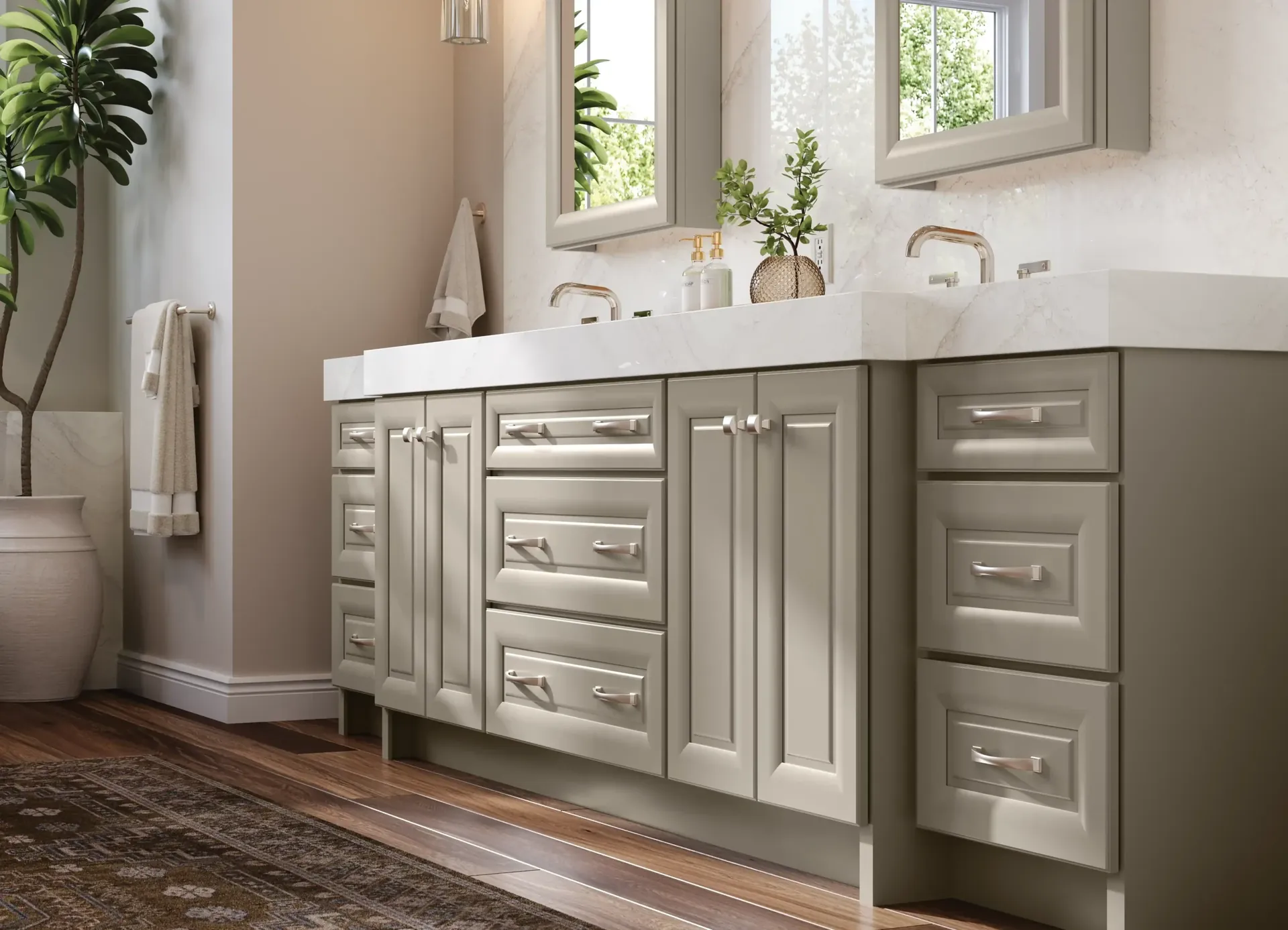
Cabinet hardware seems like a small detail, but the wrong size can make even well-built cabinets look off. The most common question we hear during a remodel: what size cabinet hardware should I use?
The simplest, most reliable answer is the 1/3 rule. It helps you choose cabinet pulls properly sized for drawers and doors: balanced, comfortable, and intentional. Works for kitchens, bathrooms, laundry rooms, and custom cabinetry.
The 1/3 Rule
For most kitchens and bathrooms, cabinet hardware should be sized so the pull length is about one-third the width of the drawer or the height of the cabinet door.
Hardware makers treat that one-third as a ceiling. Top Knobs says a bar pull should not exceed one-third the length of a cabinet door or the width of a drawer, measured center to center. So one-third is the top end, not a number to shoot past.
This sizing creates visual balance, provides a comfortable grip, and prevents hardware from looking too small or oversized.
Why Hardware Size Matters
Proportion plays a major role in how finished a space feels. When cabinet hardware matches the scale of the drawer or door, the entire room feels more polished.
Think of it like wearing shoes that don't fit. Even if they look nice, they're uncomfortable and distracting. Cabinet pulls work the same way.
Common Sizing Problems
- Wide drawers with short pulls can look unfinished
- Small drawers with oversized pulls feel crowded
- Inconsistent sizing can make custom cabinets look sloppy
Pull Size Chart
- 12-inch drawer → 4-inch pull
- 18-inch drawer → 6-inch pull
- 24-inch drawer → 8-inch pull
- 30-inch drawer → 10-inch pull
- 36-inch drawer → 12-inch pull
- 42-inch drawer → 14-inch pull
This is a reliable starting point for most residential cabinetry.
Pull Length vs Hole Spacing
Many homeowners make the mistake of sizing hardware based on hole spacing alone. Cabinet pulls are often labeled by their center-to-center measurement, the distance between screw holes, which is the industry standard for measuring pulls. But the overall length of the pull is usually longer.
When using the 1/3 rule, base your decision on the total tip-to-tip length, not the hole spacing. This ensures the hardware fills the right amount of visual space. It is also the safer way to measure: tip-to-tip runs longer than center to center, so sizing that way keeps the pull under the one-third ceiling.
Extra-Wide Kitchen Drawers
For drawers wider than 36 inches, you have two good options: one long pull that follows the 1/3 rule, or two smaller pulls (usually 4 to 6 inches each) spaced evenly across the drawer. Both work. Heavier drawers often benefit from two pulls for better grip and control.
What About a 42-Inch Drawer?
Using the 1/3 rule: 42 ÷ 3 = 14 inches. A pull close to 14 inches in overall length is ideal. If that size isn't available, a 12-inch pull still looks balanced. Another option is two 6-inch pulls placed evenly across the drawer.
The goal is visual balance and comfortable use, not exact math.
When to Break the Rule
The 1/3 rule is a guideline, not a requirement. It's okay to break it when function or style calls for it:
- Modern or minimalist designs that favor longer pulls
- Heavy drawers that need more leverage
- Smaller cabinet doors where knobs make more sense
If the hardware feels good to use and looks balanced in the space, it's doing its job. For exact pull lengths, knob diameters, and appliance-pull sizes by cabinet type, our cabinet hardware sizing guide has the full charts. Contact us if you'd like help picking pulls and knobs in our showroom.
Sources
- Top Knobs, Guide to Decorative Hardware Size Selection (the 1/3 sizing rule as a bar-pull maximum and center-to-center as the industry standard pull measurement)
More cabinet tips
Have a project of your own?
Free in-home estimates across Polk County.