
Cabinet Tips
Shaker vs Flat-Panel vs Inset Cabinet Doors: A Style Guide
Shaker, flat-panel, and inset cabinet doors compared on style, cost, durability, and which kitchen each one fits best.
- Published
- May 13, 2026
- Author
- Blackburn's Interiors, Winter Haven, FL
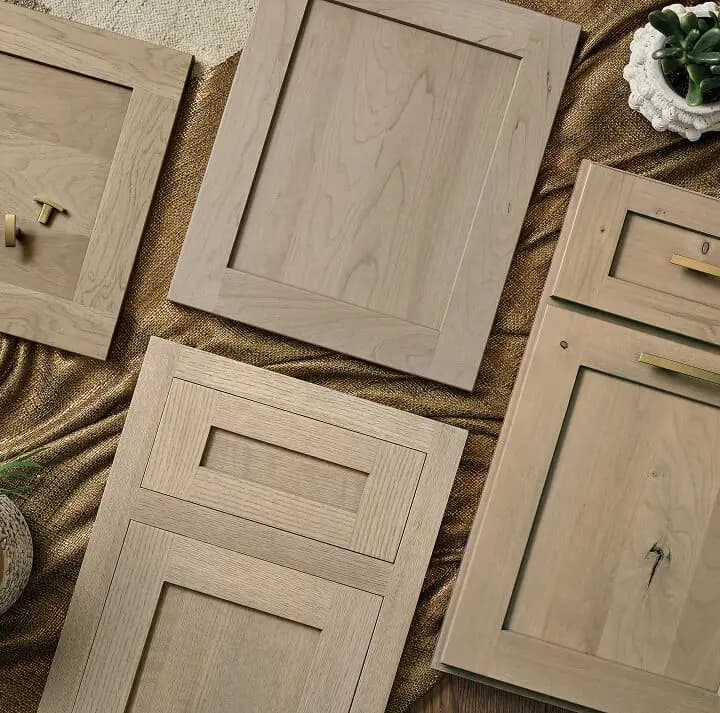
The door is the cabinet. It's what your eye lands on the second you walk into a kitchen, and it's what your hand touches a hundred times a day. Pick the wrong door and a beautiful layout falls flat. Pick the right one and a modest kitchen looks intentional and expensive.
Three door styles dominate the conversation today: shaker, flat-panel, and inset. They're not equivalents. Shaker and flat-panel are profile styles that describe what the face of the door looks like. Inset is a mounting style that describes how the door sits in the cabinet frame. You can have a shaker inset door, a flat-panel inset door, or a shaker overlay door. Knowing the difference matters when you're spec-ing out a kitchen.
We hang a lot of cabinet doors in Polk County kitchens. Here's how the three styles compare in practice.
The Quick Version
- Shaker: five-piece door with a flat recessed center panel and clean rails; the most popular style in America today
- Flat-panel: a single slab face with no frame or moldings; the cleanest modern look
- Inset: a mounting method where the door sits flush inside the cabinet frame; works with shaker or flat-panel faces
Shaker Doors
What They Are
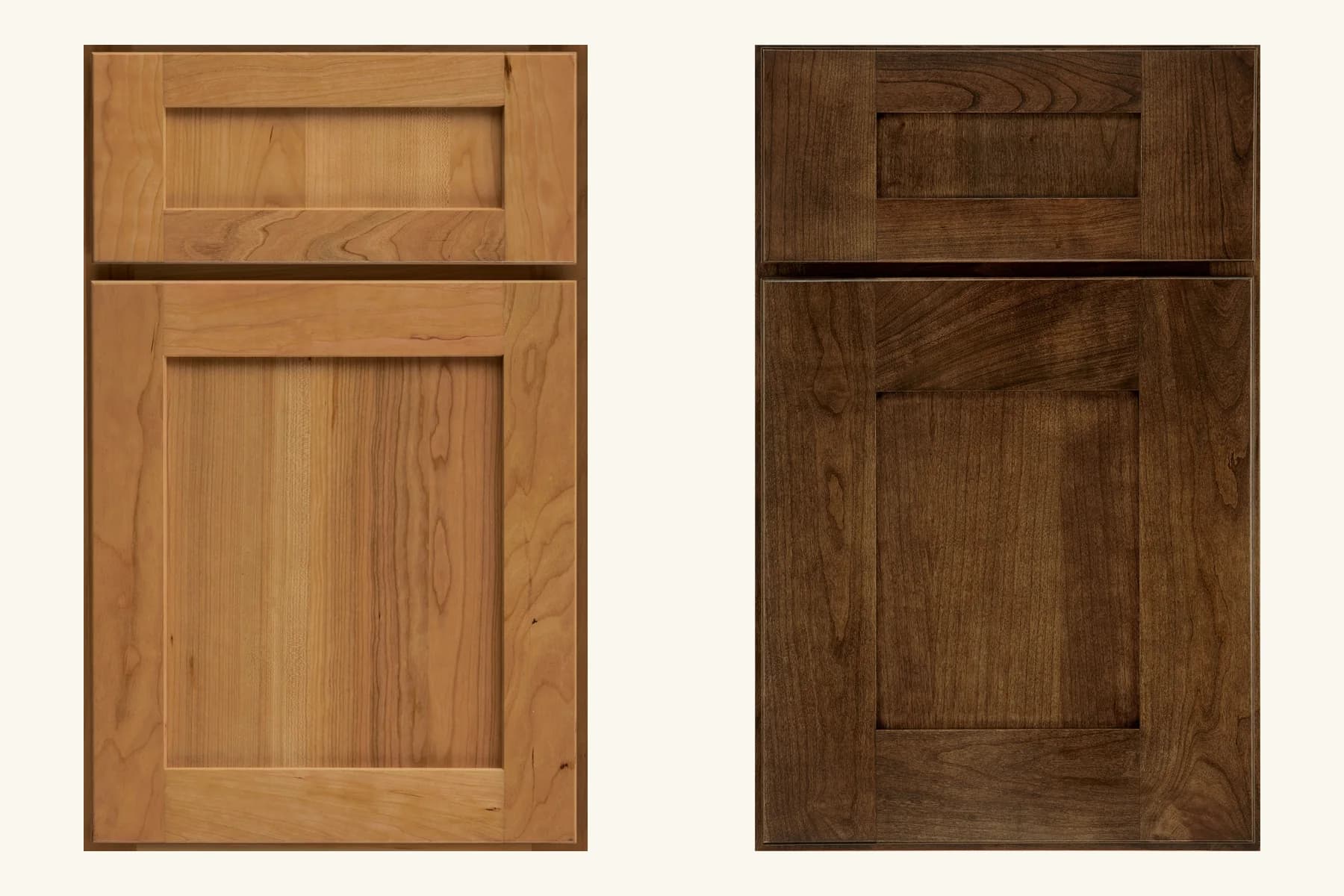
A shaker door is built from five pieces: two vertical stiles, two horizontal rails, and a flat center panel that floats inside the frame. The center panel has a slight recess but no raised molding or arch. The corners are square. The lines are clean and unfussy. The style traces back to 18th- and 19th-century Shaker furniture, where function and simplicity were the whole point.
Where They Win
Versatility. Shaker doors look right in nearly any kitchen: traditional, transitional, farmhouse, modern coastal, even contemporary if you keep the hardware minimal. Paint them white and they read clean and classic. Paint them deep navy or sage and they read current. Stain them in white oak and they read warm and natural. Few doors carry that kind of range.
They're also the easiest door to keep clean. The flat panel and shallow recess catch a fraction of the dust that raised-panel or arched doors do. A weekly wipe with a damp microfiber cloth keeps them looking new for years.
Where They Fall Short
Shaker is so popular it's bordering on default. If your goal is a kitchen that stands out from every Instagram post, shaker won't get you there on its own. You'll need a distinctive color, hardware, or layout choice to make the room feel personal.
Shaker also reads slightly traditional. In a strictly modern home, whether minimalist, high-rise, or contemporary architecture, flat-panel does a better job of matching the building's lines.
Price Tier
Mid. Shaker is widely produced across every major manufacturer, which keeps the price competitive. In semi-custom lines like Medallion, shaker often sits at or near the entry price point. A typical kitchen in shaker semi-custom lands in the $10,000 to $20,000 range for cabinets alone.
Flat-Panel Doors
What They Are
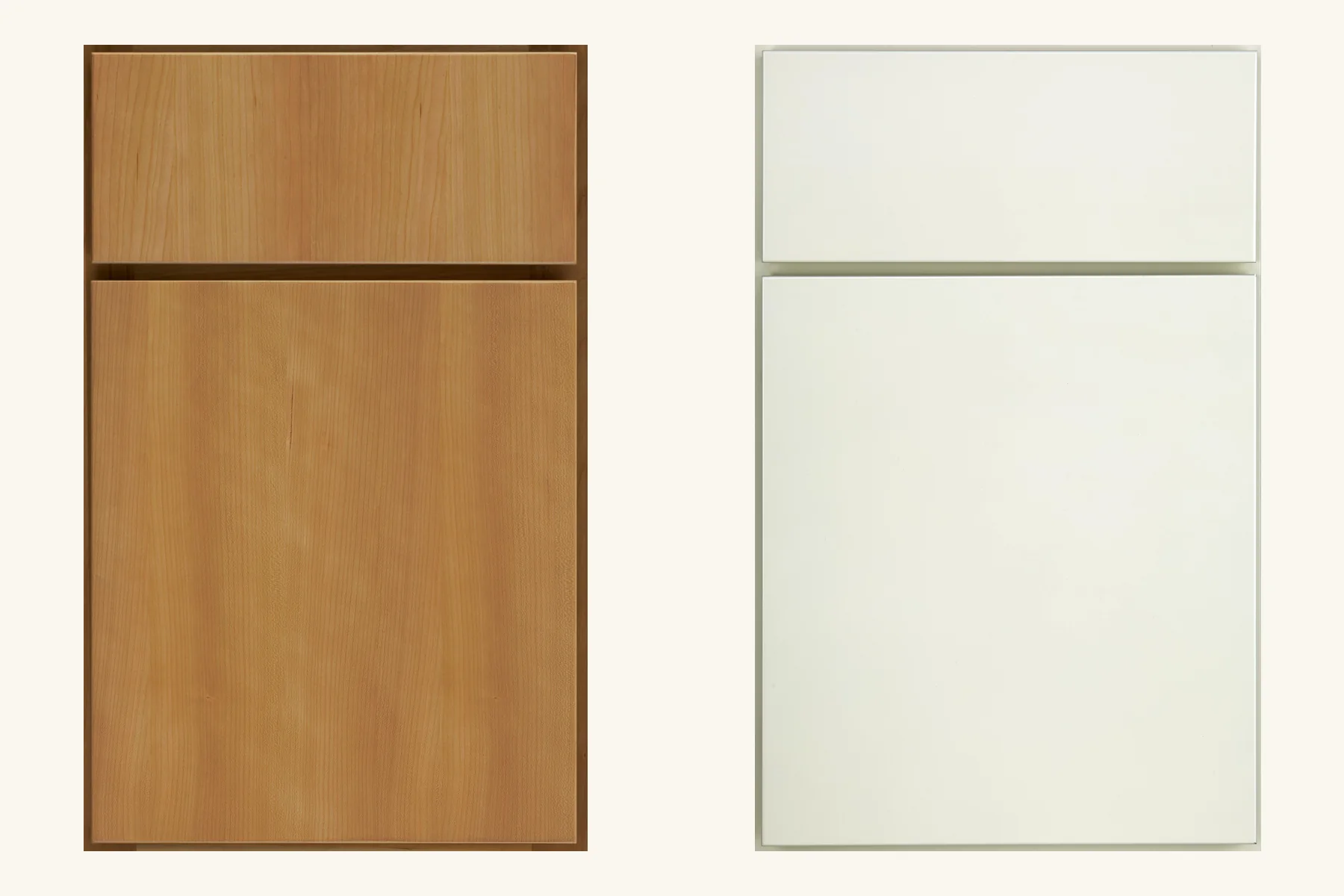
A flat-panel door, sometimes called a slab door, is exactly what it sounds like. One single, flat panel of material with no rails, stiles, or center recess. The face is smooth, clean, and uninterrupted. Edges can be hard 90-degree corners or slightly softened, depending on the manufacturer.
Where They Win
Modern, minimalist, and contemporary kitchens. Flat-panel is what gives European-style kitchens their crisp, almost architectural feel. The lack of detail puts all the visual weight on the wood grain, the color, or the finish, which is exactly the point in a modern design. A book-matched walnut flat-panel kitchen is one of the best-looking things in residential design, full stop.
Flat-panel is also the easiest door to clean. No grooves, no recess, no profile to trap grease. A wipe and you're done.
Where They Fall Short
Flat-panel can read cold in the wrong room. In a traditional home with crown molding, hardwood floors, and old trim, a flat-panel kitchen can feel like it landed from a different house. Style consistency matters.
Flat-panel also shows imperfections. Any warp, dent, scratch, or seam telegraphs through the smooth face the way a dent in a car door shows up on a glossy black paint job. Quality construction matters more here than on a busier door style.
Price Tier
Variable. A basic painted MDF flat-panel can be cheaper than shaker. A high-end thermofoil, lacquered, or veneered flat-panel, whether book-matched walnut, rift-cut oak, or high-gloss European lacquer, can push deep into custom territory. The face is simple. The materials and finish do the work.
Inset Doors
What They Are
Inset isn't a door profile. It's a mounting method. On an inset cabinet, the door sits flush inside the face frame, with a small reveal of frame visible all the way around the door. The door and frame surfaces are in the same plane. Compare that to overlay (full or partial), where the door sits on top of the frame and covers some or most of it.
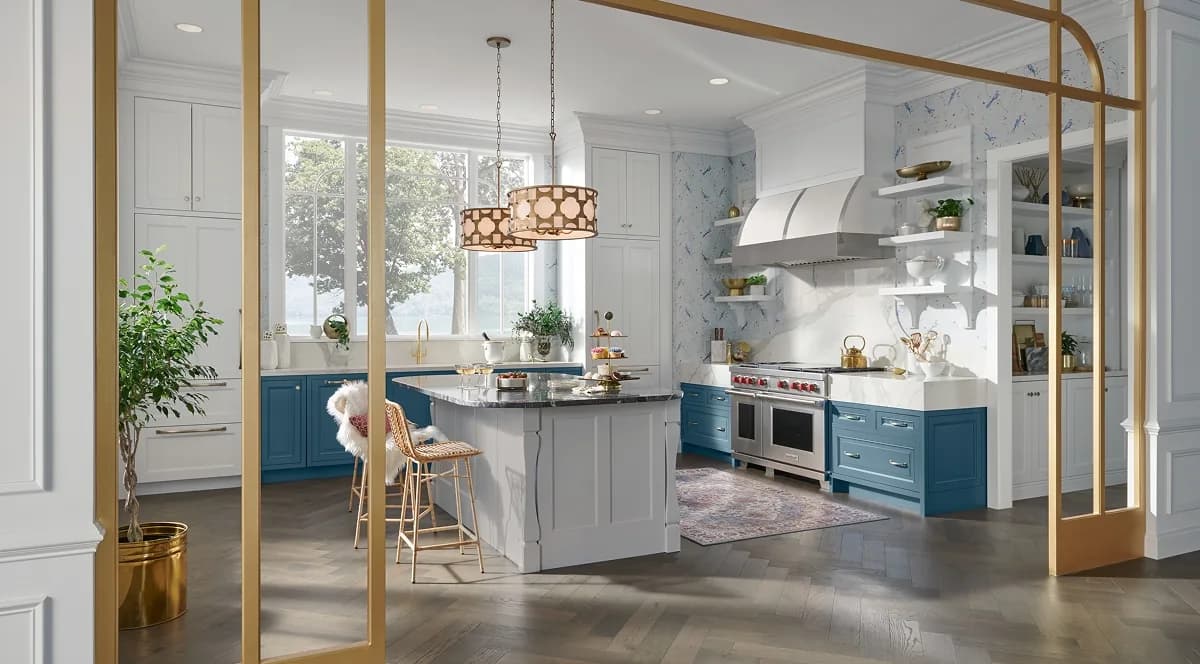
An inset door can have a shaker face, a flat-panel face, a raised-panel face, or any other profile. The inset part refers to how it sits, not what it looks like.
Where They Win
Inset gives a kitchen a hand-built, furniture-quality look. The shadow line where the door meets the frame creates visible craftsmanship. Inset cabinets evoke old custom millwork, fine furniture, and historic homes. In a high-end kitchen, inset is one of the strongest signals of quality.
Inset also lasts. Because the door is contained inside the frame, the hinges, frame, and door wear evenly. Done right, an inset kitchen lasts as long as the house.
Where They Fall Short
Cost and tolerance. Inset doors require precise tolerances: a 1/16-inch reveal all the way around the door is the standard. Hitting that tolerance consistently across an entire kitchen is harder than it sounds. Wood expands and contracts with seasonal humidity, and inset doors can stick or gap in Florida summers if the wood isn't properly conditioned. Cabinet makers who do inset well know how to compensate for it. Cheap inset is a disaster waiting to happen.
Inset also gives up a little interior space. Because the door is sized to fit inside the frame, the opening is slightly smaller than a comparable overlay cabinet. In a small kitchen with tight storage, the loss is real but usually trivial.
Price Tier
Premium. Inset construction adds 15 to 30 percent to the cost of a comparable overlay cabinet because of the tighter tolerances and additional labor. In semi-custom lines, inset is typically a paid upgrade. In custom work, it's a common spec for high-end kitchens.
Overlay: The Standard Mounting Method
Most cabinets sold today are overlay, not inset. There are two kinds. Full overlay covers nearly the entire face frame, with only a thin reveal of frame showing between doors. Partial overlay leaves more of the frame visible. Full overlay is the modern standard and reads cleanest. Partial overlay reads more traditional and is common on older or budget cabinetry.
Overlay is faster to build, more forgiving of wood movement, and cheaper than inset. Most semi-custom kitchens we install are full overlay shaker, a combination that hits the right balance of clean look, build quality, and price for most homes.
How to Pick the Right Door
Pick Shaker If
- You want a door style that works in nearly any kitchen, traditional to modern
- You're investing in a kitchen you'll keep for 15+ years and want a style that won't date
- You want easy cleaning without sacrificing style range
- You want a mid-priced door from a wide range of manufacturers
Pick Flat-Panel If
- Your home is modern, contemporary, or minimalist
- You want the wood grain, color, or finish to be the visual focus
- You value the cleanest possible lines and easiest cleaning
- You're willing to invest in higher-quality material and finish to avoid showing imperfections
Pick Inset If
- You want a hand-built, furniture-quality look
- Your budget allows for a 15 to 30 percent upcharge over overlay
- You're building or remodeling a forever home and want the strongest long-term look
- Your home's style, whether Craftsman, historic, traditional, or high-end transitional, calls for it
What About Beaded Inset, Raised-Panel, and Other Profiles?
Beaded inset adds a small beaded molding around the inside of the face frame, which catches light and gives the cabinet even more of an heirloom feel. It's a beautiful detail in the right kitchen: historic homes, Craftsman bungalows, traditional designs. It costs more than standard inset.
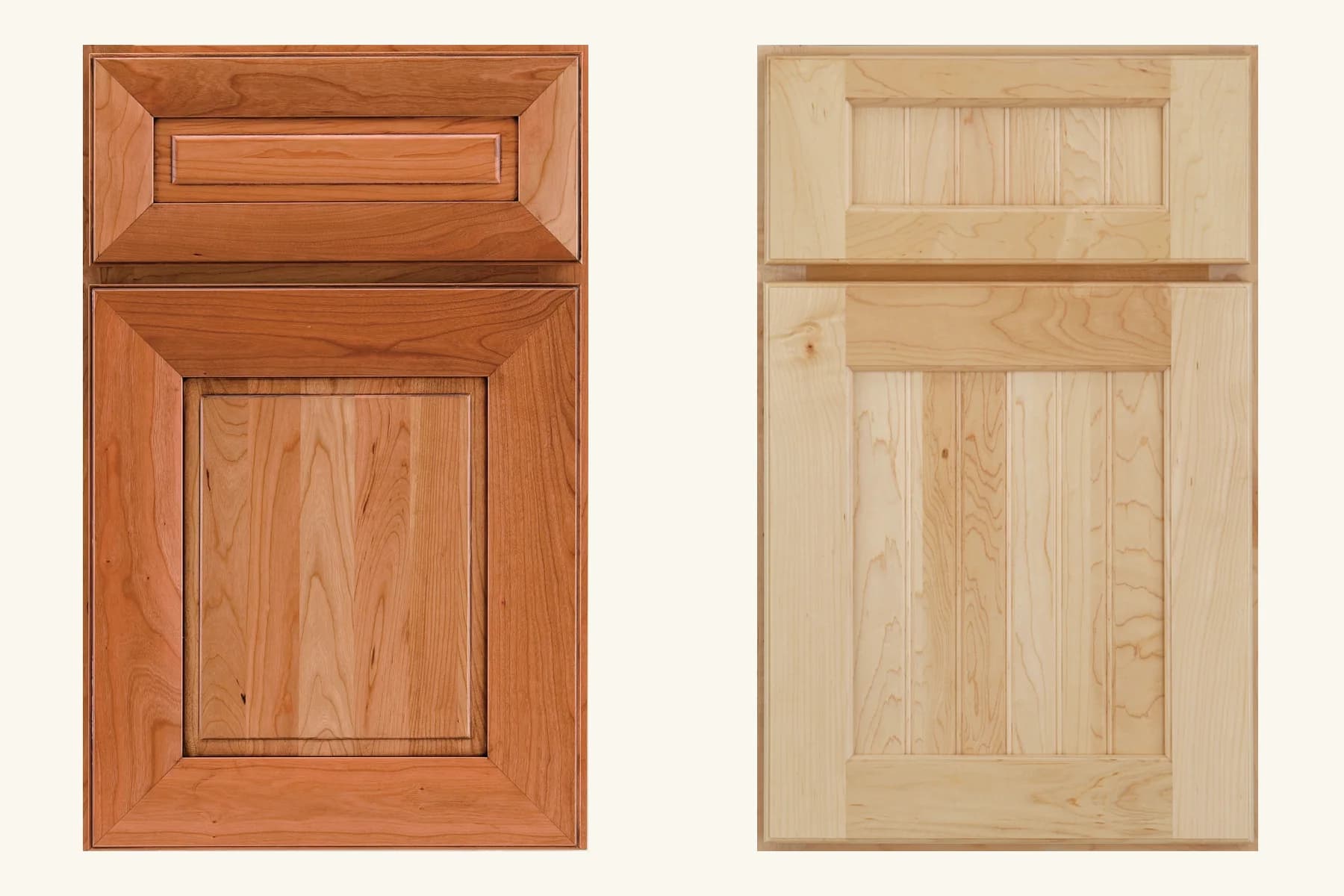
Raised-panel doors have a center panel that's milled higher than the surrounding rails and stiles, often with a beveled edge or arched top. They're the most traditional door style and read distinctly old-world. They've fallen out of favor in the last decade as the market has shifted toward cleaner lines, but they still belong in classic homes and traditional designs.
Beyond those, there are louvered doors, glass doors, mullion doors, and an endless catalog of specialty profiles. Most kitchens use one main door style throughout the room with occasional accent doors to add interest: a glass cabinet, a beaded inset hutch, or a mullion door over the sink.
Does the Door Match Florida's Climate?
Yes, and this matters more here than in drier climates. Solid wood doors expand and contract with humidity changes. In Polk County, where summer humidity runs 75 to 90 percent and winters can drop to 30 percent or lower, wood doors move noticeably across the seasons. A door that fits perfectly in February can stick in August.
Three things to ask your cabinet maker or dealer about humidity:
- Construction: engineered cores (MDF, plywood) move less than solid wood
- Finish: high-quality conversion varnish and catalyzed lacquer seal wood against humidity better than budget paints
- Hinges: six-way adjustable hinges let you fine-tune door fit seasonally if needed
Brands like Medallion build their semi-custom lines with these factors in mind. We typically recommend doors with engineered cores for Florida kitchens. They look like solid wood from the front and they don't fight the climate.
Matching Doors to Hardware
The door style sets the hardware vocabulary. Shaker doors take almost any hardware: knobs, pulls, traditional, modern. Flat-panel doors look best with finger pulls, edge pulls, or simple linear bar pulls; ornate hardware fights the clean face. Inset doors often look best with knobs or short bar pulls that don't overwhelm the visible frame around the door.
There's a sizing rule of thumb worth knowing. See our hardware sizing guide for help matching pull length to drawer width and door height. It applies to all three door styles.
What About Painted vs Stained?
All three door styles are available in paint, stain, and natural finishes. Shaker takes paint especially well because its flat surfaces give a clean, even finish. Flat-panel can go either way, but stained flat-panel doors put more pressure on the wood grain quality. Inset doors are typically painted or stained in finishes that highlight the visible frame.
Painted finishes show every fingerprint and brush mark. Stained finishes hide minor wear better and let the wood grain absorb visual interest. Both have their place. The choice is personal and depends on the overall style of the room.
Bottom Line
Shaker is the safe, smart, versatile choice for the vast majority of Polk County kitchens. Flat-panel is the right call for modern and minimalist homes. Inset is the upgrade for forever kitchens and homes whose style calls for hand-built craftsmanship.
There's no wrong answer here, only the wrong answer for your specific kitchen. Bring a few inspiration photos to the Winter Haven showroom and we'll walk you through samples side by side. The right door makes itself obvious once you see it next to your countertop and floor pick. Contact us to schedule a visit.
More cabinet tips
Have a project of your own?
Free in-home estimates across Polk County.