
Flooring Tips
Wood-Look Tile vs Hardwood vs Vinyl Plank: Which Wins in Florida?
Wood-look tile, hardwood, or vinyl plank in Florida? Tile is toughest, hardwood is warmest, vinyl is the easy middle. Here is who should pick what.
- Published
- October 10, 2026
- Author
- Blackburn's Interiors, Winter Haven, FL
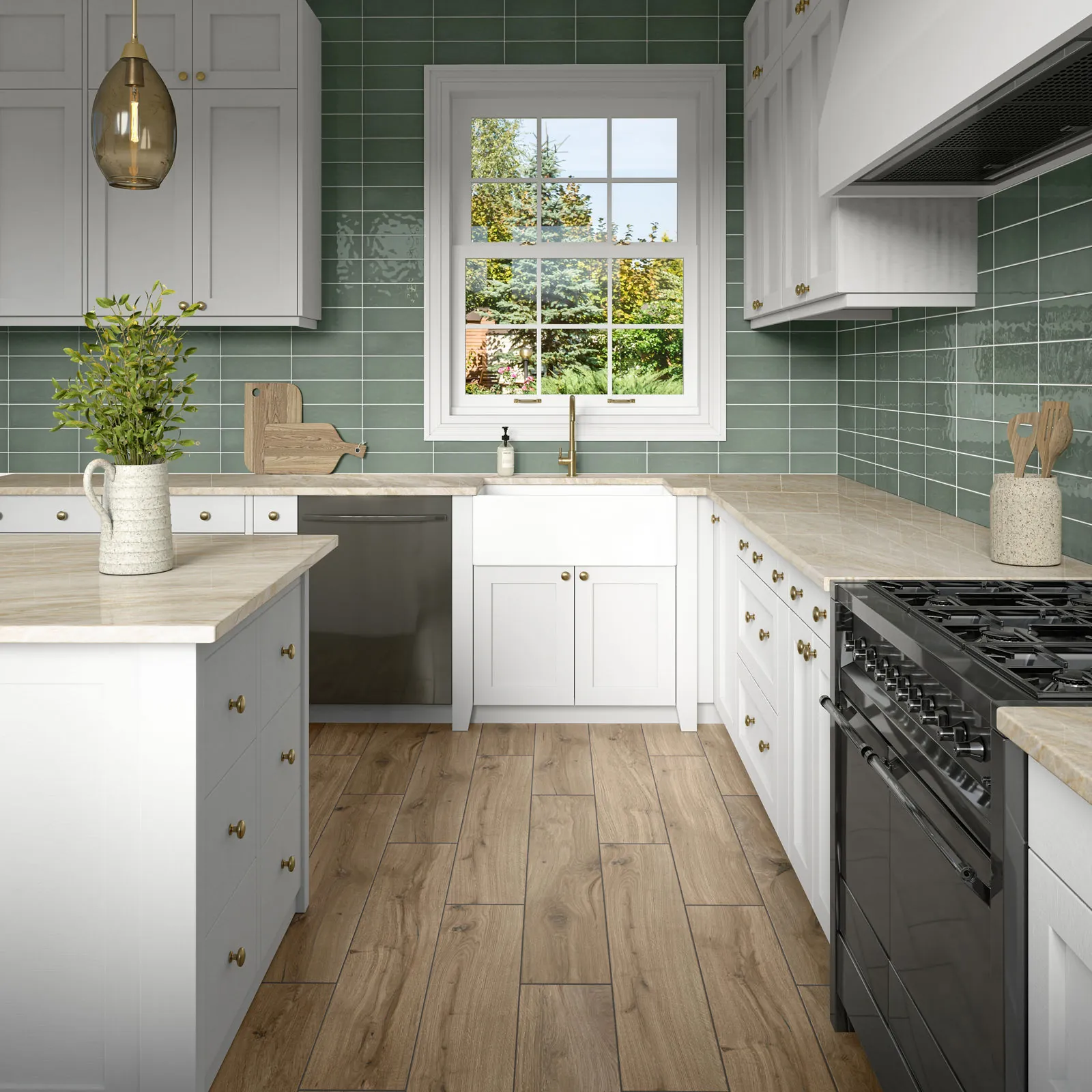
You want a wood floor, and you live in Polk County. That is where the trouble starts. Our summers soak the air from June into September. Our winters dry it back out. Real wood feels that swing and moves with it. So folks come into the showroom asking the same question. Should I get tile that looks like wood, real hardwood, or vinyl plank?
All three can look like a warm wood floor from across the room. Underfoot, and over the years, they behave very differently in Polk County homes. Here is a plain rundown of how each one holds up to Florida, and who should pick which.
The Quick Verdict
If you only read one section, read this. Then keep going for the why.
- Wood-look porcelain tile is the toughest of the three for a humid climate. It is waterproof, pest-proof, and it does not move with the weather. The trade is grout lines, a cold and hard feel underfoot, and a pricier install.
- Solid and engineered hardwood give you real warmth and, on solid boards, the option to sand and refinish. But wood moves in humidity, so it needs the most care in Florida.
- Luxury vinyl plank is waterproof like tile, warmer and softer than tile, and the easiest of the three to install. The catch is a wear layer that can dent under hard use.
Wood-Look Porcelain Tile: The Toughest for Florida
Wood-look porcelain tile is a porcelain plank printed and textured to look like a wood board. From a step away, most people cannot tell. Underfoot and over time, it is all tile, and that is the point.
Porcelain is dense. Industry standards define porcelain tile as a tile that absorbs 0.5% water or less. That low number is why it shrugs off spills, humidity, and a mopped floor instead of soaking them up. Daltile, one of the lines we carry, markets its wood-look porcelain as waterproof, stainproof, and scratch resistant, and rates it for kitchens, mudrooms, and even bathroom floors and showers.
Two more Florida wins. Termites and other pests cannot eat porcelain, and subterranean termites are a real problem in Polk County. Heat and sun do not warp it or fade it, so it works in a sun-facing room or next to a lanai. It never needs sanding, re-staining, or re-sealing.
How tough is the surface? Tile hardness is graded on the PEI scale, which runs from 1 to 5 and measures how well the glaze resists wear. A PEI 3 handles normal home foot traffic. A PEI 4 or 5 is built for high-traffic and light commercial floors. A wood-look porcelain made for floors usually lands at the top of that scale. We confirm the exact rating on the tile you choose.
Now the trade-offs, because tile has them. It has grout lines, which means more cleaning and a look that reads as tile up close. It feels cold and hard underfoot, though in Florida that cool surface is often a plus on a hot afternoon. And it costs the most to install of the three, because a good tile job means leveling the floor, setting each piece, and grouting. Want the full split between porcelain and standard ceramic? Our guide on porcelain versus ceramic lays it out.
Hardwood: Real Warmth That Moves With the Weather
Solid hardwood is the real thing. It is warm underfoot, it ages into a rich look, and a solid board can be sanded and refinished several times over its life. Engineered hardwood puts a real wood veneer over a stable plywood core, which handles moisture better than a solid board but usually cannot be refinished as many times.
Here is the Florida catch. Wood is a natural material, and it moves. It swells when the air is damp and shrinks when it dries. Wood flooring is milled and kiln-dried to a low moisture content, well below the humidity we live in most of the year, so in Florida wood tends to want to expand, not shrink.
That movement is manageable, but it takes respect. Boards need to acclimate in the house before install. Installers plan expansion gaps at the walls, and wider planks move more than narrow ones, so they need more room. Most of Central Florida is built on a concrete slab, so the installers we train and certify also check the slab for moisture before a single board goes down. And your air conditioning is doing quiet work all year, holding indoor humidity steady enough to keep the floor happy.
None of that rules hardwood out. Plenty of Winter Haven and Lakeland homes have beautiful wood floors. It just means hardwood belongs in the interior, climate-controlled rooms of the house, not a lanai or a room that swings with the weather. If you are torn between wood and vinyl, our hardwood versus luxury vinyl plank in Florida breakdown goes deeper.
Luxury Vinyl Plank: Waterproof and Easy on the Feet
Luxury vinyl plank, or LVP, is a printed vinyl plank with a waterproof core. It splits the difference between the other two. It is waterproof like tile, but warmer and softer underfoot, and it is the easiest of the three to install, often clicking together as a floating floor.
The number that matters most on LVP is the wear layer. That is the clear top coat that takes the daily beating, and it is measured in mils. Wear layers generally run from about 6 to 30 mils. For a home, many pros suggest 12 to 20 mils as a floor, and 20 mils or more if you have pets, kids, or a busy household. We confirm the wear layer on the exact product you pick.
The core matters too. A denser stone-based core, called SPC, resists dents better and feels firmer. A wood-composite core, called WPC, feels a little softer and warmer underfoot but dents a bit easier. That is the main trade inside the LVP world, and it comes down to how hard the room gets used.
LVP's weak spot is denting. A heavy appliance leg or a dropped cast-iron pan can leave a mark that tile would shrug off. It also cannot be refinished like solid wood. When it wears out, you replace it. For the price and the peace of mind on water, a lot of families decide that is a fair deal.
What About Cost?
Prices move with the product, the room, and the subfloor, so treat these as rough 2026 ballparks, not a quote. Installed, luxury vinyl plank often runs around $4 to $13 a square foot. Engineered hardwood tends to land near $7 to $14, and solid hardwood higher, around $10 to $20. Tile falls in the middle to upper range, roughly $8 to $15 for porcelain installed, because the labor to level, set, and grout is real work and often runs $5 to $8 a square foot on its own.
Those are ranges, not promises. We give you a firm number on the free measure, once we see the room and the floor underneath it.
So Who Should Pick What?
Here is how we usually guide the choice.
- Pick wood-look porcelain tile if you want the toughest, most waterproof and pest-proof floor, and you do not mind grout lines or a firm feel underfoot. It is the safe answer for a bathroom, an entry, a laundry room, or a bright sun-facing space.
- Pick hardwood if you want real wood warmth and the long-term value it brings, and you are putting it in interior, air-conditioned rooms where you can keep the humidity steady.
- Pick luxury vinyl plank if you want waterproof protection with a softer, warmer feel, an easier install, and a friendlier price, and you can live with the chance of a dent under heavy use. It is a favorite for busy family homes with kids and pets.
Frequently Asked Questions
Is Wood-Look Tile Really Waterproof?
Yes. Porcelain tile absorbs 0.5% water or less by the industry standard, so the plank itself does not take on water. The grout and the subfloor still need a proper install to keep water from getting underneath, which is why the setting work matters as much as the tile.
Will Hardwood Warp in a Florida House?
Not if it is installed right and kept in a climate-controlled room. Wood moves with humidity, so it needs to acclimate before install, needs expansion gaps, and needs your AC holding a steady indoor humidity. Put it in an interior room, not a lanai or a space that swings with the weather, and it can last for decades.
Does Vinyl Plank Feel Cheap Underfoot?
Good LVP does not. A thicker wear layer and a solid core give it a firm, quiet feel, and it is warmer and softer than tile. The feel and the durability track with the wear layer and the core, which is why we point you to those two numbers before the look.
Which One Is Best Near Water in a Bathroom?
For a full bathroom or a shower floor, wood-look porcelain tile is the strongest pick, since it is rated for wet areas. Luxury vinyl plank works well in a half bath or a laundry room. Solid hardwood belongs away from standing water.
The Bottom Line
All three can give you the warm look of a wood floor. Porcelain tile is the toughest against Florida's water, heat, and termites, with grout and a firm feel as the trade. Hardwood is the real, warm, refinishable original, as long as you keep it in a climate-controlled room. Vinyl plank is the easy middle, waterproof and comfortable, if you can live with a possible dent. There is no single winner. There is a right one for your room.
We carry all three, so you are not picking blind. Come see and feel the samples side by side in the Winter Haven showroom, or contact us for a free measure and we will bring them to you. Ask about financing, offered with approved credit, if you want to spread the project out over time. Third generation, family-owned since 1962, and grateful you thought of us.
Sources
- Tile Council of North America, Porcelain vs Non-Porcelain FAQ (the definition of porcelain tile as absorbing 0.5% water or less by the ASTM C373 test, the basis for its waterproof claim)
- Daltile, Wood Look Tile (wood-look porcelain being waterproof, stainproof, and scratch resistant, and rated for kitchens, mudrooms, and bathroom floors and showers)
- Angi, What Is a PEI Rating? (the PEI 1 to 5 abrasion scale, PEI 3 for moderate residential traffic and PEI 4 to 5 for high-traffic and light commercial floors)
- Access Floor Store, LVP Wear Layer Thickness Chart (LVP wear layers running from about 6 mils up to 28 mils and beyond for commercial, with roughly 12 mils a residential baseline and 20 mils for pets and heavy traffic)
- East Coast Flooring, NWFA Installation Guidelines (wider hardwood planks moving more than narrow ones and needing larger expansion gaps)
- Forbes Home, Cost To Install Vinyl Plank Flooring (the approximate 2026 installed cost range for luxury vinyl plank (the hardwood and tile ranges are general ballparks, not from this source))
More flooring tips
Have a project of your own?
Free in-home estimates across Polk County.