
Flooring Tips
Should I Remove Tile Before Installing Vinyl Plank?
Should you remove tile before installing vinyl plank? Often no. Sound tile can stay under glue-down plank. Here is when it stays and when it goes.
- Published
- November 9, 2026
- Author
- Blackburn's Interiors, Winter Haven, FL
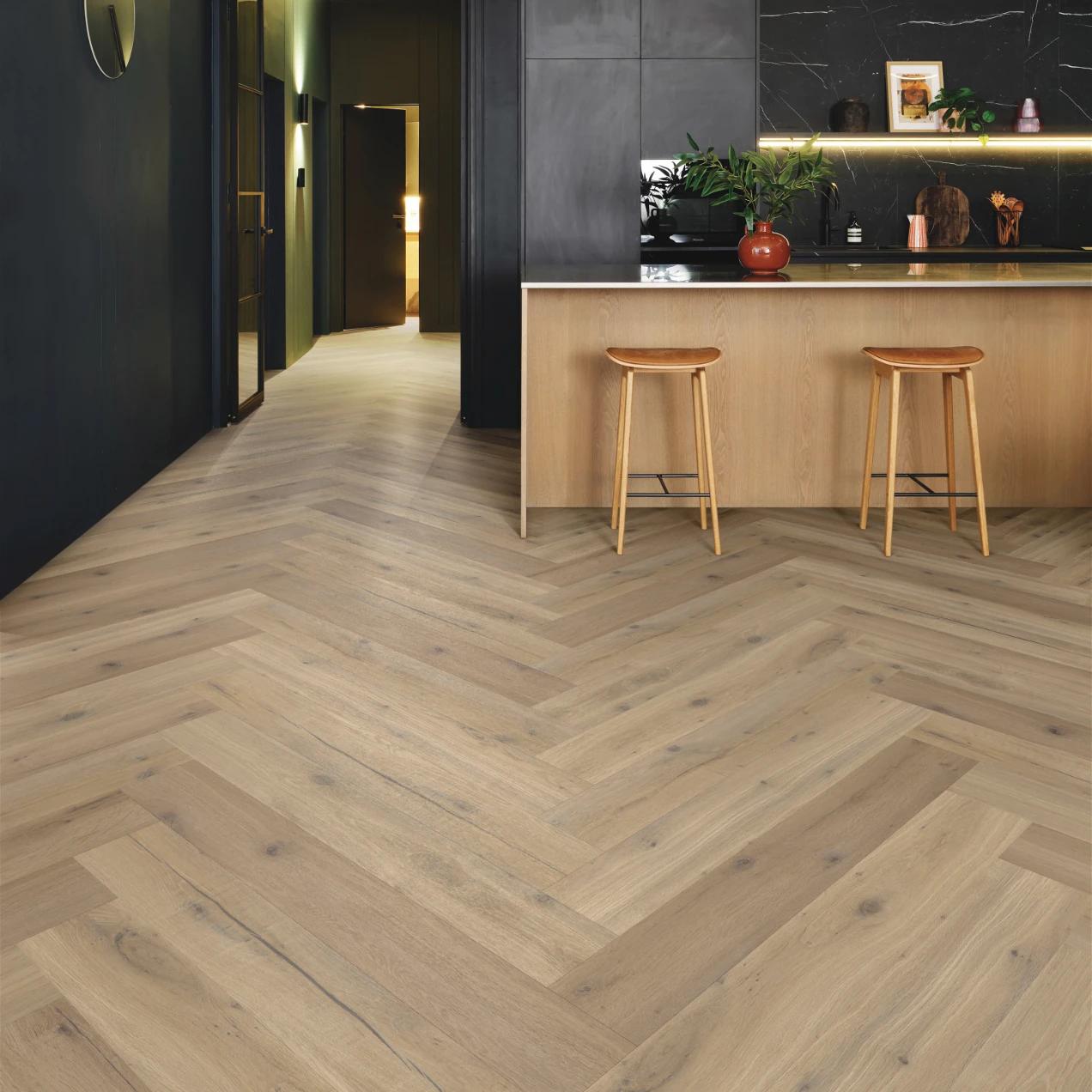
Should I remove tile before installing vinyl plank? If your home has tile in every room, that is the first question on your list. Tearing it all out sounds like the proper way to do it. It is also loud, dusty and slow. Plenty of Polk County homes, including many in Lake Ashton, have tile from the front door to the lanai, and we hear this question a lot.
We are Blackburn's Interiors, a family-owned flooring store in Winter Haven since 1962, and we have put luxury vinyl plank over a lot of tile. Here is how we decide whether yours stays or goes.
The Short Answer
Often, no. If your tile is sound, we usually leave it in place and glue the new plank right over it. We fix the bad spots, skim the grout lines smooth and glue down the plank. It typically adds only about an eighth of an inch, so doors and dishwashers usually still clear. The tile comes out when too much of it is cracked, hollow, loose or uneven.
- Keep the tile when it is solid and well bonded, with only a few bad tiles we can pull and fill.
- Pull the tile when a big share of it is cracked, hollow, loose or uneven.
- Floating plank over sound tile works too, as long as doors, cabinets and appliances have room for the extra height.
When Vinyl Plank Over Tile Works
The best case is a home with tile throughout that is still tight to the slab. We see that a lot in Lake Ashton and around Winter Haven and Lake Wales. The tile is solid. The owners are simply ready for a new look. In that home, the old tile becomes the base for the new floor.
The manufacturers agree that this can work. Karndean's glue-down installation guide says you may install directly over one layer of well-adhered ceramic tile once it is properly prepared. Shaw's direct glue guide calls for ceramic tile grout joints to be filled with a leveler before its resilient floor goes down. Here is how we prep it:
- We check the floor for cracked, hollow, loose or uneven tiles. Those come out, and we fill the spots so the base is solid.
- We skim the floor with a cement-based skim coat, such as ARDEX Feather Finish or UZIN NC 886. It fills the grout lines.
- We glue the plank down right over that smooth base. We often use Shaw glue-down plank or Karndean.
The skim coat is the step that matters most. A glue-down plank is thin, and it follows the shape of the floor under it. Skip the skim and the grout lines can telegraph through, which means you see a faint grid in your new floor. Karndean's guide asks for every grout line to be filled with no show-through, and it notes a second skim may be needed to smooth over old grout lines.
Why We Usually Glue Down Over Tile
Floating works over tile too. Karndean says its rigid core can be floated over most existing hard floors, and we float plank over sound tile when height is not an issue. The catch is height.
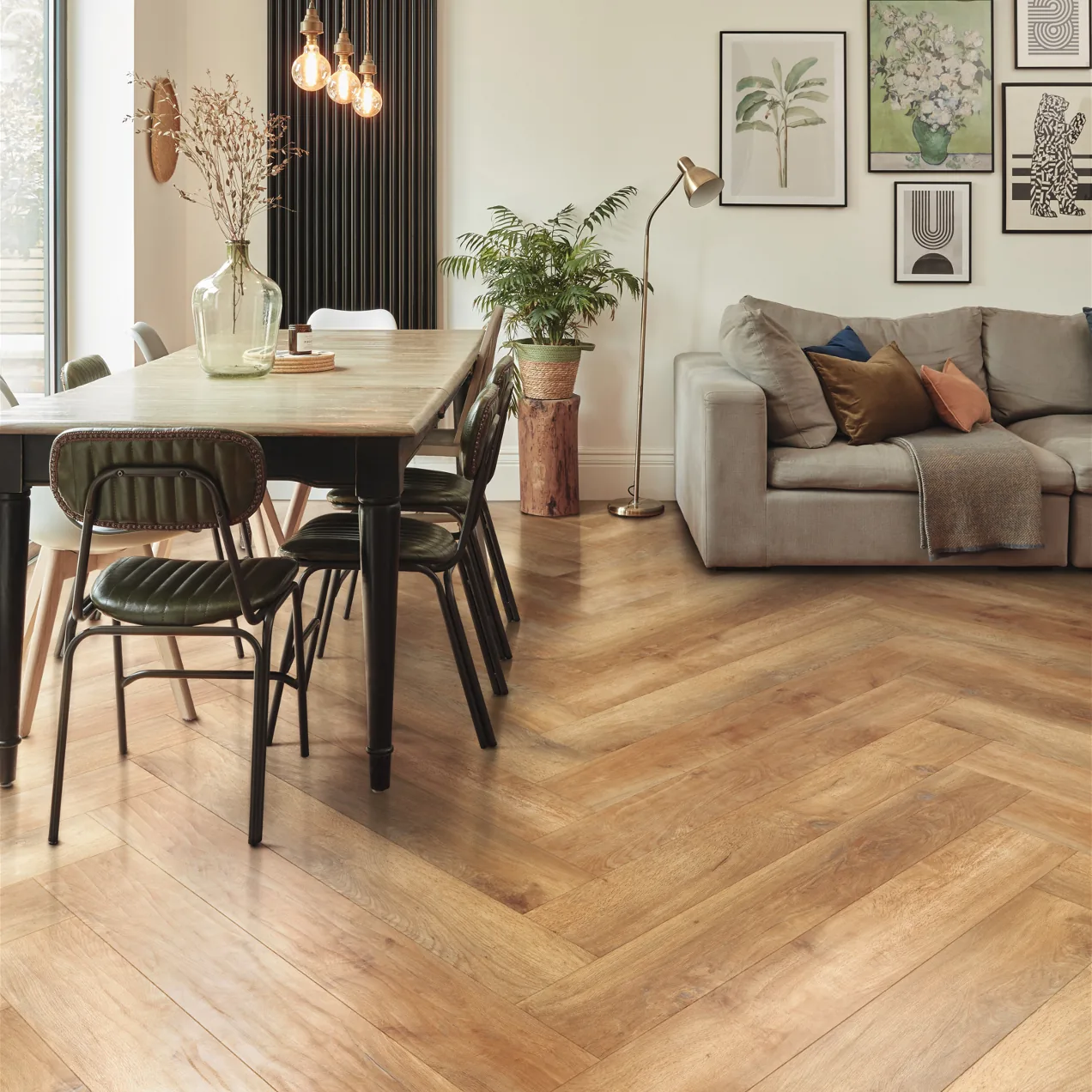
Any plank laid over tile raises the floor by its own thickness. A floating rigid-core plank is thicker than a thin glue-down plank, so it raises the floor more. Where doors, cabinets or appliances are tight, that can cause trouble. A glue-down plank over skimmed tile typically adds only about an eighth of an inch. That small rise is why we usually glue down, and why doors and dishwashers usually need nothing extra.
Glue-down brings a few other perks. Karndean notes its glue-down floors can run through large spaces without expansion gaps, a single damaged plank can be lifted and replaced, and the planks can be cut and laid in patterns like herringbone.
When the Tile Has to Come Out
Any cracked, hollow, loose or uneven tile has to come out, and the floor under the new plank has to be structurally sound. When that is a handful of tiles, we pull them and fill the spots. When it is a big share of the floor, keeping the rest stops making sense, and tear-out is usually the better path. We will tell you which one your floor is on the free measure.
Doors, Baseboards and the Dishwasher
Height is the part most people do not think about until the install, and it works in both directions.
Go over the tile with glue-down plank and the floor rises about an eighth of an inch. Doors and the dishwasher usually still clear. That is the easy direction.
Tear the tile out and the floor can drop. Tile set in thinset often stands 3/8 to 1/2 inch tall, and a glue-down plank is much thinner. So the new floor can sit lower than the old one. That can leave a gap under the baseboards and door jambs that now come up short. Fixing it can mean new baseboards and new or reworked door jambs.
One way around that is a thicker floating plank, like COREtec, once the tile is gone. It takes back more of the lost height. With the tile out, the plank floats right over the slab.
Tear-Out on a Florida Slab
Many Polk County homes sit on a concrete slab, and the tile is stuck to it with thinset. Breaking it up is loud work, and a lot of our customers would rather not live through the noise.
It is messy too. Thinset dust is very fine. We take every precaution we can, but some of that dust still finds its way into the nooks and crannies of the house.
Then comes the prep. Pulling tile leaves thinset stuck to the slab. A glue-down plank shows what is under it, so the thinset has to come off and the slab has to be prepped flat again so nothing telegraphs through. Shaw's glue-down guide sets a flatness limit of 1/8 inch in 6 feet on concrete. For underlayment and slab moisture basics, see what goes under vinyl plank flooring.
Cost and Time, Side by Side
| What changes | Go over the tile | Tear the tile out |
|---|---|---|
| Noise and dust | Far less, since the tile stays put | Loud work and fine thinset dust |
| Floor prep | Pull bad tiles, fill, skim grout lines for glue-down | Remove thinset, then re-prep the slab |
| Floor height | Rises about 1/8 inch with glue-down, more with floating | Can drop with thin glue-down; less with thicker floating plank |
| Time on 1,000 sq ft | About a week less | About a week more |
| Plank choices | Glue-down, or floating when height allows | Glue-down or floating plank |
We do not put a price on this page, because every house is different. But the cost follows the work. Tear-out adds demolition, hauling, extra slab prep and sometimes new baseboards or door jambs. Going over sound tile skips most of that. The time savings depend on the square footage. On a typical 1,000 square foot job, skipping tear-out can save about a week. For the rest of the schedule, see how long flooring installation takes.
How We Decide on Polk County Jobs
On the free measure, we walk every room with tile and check a few things:
- Cracked, hollow, loose or uneven tiles, and how many there are.
- How flat the floor is overall, so we know how much skimming it needs.
- Door jambs, baseboards and the dishwasher, so we know what a height change will touch.
If the tile is sound, our advice is usually to go over it with glue-down plank, often from Shaw or Karndean, or with a floating plank when the heights allow. If it is not, we pull it and talk through glue-down or floating plank for the new floor. Either way, the installers we train and certify do the prep, because prep is what lets a glue-down floor lie flat and smooth.
Questions We Get About Vinyl Plank Over Tile
Will the grout lines show through vinyl plank?
Not when the grout lines are skimmed smooth first, sometimes with a second coat. A glue-down plank follows the surface under it, so we fill the grout lines with a cement-based skim coat before the plank goes down. Skip that step and you can see the grid.
Can you float vinyl plank over tile?
Yes, over sound tile, as long as height is not an issue. A floating rigid-core plank raises the floor more than glue-down, so we check doors, cabinets and appliances first. When they are tight, we glue down, which typically adds only about an eighth of an inch.
How much time does skipping tear-out save?
It depends on the square footage. On a typical 1,000 square foot job, going over sound tile can save about a week, and you skip the noise and the thinset dust.
The Bottom Line
If your tile is sound, you can usually skip the tear-out. We pull and fill the bad tiles, skim the grout lines and usually glue the new plank right over it, adding about an eighth of an inch. If too much of the tile is cracked, hollow, loose or uneven, it comes out, and we plan for the height change before we start. Come walk the samples at our Winter Haven showroom or request a free estimate, and ask about our special financing available, subject to credit approval.
Sources
- Karndean Designflooring, Gluedown Installation Guidelines (USA) (installing glue-down plank directly over one layer of well-adhered, properly prepared ceramic tile, with every grout line filled so nothing shows through and a second skim if old grout lines need it)
- Shaw Floors, Installation Guidelines for Residential Resilient Direct Glue (filling ceramic tile grout joints with a leveler before glue-down resilient flooring, and the 1/8 inch in 6 feet flatness limit for concrete)
- ARDEX Americas, ARDEX Feather Finish Product Data (Feather Finish as a cement-based skim coat approved over ceramic tile on concrete to smooth the surface before a new floor covering)
- Karndean Designflooring, Gluedown Installation Format (glue-down floors fixed with adhesive, laid in patterns, run through large spaces without expansion gaps, and repairable one plank at a time)
- Karndean Designflooring, Which Format and Color (rigid core plank that can be floated over most existing hard floors)
More flooring tips
Have a project of your own?
Free in-home estimates across Polk County.