
Flooring Tips
Porcelain vs Ceramic Tile: Differences & When to Choose Each
Compare porcelain and ceramic tile across durability, cost, and best uses. Learn which one fits your kitchen, bath, or remodel project.
- Published
- February 14, 2026
- Author
- Blackburn's Interiors, Winter Haven, FL
- Updated
- September 7, 2026
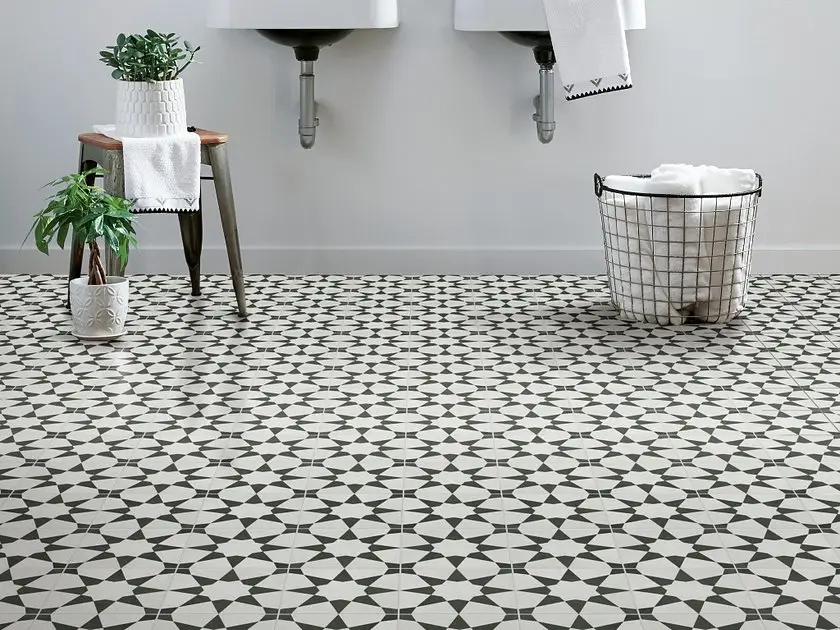
We get this question from our clients, and we get it a lot. Choosing the right tile for your home is a big decision, especially when you're thinking about appearance, durability, and cost.
Many homeowners compare porcelain and ceramic when remodeling kitchens, bathrooms, or living areas. Both look great, last a long time, and are easy to find. But they work differently in different situations.
What Is Porcelain Tile?
Porcelain tile is a heavy-duty ceramic made from refined clay and fired at extremely high temperatures. This process makes the tile harder, less porous, more moisture-resistant, and more durable. Porcelain can be glazed or unglazed and often looks like natural stone, marble, or even hardwood with amazing realism.
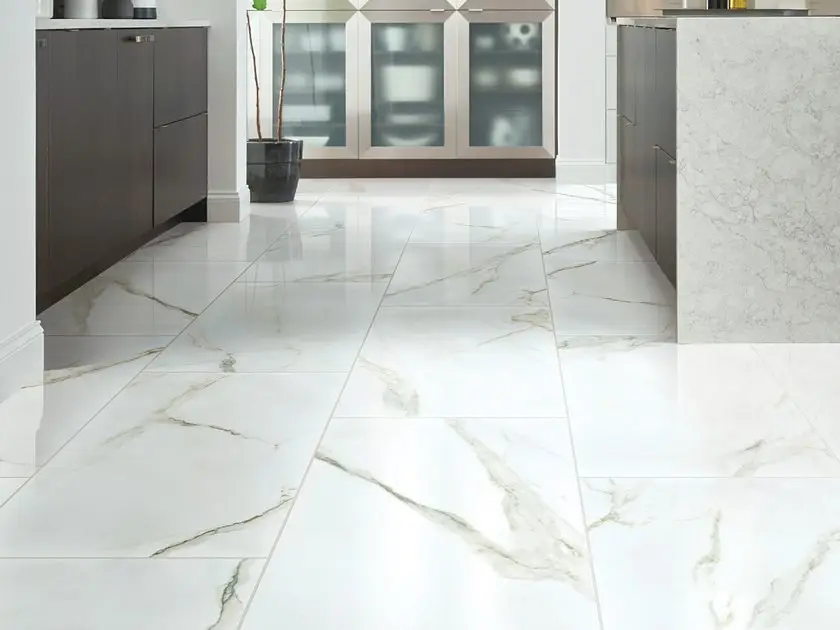
Pros
- Highly durable
- Nearly waterproof
- Ideal for high-traffic areas
- Works indoors and outdoors
- Very long lifespan
Cons
- Higher purchase cost
- Harder to cut (can mean more expensive installation)
- Heavier and more rigid
- Feels colder underfoot
What Is Ceramic Tile?
Ceramic tile is made from natural clay fired at lower temperatures than porcelain. It's lighter and slightly more porous, but still strong enough for everyday home use.
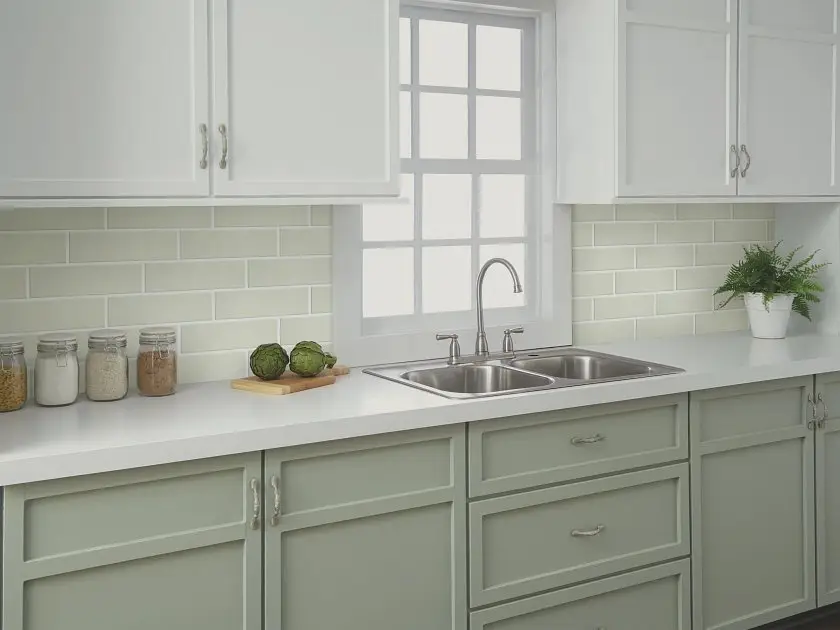
Pros
- Very budget-friendly
- Easier to cut and install
- Wide design variety
- Great for walls, backsplashes, and low-traffic floors
Cons
- Not as dense as porcelain
- Less water-resistant (may need sealing)
- Can chip more easily
- Not ideal outdoors
Side-by-Side Comparison
From our experience installing thousands of tile projects across Polk County, porcelain consistently performs better in high-moisture areas and busy spaces. Ceramic shines in areas where budget and design flexibility matter most.
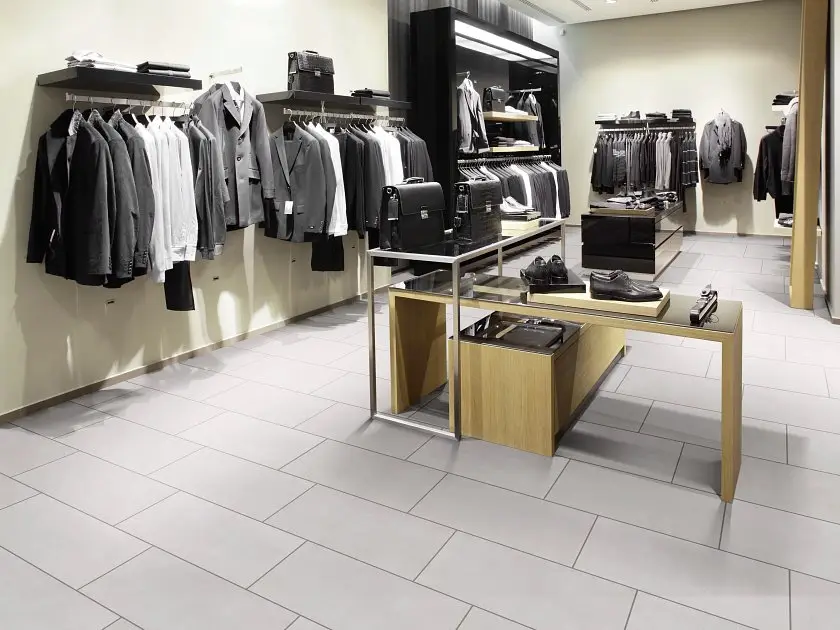
- Durability: Porcelain wins. Extremely durable and scratch-resistant
- Water resistance: Porcelain absorbs less than 0.5%; ceramic is more porous
- Maintenance: Slight edge to porcelain. Very low maintenance
- Installation: Ceramic is easier to cut and install, better for DIY
- Cost: Porcelain $3–$12 per sq ft; ceramic $1–$5 per sq ft
Porcelain installation is typically 10–20% higher because the material is harder to cut and requires more time per tile.
How Can You Tell Which Is Which?
Many homeowners can't tell the difference by looking at the surface alone. The most reliable ways:
- Check the water absorption rating: porcelain absorbs less than 0.5%
- Look at the tile body: through-body porcelain has color running all the way through
- Compare weight: porcelain tiles are noticeably heavier
- Look for the PTCA certification mark on the box
- Ask your installer or supplier to confirm
Best Uses for Each
Porcelain Is Ideal For
- Bathrooms
- Kitchens
- Laundry rooms
- Hallways
- Basements
- Outdoor patios
- Commercial spaces
Ceramic Is Excellent For
- Backsplashes
- Walls
- Low-traffic areas
- Bedrooms
- Decorative designs
What Are Rectified Tiles?
Rectified tiles are ceramic or porcelain tiles that get one more step after firing. The maker machines every side, usually with precision saws and grinders, so the face dimension comes out more exact. No published standard sets a tolerance number for rectified tile. It runs tighter than calibrated tile, and your supplier can confirm the spec on the line you pick.
Why it matters: rectified tiles allow installers to use much tighter grout joints and achieve a sleek, modern look that isn't possible with non-rectified material. They need a flat subfloor and are harder to install. The result is a thin grout line and an upscale finish.
The Bottom Line
Porcelain wins on performance: durability, water resistance, indoor and outdoor flexibility, premium look. Ceramic wins on value: lower cost, easier installation, more decorative wall options. Contact us to walk through samples in our showroom.
Porcelain = performance. Ceramic = value. Both have a place in nearly every home.
Sources
- Tile Council of North America (TCNA), Porcelain Tile Certification (the 0.5 percent or less water absorption definition of porcelain tile as measured by ASTM C373, and the PTCA certification mark a buyer can look for on the box)
- Tile Council of North America (TCNA), Rectifying the Misconceptions Associated with Rectified Tile and Narrow Grout Joint Installations (rectified tile having all of its sides mechanically finished, most commonly with precision saws and grinders, and a flattened substrate being critical to any narrow grout joint installation)
- Tile Council of North America (TCNA), A World of Difference (rectification being a precise mechanical grinding of the edges after firing, and the ISO 13006 definition of porcelain tile at 0.5 percent water absorption or less)
- Marazzi USA, Frequently Asked Questions (a tile manufacturer stating the same under 0.5 percent water absorption threshold for porcelain on its own site)
- Crossville, Understanding the Difference Between Rectified and Calibrated Porcelain Tile (rectified tile being fired and then ground to size, and its exact edges allowing smaller grout lines down to a manufacturer-stated minimum joint width)
More flooring tips
Have a project of your own?
Free in-home estimates across Polk County.