
Flooring Tips
Vinyl Plank in a Non-Climate-Controlled Home (Florida)
Closing up your Florida home for the summer? What vinyl plank makers allow with the AC off, floating vs glue-down, and where to set the thermostat.
- Published
- November 23, 2026
- Author
- Blackburn's Interiors, Winter Haven, FL
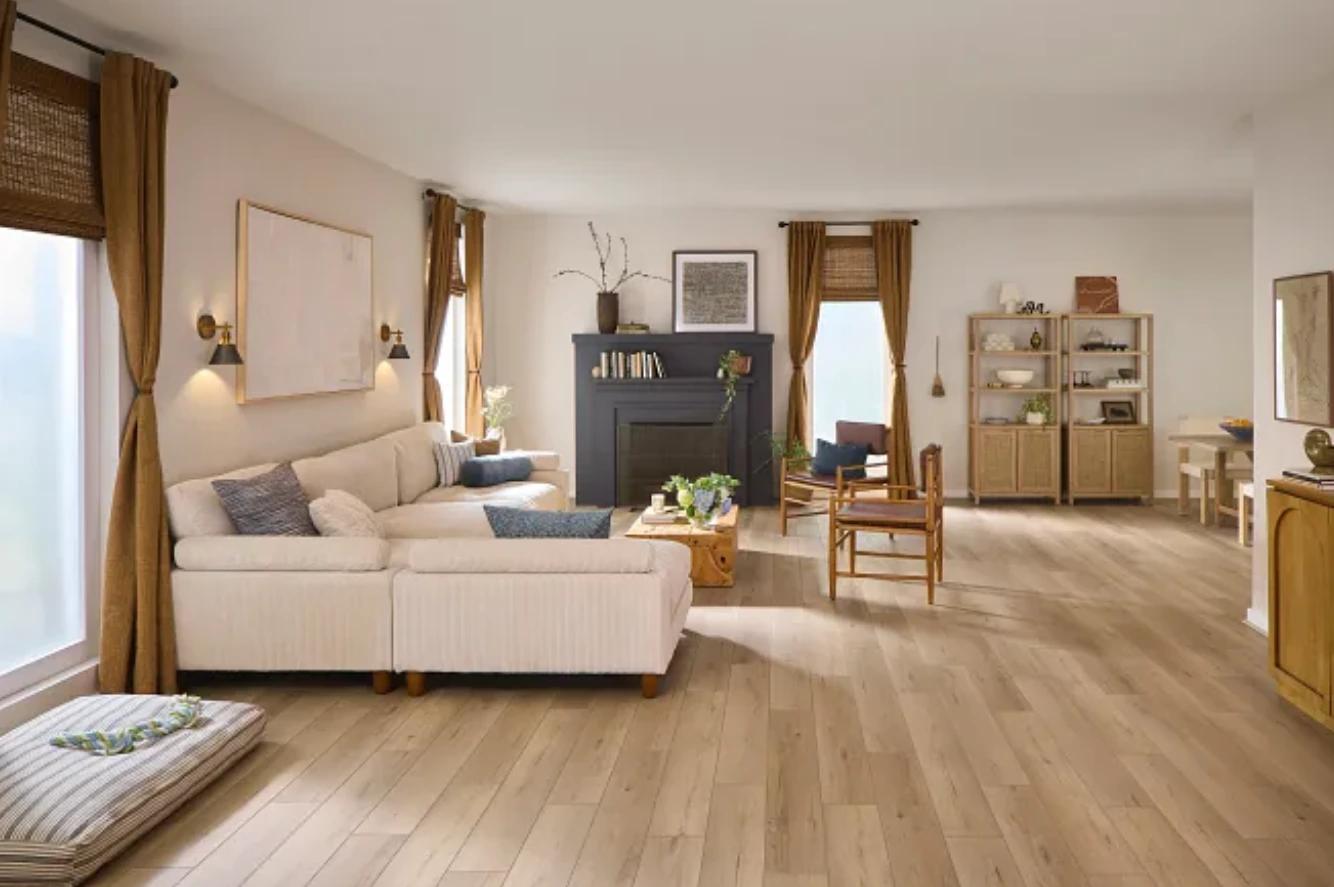
Many Polk County homes sit empty all summer while their owners head north. Before they leave, a common question comes up. Can I shut off the AC, or will my new vinyl plank buckle? It is a fair worry. A Florida house closed up from May to October gets hot and damp, and your floors and cabinets sit in it the whole time.
We are Blackburn's Interiors, a family-owned flooring store in Winter Haven since 1962, and we install luxury vinyl plank all over Polk County. Here is what the makers' install guides and warranties say about a home with no climate control, plus what UF/IFAS Extension and two Florida electric utilities say about where to set the thermostat.
The Short Answer
Vinyl plank does fine in a closed-up Florida home as long as the AC keeps running at a setting inside the floor's limit. Most of the vinyl plank we checked is not made for a house with the AC off all summer. Only a few floating floors allow that.
- AC on, set at 85°F or lower: the vinyl plank in our table below is within its limits.
- AC set above 85°F: not advised. UF/IFAS says 85°F at most, and Shaw and Karndean glue-down vinyl stop at 85°F.
- AC off all summer: only a floating floor whose guide allows it, like COREtec Scratchless.
Why Summer Heat Matters to Vinyl Plank
Vinyl grows a little when it gets hot. Shaw's install guide says excess heat from direct sun can cause thermal expansion and fading. A closed house in July gets hot inside, and sun through a window heats the floor under it even more.
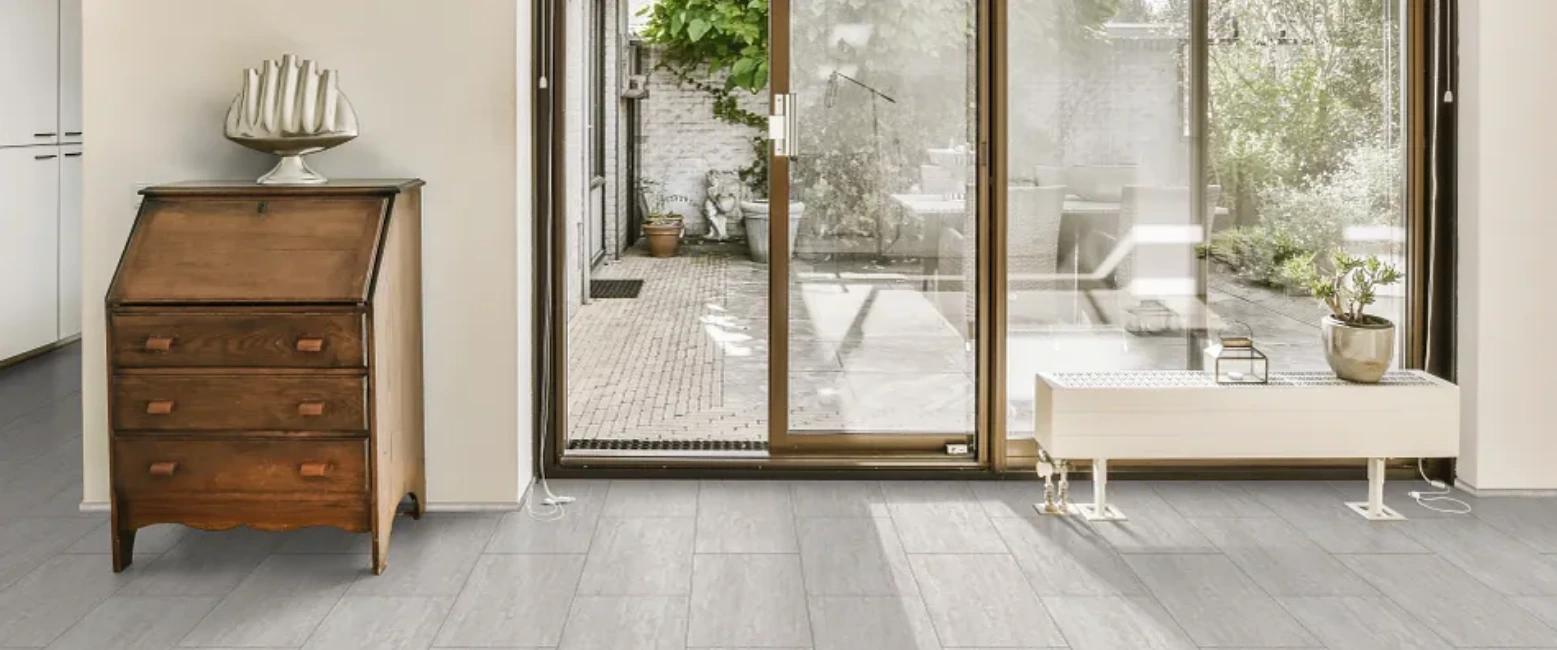
A floating floor moves as one piece, so Shaw calls for a gap at every wall, 1/4 inch for most rooms, for it to grow into. If the floor gets hotter than the plank is built for, damage can follow, and some warranties exclude it. A glue-down floor is held to the slab by adhesive instead, and the makers set a top temperature for the room once it is in.
What the Makers Allow After the Install
The temperature range in the install guide is not a suggestion. Shaw's warranty, for one, covers a floor installed the way its guide says. Here is what the guides say for brands we carry, once the floor is in:
| Product | After the install | Closed-up home note |
|---|---|---|
| Shaw SPC (stone plastic core) rigid core | 55 to 100°F | Floating or glue-down. Keep blinds or drapes closed. |
| Shaw glue-down vinyl | No higher than 85°F | Says working HVAC is the best way to control heat and humidity |
| COREtec Scratchless | Minus 25 to 155°F, floating only | Allows a home without climate control for long seasons |
| Karndean glue-down | 65 to 85°F at all times | Lists unheated rooms among areas with big swings |
COREtec Scratchless is the one guide we found that speaks to a seasonal home by name. It allows a floating floor where the home goes without climate control for long stretches during certain seasons. The home still has to hold 55 to 85°F while the floor goes in, and the allowance does not cover a glue-down install. Other COREtec lines set tighter ranges. The COREtec Galaxy warranty, for one, excludes damage to a floating floor heated above the temperatures in its install guide. So we check the guide for the exact product you pick.
If the room in question is a Florida room or sunroom, read our post on vinyl plank in a Florida room. It covers sun through glass and old lanai slabs.
Floating or Glue-Down in a Seasonal Home
For a home that sits closed all summer, the install method matters as much as the plank.
- Floating: the planks lock together and rest on the slab. In the guides we checked, floating floors get the widest range after the install, and only floating floors get the COREtec allowance for homes without climate control.
- Glue-down: the planks are glued to the slab, so the floor stays low and put. Shaw's and Karndean's glue-down guides cap the room at 85°F, so it fits a home that keeps its AC running.
A floating floor has one catch: cabinets. Shaw and COREtec both say the plank under cabinets has to be glued down, not left floating. Shaw's rigid core guide says the same for islands and carries the glue 2 feet past them.
Many seasonal homes here still have old tile. Plank can float over tile as long as the extra height is not a problem, but we usually glue down over tile, which adds about 1/8 inch. Our post on removing tile before vinyl plank covers that choice. Either way, we test the slab for moisture first, as ASTM F710, the industry standard for prepping concrete, calls for. Tell us if you will be gone all summer, because it can change the plank and the method we suggest.
Where to Set the Thermostat Before You Leave
Leave the AC on. It does not need to keep the house cool, but it does need to pull out the damp. UF/IFAS Extension's guide on closing a seasonal home says to leave it set no higher than 85°F, and that there is no reason to keep the house cool while you are away. Humidity is the bigger concern. The same guide warns that humidity above 55 to 60% can lead to mold.
Two Florida electric utilities aim lower on temperature. LCEC, a Southwest Florida co-op, suggests 80°F with a humidistat (a control that runs the AC by humidity) set at 65%. It says many empty homes need a little AC every day all summer. That 65% is higher than the 55 to 60% UF/IFAS warns about, so we would aim lower. Florida Power & Light (FPL) tips from April 2026 suggest 80°F and indoor humidity under 60% on a basic thermostat.
For a programmable thermostat, FPL suggests 72°F for two hours before sunrise and 88°F the rest of the day. That 88°F is above UF/IFAS's 85°F advice and above the 85°F cap on Shaw and Karndean glue-down vinyl. Keep the setting at 85°F or lower unless your floor's guide and your humidity control both allow more.
So pick a number at or below your floor's top limit that also keeps the humidity in check. Before you lock up:
- Leave the AC on, set at or below your floor's top limit.
- Have your humidistat checked, or run a dehumidifier that drains on its own.
- Close the blinds and drapes, most of all on windows that get direct sun.
- Leave interior doors open so the air can move.
- Lift any rubber-backed rugs. Heat speeds up the yellow stain they leave, as our post on area rugs and vinyl plank explains.
Your Cabinets Feel the Humidity Too
Wood cabinets react to humidity as well as heat. Medallion's cabinet warranty says wood expands and contracts with changes in temperature and humidity. It does not cover that natural movement or the seam lines it leaves, and it notes painted finishes are prone to seam lines. It also excludes damage from moisture or extreme temperatures in your home.
MasterBrand, another cabinet maker, suggests indoor humidity between 30 and 55%. It says a humid home can swell doors and open up joints. So the AC and humidity plan that protects your floor protects your cabinets too. UF/IFAS also says to clean your cabinets inside and out and take out all the food before you go. If you are choosing new cabinets for a seasonal home, our guide to cabinet materials for Florida humidity can help.
Questions We Get About Vinyl Plank in a Closed-Up Home
Can I turn off my AC while I am gone for the summer?
We do not recommend it. UF/IFAS Extension says to leave it set no higher than 85°F, and most of the vinyl plank we checked needs a cooled home after the install. Only a few floating floors, like COREtec Scratchless, allow long stretches with no climate control.
Will vinyl plank buckle in a hot house?
Heat can damage it if the floor gets hotter than its maker allows. That is why makers set a top temperature, and why the COREtec Galaxy warranty excludes damage to a floating floor heated above its install guide. A floating floor also needs its gap at every wall.
What temperature should I leave my Florida house at for the summer?
The guides we found land between 80 and 85°F. Keep humidity under 55 to 60%, and keep the setting at or below the top limit for your floor. For Shaw and Karndean glue-down vinyl, that limit is 85°F.
Does the floor I pick matter if I only live here in winter?
Yes. Tell us how you use the home. If the AC stays on, most vinyl plank works. If it will be off, we will steer you to a floating product built for it, or to another floor.
The Bottom Line
Vinyl plank and a seasonal Florida home get along fine when the AC keeps running. Set it at or below your floor's limit, keep the humidity in check and close the blinds, and the same plan protects your cabinets. If the AC will be off, pick a floating floor built for it, and tell us before we order. Visit our Winter Haven showroom or request a free estimate, and ask about our special financing available, subject to credit approval.
Sources
- Shaw Floors, Resilient Installation Guidelines for SPC Products (rev. 06/13/2024) (the 55 to 100°F range after the install for floating and glue-down, drapes or blinds at peak sun, thermal expansion and fading from direct sun, the 1/4 inch gap at the walls under 2,500 square feet, and gluing the plank under cabinets and islands plus 2 feet beyond)
- Shaw Floors, Installation Guidelines for Residential Resilient Direct Glue (keeping the room no higher than 85°F after the install, and working HVAC as the best way to control temperature and humidity)
- COREtec (Shaw), COREtec Scratchless Installation (rev. 05/01/2023) (the 55 to 85°F install range, the minus 25 to 155°F allowance for homes without climate control for long seasons, floating floors only, and gluing only under cabinets)
- Karndean Designflooring, Gluedown Installation Guidelines (USA), KD80333GLO (keeping the room at 65 to 85°F at all times after the install, and listing unheated rooms among areas with extreme temperature swings)
- COREtec Galaxy Warranty (rev. 08/27/2021) (excluding damage to a floating floor heated above the temperatures in its install guide)
- COREtec Scratchless Warranty (Shaw Residential Resilient Limited Warranty) (coverage for a floor installed per the maker's guidelines, for indoor residential use)
- UF/IFAS Extension, Closing Your Seasonal Home (HE887) (leaving the AC set no higher than 85°F, no need to keep the house cool while away, humidity above 55 to 60% leading to mold, checking the humidistat, a dehumidifier with a continuous drain, leaving interior doors open, and cleaning out the cabinets)
- LCEC, Vacant Homes (80°F with a humidistat at 65%, and many empty homes needing a little AC every day in summer)
- WUSF, FPL tips for Florida snowbirds preparing to leave for summer (April 20, 2026) (80°F and humidity under 60% on a basic thermostat, and 72°F before sunrise with 88°F the rest of the day on a programmable one)
- Medallion Cabinetry, Gold Lifetime Limited Warranty (wood expanding and contracting with temperature and humidity, natural joint movement and seam lines not covered, painted finishes prone to seam lines, and damage from moisture or extreme temperatures excluded)
- MasterBrand Cabinets, Humidification Education (indoor humidity between 30 and 55%, and humid homes swelling doors and opening joints)
- ASTM F710, Standard Practice for Preparing Concrete Floors to Receive Resilient Flooring (testing every concrete slab for moisture before resilient flooring goes down)
More flooring tips
Have a project of your own?
Free in-home estimates across Polk County.