
Flooring Tips
Do Area Rugs Damage Vinyl Plank Flooring?
Area rugs can yellow vinyl plank. The rug is not the problem, the backing is. Rubber and latex stain LVP. See which backings are safe and which to skip.
- Published
- August 24, 2026
- Author
- Blackburn's Interiors, Winter Haven, FL
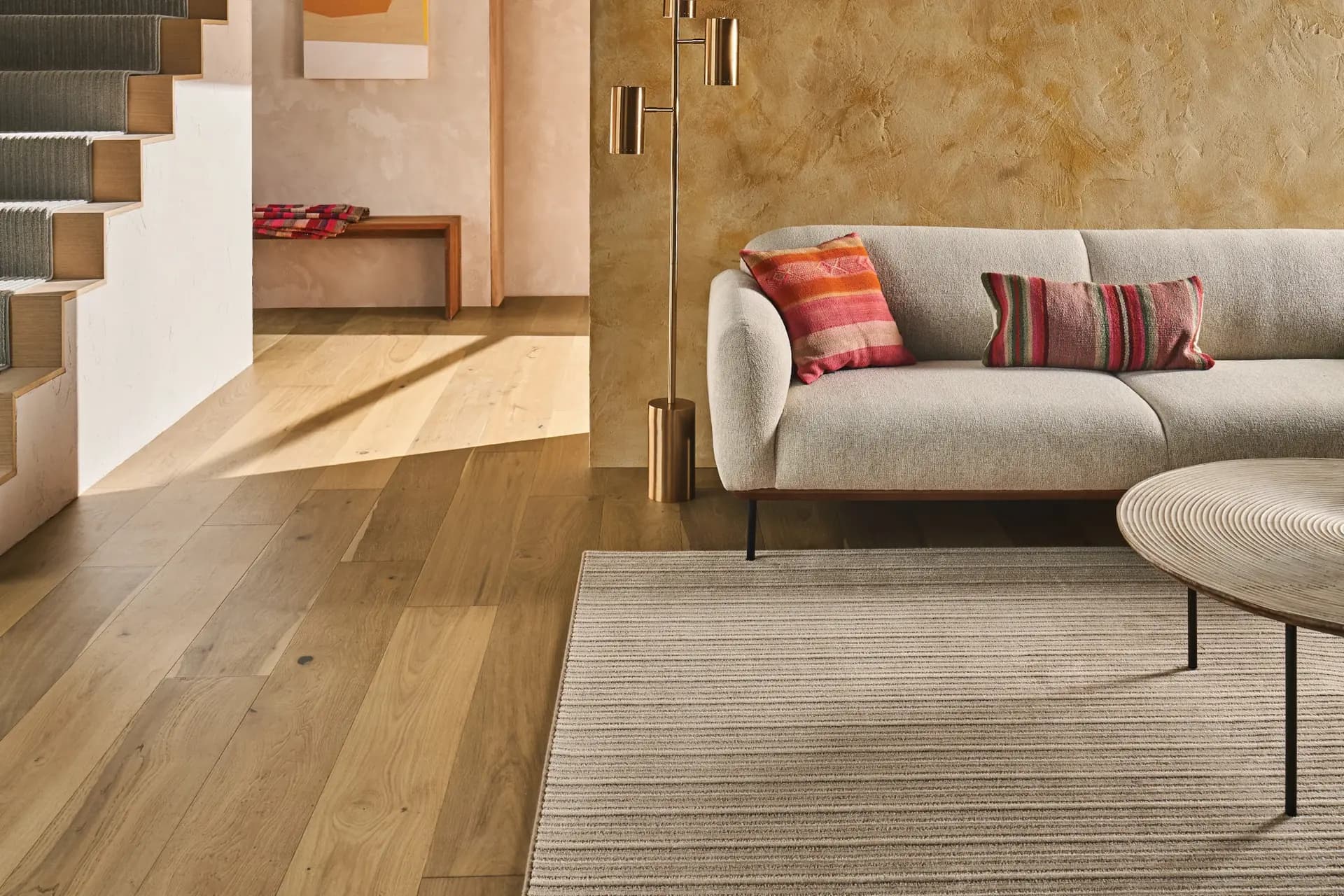
Short answer: yes, an area rug can damage vinyl plank, but the rug itself is rarely the villain. The backing is. A rubber or latex backing can leave a yellow or amber shadow on the floor in the exact shape of the rug. It looks like a stain. It is not. It is a chemical reaction, and once it sets in, it does not wipe away. The good news is that this is easy to avoid. We install a lot of luxury vinyl plank here in Winter Haven, and folks ask us about rugs all the time. Here is the plain truth about what stains LVP and what is safe to lay down.
We have been a family flooring shop since 1973. In that time we have seen beautiful floors ruined by a cheap bath mat left in one spot too long. It is one of the most common calls we get, and it is one of the most preventable. So let us walk through why it happens, what to look for, and how to pick a rug that protects your floor instead of hurting it.
Why Rubber and Latex Stain Vinyl Plank
Vinyl plank is made with plasticizers. Those are the ingredients that keep a plank flexible instead of brittle. Rubber and latex carry their own plasticizers and antioxidants too. When rubber sits against vinyl, those chemicals migrate. They move out of the rubber, into the surface of your floor, and react with the vinyl's own chemistry. The result is a yellow or amber patch right where the two touched.
Heat and friction make it worse. RugPadUSA explains that sunlight, and even the rub of foot traffic on a rubber-backed pad, drives the reaction faster. Pressure matters too. A heavy rug that sits in one spot for months gives the reaction all the time it needs. That is why the stain shows up under the rug and nowhere else.
What the Damage Looks Like
This is not a spill you scrub out. The discoloration comes up from inside the wear layer, not from something sitting on top. It usually shows as a yellow, amber, or brownish patch in the outline of the rug, or the grid of the pad. Move the rug and there it is, a shadow you did not know was forming. By the time you see it, the reaction is done. No cleaner, no mop, and no amount of scrubbing brings the color back. On most floors, the only real fix is replacing the stained planks.
Rug Backings to Avoid
These are the backings that cause trouble. When a rug goes down on vinyl plank, steer clear of:
- Solid rubber backing, natural or synthetic. This is the classic culprit behind the yellow footprint.
- Latex backing and latex-coated mats. Latex reacts the same way rubber does.
- Cheap rubber-backed bath mats, kitchen mats, and door mats. They sit in one place and often catch sun, so they do the most harm.
- Some foam and synthetic-backed rugs. A few carpets and mats hide latex in the backing even when the label does not say so.
This is not a fringe worry. Every major flooring maker warns about it. Shaw tells vinyl owners to use mats without latex or rubber backings to reduce discoloration. CoreTec, a brand we carry, says the same in its own LVP cleaning guide: rubber or latex backed mats can discolor your floor. Karndean warns that rubber can permanently stain vinyl floor coverings and tells owners to skip rubber-backed mats, rubber furniture feet, and rubber-wheeled casters. Mohawk goes furthest. Its residential vinyl warranty flatly excludes discoloration caused by latex or rubber-backed floor mats, and it notes that some synthetic-backed carpets contain latex that can discolor your floor. In plain terms, if a rubber mat stains your LVP, the warranty will not cover it.
Rug Backings That Are Safe
You do not have to give up rugs. You just have to choose the backing with care. The safest picks are simple:
- Felt rug pads. Natural felt has no plasticizers to migrate, so it will not react with your floor.
- Felt-and-EVA blend pads. The soft foam grips the rug without the staining chemicals of raw rubber.
- Any rug or pad the maker labels non-staining or vinyl-safe. That label is your green light.
Two backings need a closer look. Some pads use PVC-coated grids sold as non-staining, and some use natural rubber sold as vinyl-safe. Either can be fine, but not all of them are. RugPadUSA points out that many PVC pads are made with glues and adhesives that stick to floors and can affect your indoor air. So do not trust the material name alone. Trust the label. If the maker states in writing that the pad is non-staining and safe for luxury vinyl, you are good. If it is silent, pass. Mohawk's own advice is blunt: always use mats marked non-staining.
Why Florida Makes This Worse
Our climate stacks the deck against rubber-backed rugs. Three things make Polk County homes higher risk than a house up north:
- Our sun is strong and steady. It pours through sliding glass doors and big windows and heats a rug backing fast. Since heat drives the reaction, a rubber mat in a sunny Florida room stains quicker than the same mat in a shaded room somewhere cooler.
- Entry rugs take a beating. They catch sandy, damp feet all day, so they sit heavier and longer in one spot. That mix of pressure, heat, and moisture is exactly what triggers the reaction.
- Snowbird homes sit closed up for months. Furniture and rugs stay put while the house bakes with the AC set back. That gives the stain uninterrupted time to form before anyone is home to notice.
What to Do If It Already Happened
We will be straight with you. Once the discoloration sets in, it is usually permanent. It lives inside the wear layer, so no product lifts it out. Try a gentle cleaner first, just in case the mark is surface residue and not a true reaction. If it does not budge, the color is in the plank. The fix is to replace the affected boards. This is one reason we tell folks to keep a box of leftover planks after any install. A few spare boards turn a big headache into a quick swap. If you do not have spares, we can help you match what you have or plan a fresh floor. For day-to-day care that prevents the next problem, our guide on how to clean luxury vinyl plank flooring walks through the safe routine.
A Quick Checklist Before You Lay a Rug
Keep it simple. Before any rug or pad goes down on your vinyl plank, run through this:
- Read the backing label. Look for the words non-staining or vinyl-safe.
- Skip anything with solid rubber or latex backing.
- Choose a felt or felt-blend pad when in doubt.
- Lift and move rugs now and then so no spot bakes for months.
- Keep entry rugs off the sunniest patches of floor when you can.
- Save a few spare planks from your install for easy repairs down the road.
Frequently Asked Questions
Can I put any rug on luxury vinyl plank?
Almost. The rug is fine. The backing is what matters. As long as the backing is felt, a felt blend, or a pad the maker marks non-staining or vinyl-safe, you can lay it down with confidence. Avoid solid rubber and latex backings, and you avoid the problem.
Will a felt rug pad protect my vinyl plank?
Yes. Felt has no plasticizers to migrate into the floor, so it will not react with the vinyl. A good felt or felt-and-EVA pad also keeps the rug from sliding and adds a little cushion. It is the pick we point people to most often.
Is the yellow stain from a rubber mat permanent?
Usually, yes. The color forms inside the wear layer, so cleaners cannot reach it. Test a gentle cleaner first in case the mark is only surface residue. If it stays, plan on replacing the stained planks. Spare boards from your original install make that an easy fix.
The Bottom Line
Area rugs do not have to hurt your vinyl plank. Rubber and latex backings are the real risk, and the fix is as simple as reading a label and choosing felt or a pad marked non-staining. That is doubly true here in Florida, where sun and sandy entry rugs speed the reaction along. If you are weighing new floors, or you just want a rug question answered by someone who has seen it all, we would be grateful to help. Stop by our 8,000 square foot showroom at 1507 Havendale Blvd NW, call us at (863) 294-7355, or request a free in-home measure. The installers we train and certify handle every job at our Winter Haven flooring store and across Polk County, backed by an industry-best residential labor warranty, and special financing is available with approved credit. Thanks for thinking of our family. We know you have other choices, and we do not take that lightly.
Sources
- Shaw Floors, Vinyl Floor Care & Maintenance (maker advises mats without latex or rubber backing to reduce vinyl discoloration)
- Mohawk LVT/LVP Residential Warranty Chart (PDF) (warranty excludes discoloration from latex or rubber-backed mats and says to use mats marked non-staining)
- Karndean, Vinyl LVT Floor Protection Tips & Advice (maker says rubber can permanently stain vinyl and to avoid rubber-backed mats, feet, and casters)
- CoreTec, Your Guide to Cleaning LVP Flooring (maker says rubber or latex backed mats can discolor LVP)
- RugPadUSA, How to Protect Your Vinyl Floors from Damage (the heat-and-friction acceleration of the rubber-and-vinyl reaction, and the caution that not all PVC pads are safe)
More flooring tips
Have a project of your own?
Free in-home estimates across Polk County.