
Flooring Tips
Best Flooring for Stairs
The best flooring for stairs balances traction, durability, and a safe nosing. We compare carpet, hardwood, and stair-rated LVP from a Florida installer's view.
- Published
- June 29, 2026
- Author
- Blackburn's Interiors, Winter Haven, FL
- Updated
- August 3, 2026
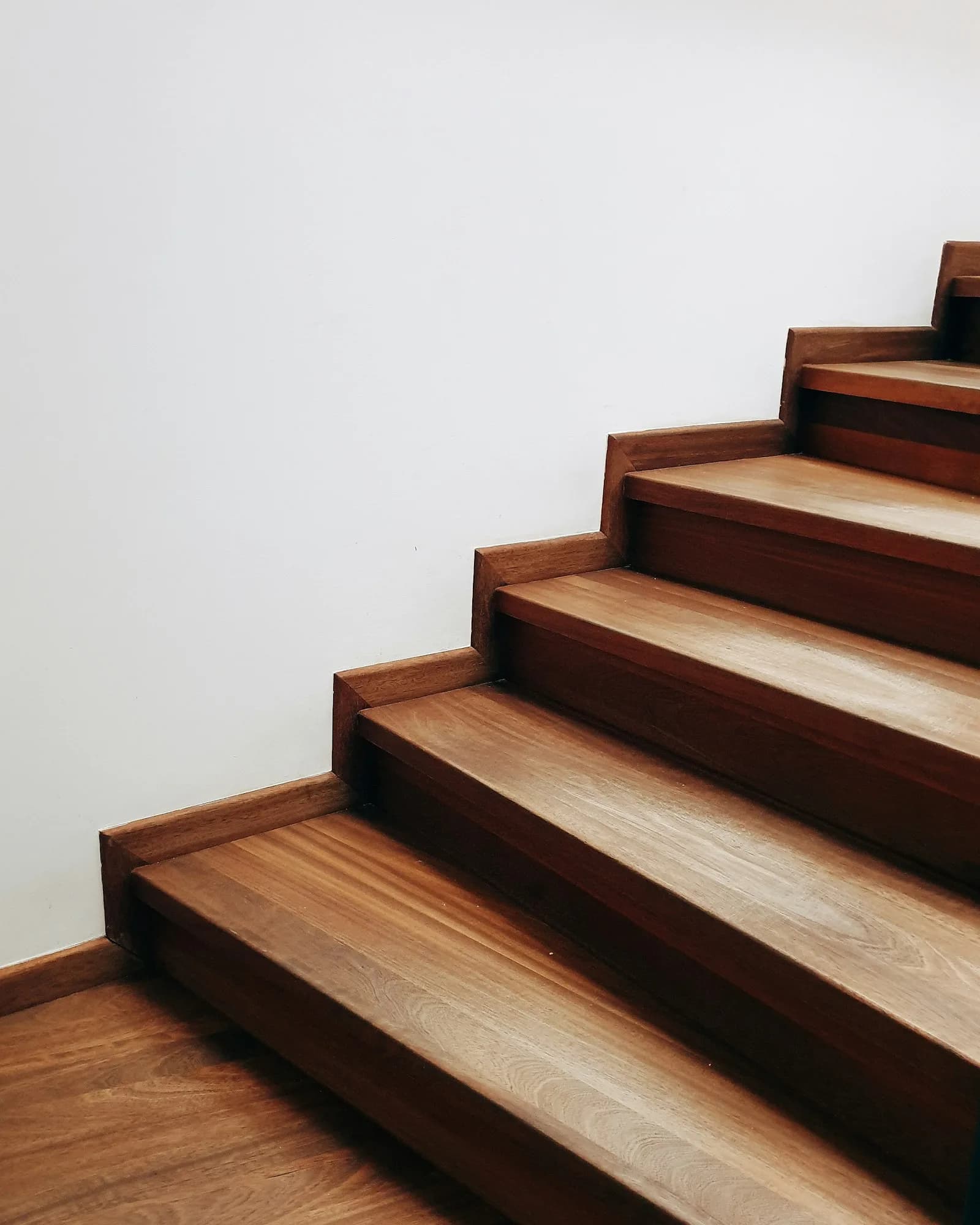
The best flooring for stairs is the one that keeps your family on its feet. Stairs are the most dangerous surface in any home. A floor that looks great in the living room can turn slick and risky on a staircase. We have walked thousands of Polk County homes since 1973, and stairs are where we slow down and think hardest. Here in Winter Haven, most homes sit on a concrete slab, so the staircase is often the only wood framing in the house. That changes the install. It also changes which floors make sense.
This guide breaks down the three real choices for stairs: carpet, hardwood, and stair-rated luxury vinyl plank. We will cover traction, the nosing edge, durability, and the part most people miss: why stairs cost more per step than the floor they connect. The climate notes are written for Florida. The safety truths apply to a reader anywhere.
Why Stairs Are a Different Animal
A flat floor only has to lie still and look good. A staircase has to do that while people walk down it in socks, carry laundry, and chase a toddler. The forces are different. Every step lands on the front edge of the tread. That edge takes the most wear and creates the most slip risk. Get it wrong and the floor fails where it matters most.
Stairs also have a part no flat floor has: the nosing. That is the rounded lip that overhangs the front of each tread. It is the single most important detail on a staircase. A proper nosing gives your foot a clean edge to grip and protects the front of the step from wearing through. A bad nosing, whether loose, square, or slick, is a fall waiting to happen.
The Anatomy of a Stair
- Tread: the flat part you step on. Takes all the foot traffic and abrasion.
- Riser: the vertical face between treads. Mostly visual, but it has to match.
- Nosing: the overhanging front edge. Drives both grip and durability.
- Stringer: the framing that holds it all. On a Florida slab home, this is often the only wood structure in the house.
Each of these gets its own material and its own labor. That is why a staircase is never a simple add-on to a flooring job. It is a small project inside the bigger one.
Carpet on Stairs: Quiet and Safe, but Dated
Carpet is the safest stair surface, full stop. The soft fiber grips a bare foot or a sock. It muffles sound, so nobody hears every trip up and down. And if someone does slip, carpet cushions the fall far better than any hard surface. For homes with young kids, older parents, or both, that safety margin is real.
The trade-offs are wear and style. Stairs concentrate foot traffic onto a narrow path, so carpet flattens and frays on the nosing edge first. A cut-pile that looks fine in a bedroom can wear out fast on a staircase. And to many buyers, carpeted stairs read as dated next to a clean wood or vinyl run.
If You Choose Carpet, Choose the Right Kind
- Pick a dense, low-pile loop or a tight twist. The denser the fiber, the longer it holds the nosing edge.
- Solution-dyed nylon resists stains and crushing better than cheaper polyester on a high-wear stair. We compare the fibers in which carpet fiber to buy.
- A waterfall install drapes the carpet over each nosing; an upholstered (cap-and-band) install wraps each step tightly. Wrapped looks sharper and wears better, but it costs more labor.
- Always use a quality pad rated for stairs. A thin or soft pad lets the carpet shift, and shifting carpet is a slip risk.
Carpet runs about $3 to $7 per square foot installed on a flat floor, but stairs are priced by the step, not the square foot. More on that below. If you want to see fiber and pile options in person, our carpet selection page lays out the families we stock, and you can feel them side by side in the showroom.
Hardwood on Stairs: Classic, Lasting, and Slick Without Help
Hardwood stairs are the look most people picture when they imagine a beautiful staircase. Real wood treads are gorgeous, they last for decades, and they can be sanded and refinished when the finish dulls. A hardwood staircase lifts the whole house and reads as quality to any buyer. For resale, nothing beats it.
There is one honest catch: bare hardwood is slippery. A polyurethane finish that looks rich and smooth gives almost no grip to a sock or a paw. We have seen the aftermath of slick wood stairs more times than we would like. This is a safety issue you have to plan around, not ignore.
How to Make Hardwood Stairs Safe
- Add a runner. A carpet runner down the center gives traction where every foot lands and protects the wood underneath. It is the classic fix for a reason.
- Ask for a satin or matte finish with a slip-resistant additive instead of a high-gloss coat. Gloss looks slicker than it grips.
- Use a real bullnose tread with a rounded, solid nosing, not a thin veneer wrapped over a square edge.
- If you have dogs, a runner does double duty: it gives their nails grip and saves the finish from scratches.
Solid vs Engineered for Stair Treads
A Florida staircase is framed in wood rather than sitting on the slab, so solid wood treads are the traditional choice there, and they refinish the most times. We install engineered hardwood, not solid. Engineered treads stay a little more stable through our humidity swings. If you are weighing wood against vinyl for the whole project, our hardwood vs luxury vinyl plank guide for Florida homes walks through how slab construction and humidity push that decision.
Hardwood typically runs $9 to $18 per square foot installed on a flat floor, and matched stair treads carry a premium on top of that. The wood is worth it for many homes. Just budget for the runner or the slip-resistant finish as part of the plan, not an afterthought. Our hardwood flooring page covers the species we carry and how each handles a busy household.
Stair-Rated LVP: The Modern Middle Ground
Luxury vinyl plank has become the most popular floor we install in Polk County, and homeowners naturally want it to flow right up the stairs. It can, but only if it is done right. This is where install quality matters more than anywhere else in the house.
The problem is the nosing. A flat LVP plank has a square cut edge. You cannot just bend a rigid plank over the front of a step. The fix is a matching stair nose molding, a special profile made to coordinate with your plank, that caps the front of each tread with a proper rounded edge. Skip it and you get a sharp, weak edge that chips and catches. A real stair-rated install glues the plank down fully and locks in a matched nose on every step. That is not just our preference. Mohawk's own LVT install guide requires the glue down method on all treads and risers, then stair nose moldings afterward to protect the edge.
What a Proper LVP Stair Install Needs
- Full glue-down on every tread and riser. Floating LVP is fine on a flat floor but unsafe on stairs, as it can shift underfoot.
- A matching manufacturer stair nose on each step. This is the single most important part of the job.
- A thicker wear layer. Stairs wear fast, so we lean toward 20 mil on a staircase even when 12 mil is fine on the flat.
- A flat, sound substrate. Wood stair framing must be screwed tight and level before anything goes down.
Done this way, LVP stairs are durable, fully waterproof, and they match the floor running through the rest of the house. The look is clean and current. To understand cores, wear layers, and why the nosing profile matters, our complete guide to luxury vinyl plank breaks down the construction. Quality LVP runs about $5 to $11 per square foot installed on a flat floor, with stair nosings adding cost per step.
A Note on Laminate and Tile
Laminate can go on stairs with matching nosings too, but its fiberboard core makes it less forgiving on a high-impact edge, and it is not waterproof. The North American Laminate Flooring Association puts it plainly: laminate is not suited to outdoor use or areas with excessive moisture unless the manufacturer specifies it as waterproof. If you are comparing the two, our LVP vs laminate breakdown for Florida covers why the core difference matters even more on stairs. Tile is rare on interior stairs. It is hard, cold, very slippery when wet, and brutal in a fall. We mostly steer homeowners away from tile treads unless there is a specific outdoor or commercial reason.
Why Stairs Cost More: The Per-Tread Reality
Here is the part that surprises people. Stairs are not priced like the rest of your floor. A flat room is measured in square feet and installed fast. A staircase is measured by the step, because each step is slow, detailed handwork.
Think about a single tread. The installer measures it, cuts the surface to fit, cuts and fits a separate riser, then fits a nosing to the front edge. Then they do it again on the next step, and the next. A flight of thirteen stairs is dozens of precise cuts and fits. Some get scribed to a wall or a stringer. That is hours of careful labor that a flat floor never needs.
What Drives the Per-Step Number
- Material: wood treads and matched nosings cost more than carpet over a pad.
- Cut complexity: open-side stairs, curved steps, and pie-shaped winders cost more than a straight boxed run.
- Demo: pulling old carpet, staples, and tack strip off stairs is slow, dirty work.
- Nosing type: a matched manufacturer stair nose on every LVP step adds material and time.
As a rough industry range, expect roughly $50 to $150 per step installed depending on material and stair type, with custom hardwood treads landing higher. That is why your written estimate breaks stairs out as their own line. It is not padding. It is honest pricing for real work. Our flooring cost guide explains how labor lines add up across a whole project, and the flooring calculator gives you a quick ballpark for the flat rooms.
Why Stairs Are the Last Place to DIY
We are big believers in homeowners doing what they can. Stairs are the one place we ask you to let a pro handle it. The reason is simple: a flat-floor mistake is ugly, but a stair mistake is dangerous. A loose tread, a square nosing, or a plank that shifts is a fall risk in the most fall-prone part of your home.
Stairs also have to meet rise-and-run consistency. Every step needs the same height and depth. The human body learns the rhythm of a staircase in the first two steps, and a tread that is even a half-inch off throws people forward. Getting that right across a full flight takes experience and the right tools.
The installers we work with are among the best in Florida, trained and certified to our standard. That matters on a job this detailed. Read what neighbors say on our customer reviews page, and see our pre-installation tips for how we prep a home before stair day.
Matching Stairs to the Rest of Your Floor
Most homeowners want the stairs to flow with the floor above and below. The cleanest look runs the same material straight through. LVP up the stairs to match LVP on the main level. Hardwood treads to match a hardwood great room. When the colors and plank widths line up, the eye reads the whole home as one continuous floor.
You can also mix on purpose. A common Florida choice: LVP or hardwood on the main level with a carpet runner down the center of wood stairs. That gives you the wood look and the carpet's grip in one staircase. If you are still choosing a material for the whole house, our guide to choosing the right flooring is a good starting point, and you can browse what we carry on the flooring catalog.
Quick Comparison for Stairs
- Traction: Carpet wins by a wide margin. LVP with a textured surface is solid. Bare hardwood is the slickest and needs a runner.
- Durability on the nosing: Hardwood and stair-rated LVP both last for years. Carpet wears on the edge first.
- Safety in a fall: Carpet cushions best. Hard surfaces do not. Plan grip in from the start.
- Noise: Carpet is quietest. Hard surfaces echo more, especially in an open stairwell.
- Water and pets: LVP is fully waterproof and wipes clean. Hardwood needs care. Carpet stains and holds odor.
- Resale look: Hardwood reads as the most premium. Clean LVP is a strong, current look. Carpet can read dated.
- Cost per step: Carpet is usually the least. LVP sits in the middle once you add matched nosings. Custom hardwood treads run highest.
Common Questions About Stair Flooring
Can I Put LVP on My Stairs?
Yes, when it is glued down fully and finished with matching stair nose moldings on every step. That is the part that makes it safe and lasting. A floating click install meant for a flat floor should never go on stairs.
Are Hardwood Stairs Too Slippery?
They can be. Bare, glossy wood gives little grip. A carpet runner, a satin slip-resistant finish, or both make hardwood stairs safe while keeping the look you want.
Why Are Stairs So Much More Per Square Foot?
Because they are not really priced by the square foot. Each step is hand-cut and fitted: tread, riser, and nosing. Stairs are priced per step. A short flight can hold dozens of precise cuts. The labor is the cost.
What Is the Safest Flooring for Stairs With Kids or Seniors?
Carpet, or hardwood with a carpet runner. Both give the most grip and the softest landing. If you want a hard surface, textured stair-rated LVP with a proper nosing is the next safest choice.
The Bottom Line
There is no single best floor for every staircase. There is the right one for your home, your family, and how your stairs are built. Carpet is the safest and quietest. Hardwood is the most beautiful and lasting, as long as you plan for grip. Stair-rated LVP gives you a waterproof, current look that flows with the rest of the house, but only with full glue-down and matched nosings. On all three, the nosing and the install quality matter more than the material itself. We would be glad to walk your staircase with you, talk through traction and cost per step, and bring samples to your house. Reach out for a free in-home measure or call us at (863) 294-7355, and come see and feel the options at our showroom at 1507 Havendale Blvd NW in Winter Haven. If you would like to spread the project out over time, ask about special financing, subject to credit approval. We are grateful you would consider letting our family build your stairs.
Sources
- Mohawk Flooring, Residential Installation Guide for LVT Click (glue-down required on stair treads and risers, with stair nose moldings)
- North American Laminate Flooring Association, Laminate Flooring FAQs (laminate not waterproof by default)
More flooring tips
Have a project of your own?
Free in-home estimates across Polk County.