
Countertop Tips
Porcelain and Sintered Stone Countertops (Dekton, Neolith): Are They Worth It?
What porcelain and sintered stone (Dekton, Neolith) do best, where they beat quartz outdoors, the honest downsides, and what they cost installed.
- Published
- September 16, 2026
- Author
- Blackburn's Interiors, Winter Haven, FL
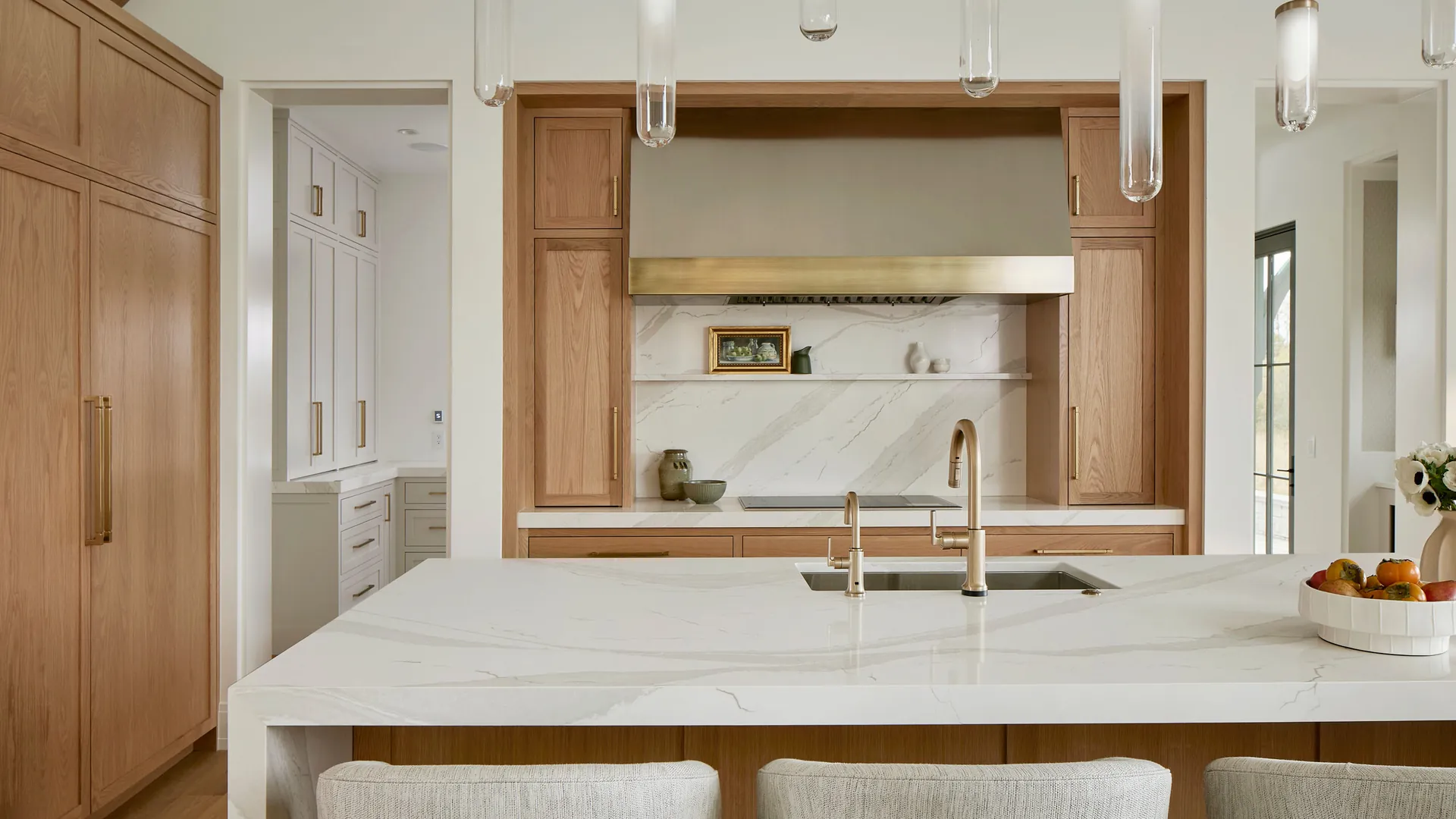
Most Polk County kitchens still choose quartz or granite. But a newer surface keeps showing up in showrooms and on job sites: sintered stone, sold under names like Dekton and Neolith. It is thin, tough, and built for heat and sun. It is also pricier and harder to cut than the stones you already know.
This guide covers what these countertops are, what they do best, where they beat quartz, the honest downsides, and what they cost installed. Every price here is a hedged range from a published source, current as of 2026. Your real number comes from the exact slab you pick and the shop that cuts it.
What Porcelain and Sintered Stone Actually Are
Porcelain slabs and sintered stone are close cousins. Both start as mineral powders that get pressed and fired under high heat and pressure. Sintered stone takes the same idea further. Dekton (made by Cosentino) and Neolith (made by TheSize) are the two names you will hear most, with a few other brands in the same family.
Here is the short version of how Dekton is built. It combines the same raw materials used to make quartz, glass, and porcelain, then bonds them with a high-heat, high-pressure sintering process the maker calls Sinterized Particle Technology. No glue. No resin. Just minerals fused into a solid, dense slab.
That last part is the whole story. Quartz counters are ground stone held together with a polymer resin. Sintered stone has no resin at all. Take the resin out and you take out the two things that give quartz trouble: heat and sunlight.
The Standout Strengths
Because there is no resin to melt, yellow, or wear, sintered stone leads on the specs that matter in a hot Florida kitchen.
Heat You Do Not Have to Baby
Quartz has a fairly low heat limit, around 300°F, because the resin softens. Sintered stone is rated far higher, at roughly 500°F and up. Dekton in particular is built to take extremely high heat with zero burns, cracks, or scorching. A hot pan straight off the burner or a grill lid set down mid-cook is not the worry it is with quartz.
It Will Not Fade in the Sun
This is the big one for Florida. With no polymers inside, sintered stone does not yellow or break down in sunlight, so it is safe for full outdoor exposure. Dekton is rated highly UV resistant and does not fade over time. Quartz, by contrast, is not rated for outdoor or UV use, and direct sun can discolor it. In Polk County sun all summer, that difference is real, not a spec-sheet footnote.
Scratches and Stains Sit on Top
Sintered stone is a hard, dense, non-porous surface. It resists scratches well, and because liquids cannot soak in, spills sit on top instead of staining. There is no yearly sealing step the way there is with most natural stone.
Thin, Big Slabs
This category comes in large-format panels at thicknesses standard stone cannot hit. Dekton is offered from 8mm up to 30mm, and Neolith comes in 3mm, 6mm, 12mm, and 20mm. Those thin panels open up looks that thick stone cannot, like slim waterfall sides, cabinet fronts, or a counter that reads light instead of chunky.
Where It Beats Quartz Outdoors
If you are building an outdoor kitchen or a covered lanai bar, this is where sintered stone earns its keep. A counter in full sun needs a surface that will not fade, will not soften under a grill, and will not soak up a spilled drink. Sintered stone checks all three. Quartz does not, since it is not rated for the sun. For the full material survival guide, read our outdoor kitchen countertops in Florida breakdown.
That said, granite and porcelain both hold up outside too. Sintered stone is not the only option for a lanai. It is the option that trades the highest price for the fewest worries.
The Honest Downsides
No surface is perfect, and this one has real trade-offs. We would rather you hear them from us up front than find out during fabrication.
The Edges Can Chip
Sintered stone is hard, and hard can also mean brittle at a thin edge. Complex decorative edge profiles, like an ogee or a dupont, carry a real chip-out risk on a 12mm slab and are generally not recommended. Simpler edges are the safe call. If your heart is set on a fancy shaped edge, this may be the wrong material for it.
It Is Harder and Pricier to Cut
Fabricating sintered stone takes specialized tooling and a careful technique. Plan on a labor premium of roughly 40 to 60 percent over what a standard granite job costs to cut and finish. The stakes are higher too: the slab can crack or break if it is not fabricated correctly, and repairing sintered stone is difficult and expensive. A bad cut can ruin a costly slab.
Fewer Shops Are Set Up for It
Because it is hard to cut, not every fabricator is equipped for it, and that is truer in a smaller market like ours. Ask any shop directly whether they have cut Dekton or Neolith before you commit. We work with fabricators experienced in this material, and the installers we train and certify set it once it is cut. If a shop has never handled it, that is a reason to slow down, not speed up.
What It Costs Installed
Prices vary by source, year, slab, and job, so treat these as ranges, not quotes. Across the published guides we checked for 2026, the numbers land like this. For the fuller picture across every material, see our countertop cost by material guide.
- Dekton: roughly $55 to $120 per square foot installed, depending on which guide you read.
- Neolith: roughly $60 to $120 per square foot installed.
- Porcelain and sintered stone in general: about $60 to $120 per square foot installed, with most jobs near $75 to $95.
Those ranges put sintered stone in the same neighborhood as premium quartz and granite, sometimes a bit above once the fabrication premium is counted in. If the total lands higher than you planned, ask us about financing. It is available with approved credit, so a project does not have to wait.
So, Is It Worth It?
It depends entirely on where the counter lives and what you ask of it. Here is our straight answer by use case.
- Outdoor kitchen or sunny lanai: yes. The UV stability and heat tolerance are worth the premium here, and quartz simply is not rated for the job.
- Indoor kitchen with a hot-pan-and-no-babysitting cook: worth a look, especially if you want to skip sealing and never think about heat.
- Standard indoor kitchen on a budget: often not. Quartz or granite gives you a beautiful, durable counter for less, with more shops able to fabricate it.
If you are torn between the two most popular indoor choices before you even weigh sintered stone, our quartz vs. granite countertops guide sorts that call in full.
Frequently Asked Questions
Is Sintered Stone the Same as Porcelain?
They are close relatives, not identical. Both are made by pressing and firing minerals under heat and pressure. Sintered stone is engineered to be denser and thicker, and it is often marketed under brand names like Dekton and Neolith. In everyday shopping, you will see the terms used side by side, and the strengths overlap heavily.
Can You Really Put a Hot Pan on Dekton or Neolith?
Yes, within reason. Sintered stone is rated for heat around 500°F and up, well past quartz, and Dekton is built to take extreme heat with no burns or scorching. It handles a hot pan far better than resin-based quartz. We still confirm the exact rating for the slab you choose, since it can vary by product.
Does Sintered Stone Chip Easily?
The flat surface is very tough. The edges are the weak point. A simple edge holds up fine, but complex shaped profiles carry a real chip risk on thin slabs and are usually skipped for that reason. Choose a clean, simple edge and you avoid the problem.
The Bottom Line
Porcelain and sintered stone counters like Dekton and Neolith beat quartz on heat and sun because they have no resin inside. That makes them the standout pick for an outdoor kitchen or a sunny lanai here in Florida. The trade-offs are honest ones: edges can chip, fabrication is harder and runs a 40 to 60 percent labor premium, and fewer shops cut it well. Indoors, on a budget, quartz or granite often wins.
The best way to decide is to see the slabs and talk through your kitchen. Come visit our 8,000 square foot showroom at 1507 Havendale Blvd in Winter Haven, or contact us to book a free measure. We will template your space, price every line in writing, and give you a real number, not a generic calculator guess.
Sources
- SlabWise, Quartz vs Sintered Stone Countertops (2026 Comparison) (quartz's ~300°F heat limit versus sintered stone at 500°F and up, and sintered stone's UV stability and outdoor rating where quartz is not rated)
- Today's Homeowner, Neolith vs Dekton (2026) (what sintered stone is made of and how Dekton is manufactured, its heat and UV performance, the fabrication and repair risk, and installed price ranges)
- SlabWise, Porcelain Countertop Cost 2026 (porcelain and sintered stone at $60 to $120 per square foot installed with a $75 to $95 average)
- Go Source, Dekton vs. Neolith Guide (2026) (the 40 to 60 percent fabrication labor premium over granite, edge-chip risk on decorative profiles, and available slab thicknesses)
More countertop tips
Have a project of your own?
Free in-home estimates across Polk County.