
Countertop Tips
Quartz vs Granite Countertops: Which Is Better for Your Kitchen?
Quartz and granite countertops compared on durability, maintenance, heat, sealing, price, and how each holds up in Florida kitchens.
- Published
- April 12, 2026
- Author
- Blackburn's Interiors, Winter Haven, FL
- Updated
- August 4, 2026
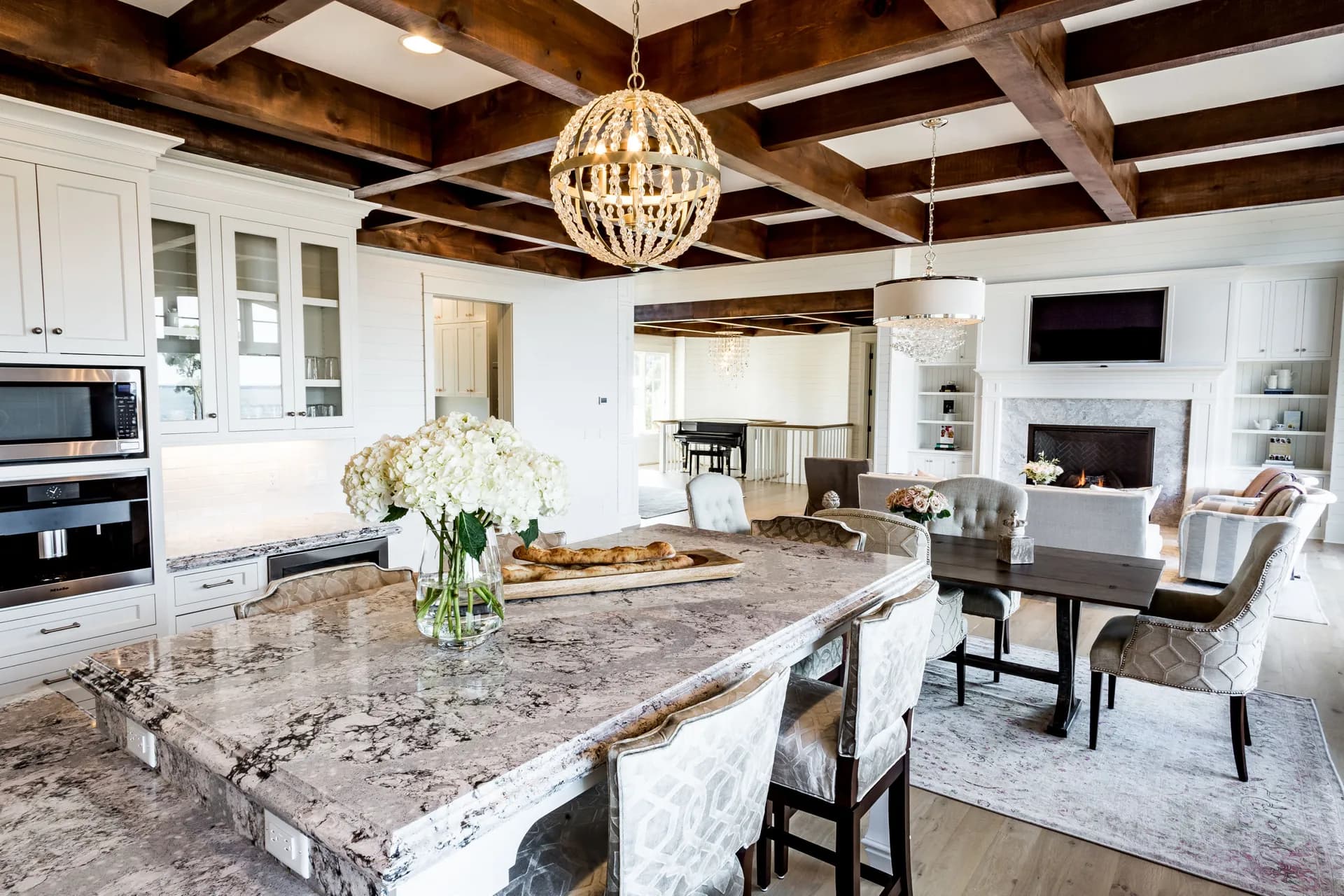
Quartz and granite are the two materials customers compare more than any other in our countertop showroom. Both are stunning. Both last decades. But they behave very differently, and the right pick depends on how you actually use your kitchen.
Here's a clear, honest breakdown: what each material is, how they differ, and which one wins for the way most Polk County families cook and live.
What Is Granite?
Granite is 100% natural stone. It's quarried in big slabs from the earth, cut to size, polished, and installed. Every piece is unique. Two slabs of "Santa Cecilia" from the same quarry will have different veining, different mineral deposits, and slightly different colors. That's the appeal. No other kitchen has the exact same countertop.
Because granite is natural rock, it's porous. The pores absorb liquid if you let them. That does not mean every slab needs sealing. The Natural Stone Institute says most granite countertops do not need to be sealed, and a quality sealer has a life expectancy of ten to fifteen years. We still like the water test on a new counter: drip a little water on it, and seal it only if the stone drinks it in.
What Is Quartz?
Quartz countertops are engineered stone. They're roughly 90–95% crushed natural quartz mineral mixed with 5–10% resin and color pigment, pressed under high heat and pressure into uniform slabs. The result is a stone-like surface with consistent color and pattern across the whole slab.
The resin binder makes quartz non-porous. Nothing soaks in: no oil, no wine, no tomato sauce. Quartz never needs to be sealed. Cambria, one of the lines we carry, says it plainly: its quartz is nonabsorbent and nonporous, and it never needs sealing or reconditioning.
Side-by-Side: The Real Differences
Durability and Scratching
Both materials are extremely hard. Granite measures roughly 6–7 on the Mohs hardness scale. Most engineered quartz lands in the same 6–7 range, with premium brands sometimes rated higher. In real-world kitchen use, neither one scratches under normal cooking. You can drag a ceramic mug across either surface and leave no mark.
Where they differ: granite can chip on a sharp corner if something heavy hits it. Quartz is slightly less brittle because the resin gives it a touch more flex. Both can be repaired, but quartz repairs are easier to color-match.
Heat Resistance
Granite wins here. It's pure rock, so you can set a hot pot directly on granite without damage. We still recommend trivets, but a quick set-down won't hurt.
Quartz contains resin, and resin does not love heat. Hot pans straight from the stove can scorch or discolor a quartz countertop. Cambria's own FAQ says its quartz may not withstand the direct transfer of heat from pots and pans, and that a hot pad or solid trivet is always recommended. So use one every time. This is the single biggest practical difference for cooks.
Stains and Sealing
Quartz wins here, decisively. Because it's non-porous, nothing stains. Red wine, turmeric, coffee, olive oil: wipe it up the next morning and there's no mark.
Granite can stain if it is thirsty and unsealed. Spilled oil or wine soaks in and leaves a permanent shadow. Most granite does not need sealing at all, and a quality sealer lasts ten to fifteen years, so this is not a yearly chore. Test it by dripping water on the stone: if it beads, you are fine. If it soaks in, it is time to seal.
Bacteria and Hygiene
Quartz's non-porous surface gives bacteria nowhere to hide. Wipe with mild soap and a damp cloth and you're done. Granite is also safe when properly sealed, but the maintenance burden is on you to keep the seal current.
Appearance
Granite is one of a kind. The natural veining, mineral crystals, and depth in a polished granite slab look like nothing else on earth. If you want a countertop that's a piece of art, granite wins.
Quartz is consistent. The color and pattern run across the whole slab and match perfectly seam to seam. Quartz can also be engineered to mimic high-end materials like Calacatta marble at a fraction of the price and without marble's fragility. If you want a specific clean, modern look, quartz delivers.
Price
Both materials usually run $50–$150 per square foot installed, depending on color, slab thickness, edge profile, and how complex the cut-outs are. Higher-end granite (rare exotic colors) and premium quartz brands like Cambria can push higher. Entry-level options in either material can come in lower.
Use the countertop service page to see the lines we carry, and ask about special financing, subject to credit approval, if you want to spread the cost out.
Florida Living: What Matters in a Hot, Humid Kitchen
Polk County kitchens deal with two things northern kitchens don't: long summers with the AC running constantly, and high outdoor humidity that follows everyone inside. Neither granite nor quartz is bothered by humidity. They're stone or stone-like and don't expand or contract.
Outdoor kitchens are a different story. If you're building a covered outdoor cooking space, granite is the better pick. UV light over time can fade or yellow the resin in some quartz slabs. Granite, being all natural stone, takes the sun without issue.
Indoors, both perform equally well. The choice comes down to how you cook and how much maintenance you want to do.
Maintenance Compared
Daily Care
- Granite: wipe with warm water and mild dish soap or a granite-safe cleaner. Avoid acidic cleaners (vinegar, lemon), which break down the sealer.
- Quartz: wipe with warm water and mild dish soap. Skip abrasive scrubbers. No sealing, no special cleaners.
Long-Term Care
- Granite: most slabs never need sealing, and a quality sealer lasts 10–15 years. A bottle costs $20–$40 and the job takes 30 minutes.
- Quartz: no resealing, ever. Just keep hot pans off it.
Which One Should You Choose?
Pick Quartz If
- You want zero maintenance: no sealing, no special cleaners
- You cook a lot with oils, wine, and acidic ingredients that stain
- You want a consistent, modern look across the whole kitchen
- You have kids who will wipe (or not wipe) spills inconsistently
- You want a specific designer color that doesn't exist in nature
Pick Granite If
- You want a one-of-a-kind natural stone with depth and movement
- You frequently set hot pots down without thinking
- You don't mind the water test now and then, and sealing on the rare slab that needs it
- You're building an outdoor kitchen exposed to sunlight
- You love the natural variation and character of real rock
Can You Mix Quartz and Granite in the Same Kitchen?
Yes, and it's becoming more common. A frequent combination: quartz on the main island and perimeter counters, granite on a smaller prep area or coffee bar. The mix adds visual interest and lets you pick the right material for each job. Just keep the colors in the same family so it reads as intentional, not accidental.
Brands We Carry
On the quartz side, we carry Cambria, Wilsonart, Pompeii, and Quantum Quartz. On the granite side, we work with regional fabricators to source whatever color and pattern fits the project. There are hundreds of options. The best way to pick is to come into the showroom and see full slabs in person. A 4-inch sample doesn't show veining or movement the way a full slab does.
Edge Profiles and Other Choices
Both materials offer the same edge profile options: eased (a slight rounded edge), beveled, ogee, bullnose, and mitered. Mitered edges (where two slabs meet at a 90° angle to look thicker) cost more but create a striking modern look that's popular on islands. The edge choice doesn't depend on material; pick what fits your kitchen style.
Slab thickness is typically 2 cm or 3 cm. Three centimeter is standard for kitchen counters because it doesn't need a build-up under the edge. Two-centimeter slabs are common for backsplashes or bathroom vanities and usually need a lamination to look thicker at the front edge.
Frequently Asked Questions
Which One Lasts Longer?
Both quartz and granite can last 50+ years with reasonable care. Granite has been installed in homes for centuries with no upper limit on lifespan if it's sealed properly. Quartz is newer (engineered since the 1980s), but well-made slabs from major brands show no signs of breaking down at 30+ years. Either way, you'll likely sell the house before the counter wears out.
Can I Cut Directly on Either Surface?
Don't. Both surfaces are hard enough to dull or chip your knife blade, and both can be scratched by a forceful pull with the wrong knife angle. Use a cutting board. Your knives and your counter will thank you.
What About Resale Value?
Both quartz and granite add real value compared to laminate or tile counters. Real estate listings frequently call out either material as a selling feature. In our Polk County market, neither material commands a clear premium over the other. Buyers expect one or the other in any kitchen above the entry-level price point.
Are Quartz and Granite Both Heat-Resistant?
Granite handles direct heat. Quartz doesn't. Its resin binder can scorch or yellow under hot pans straight from the burner. Always use a trivet on quartz. On granite, trivets are recommended but not strictly necessary for short heat contact.
Special Considerations for Florida Kitchens
Sun exposure matters. Florida kitchens often have big windows and skylights, and direct sun over years can affect some materials. Quartz with darker pigments may slightly fade in direct sunlight over a decade or more, a manageable risk in most kitchen layouts. Granite is essentially UV-stable. If your kitchen has a south- or west-facing window directly over the counter, that's worth raising during slab selection.
Hurricane and storm risk doesn't directly affect counters, but if you ever flood and water sits on the floor for days, granite is unaffected and quartz is generally unaffected. Both materials survive house events that wreck wood floors and cabinets.
The Bottom Line
Quartz wins on maintenance, consistency, and stain resistance. Granite wins on heat tolerance, natural character, and outdoor use. Both last decades and both add real value to a home.
If you want the easier kitchen day to day, choose quartz. If you want a natural stone that's truly one of a kind, choose granite. We install both every week. Contact us to walk through slabs in our Winter Haven showroom, or pair the new counters with fresh cabinets for a full kitchen remodel.
Sources
- Cambria, Quartz Countertops FAQ (quartz being nonporous and never needing sealing, and the trivet rule for hot pots and pans)
- Natural Stone Institute, Sealing Natural Stone Countertops (most granite not needing sealing, and a quality sealer lasting ten to fifteen years)
More countertop tips
Have a project of your own?
Free in-home estimates across Polk County.