
Countertop Tips
Outdoor Kitchen Countertops in Florida: What Actually Survives
Florida sun, salt, and humidity destroy the wrong outdoor countertop. Here's which materials survive, and which ones quietly fail in 3 years.
- Published
- July 23, 2026
- Author
- Blackburn's Interiors, Winter Haven, FL
- Updated
- August 4, 2026
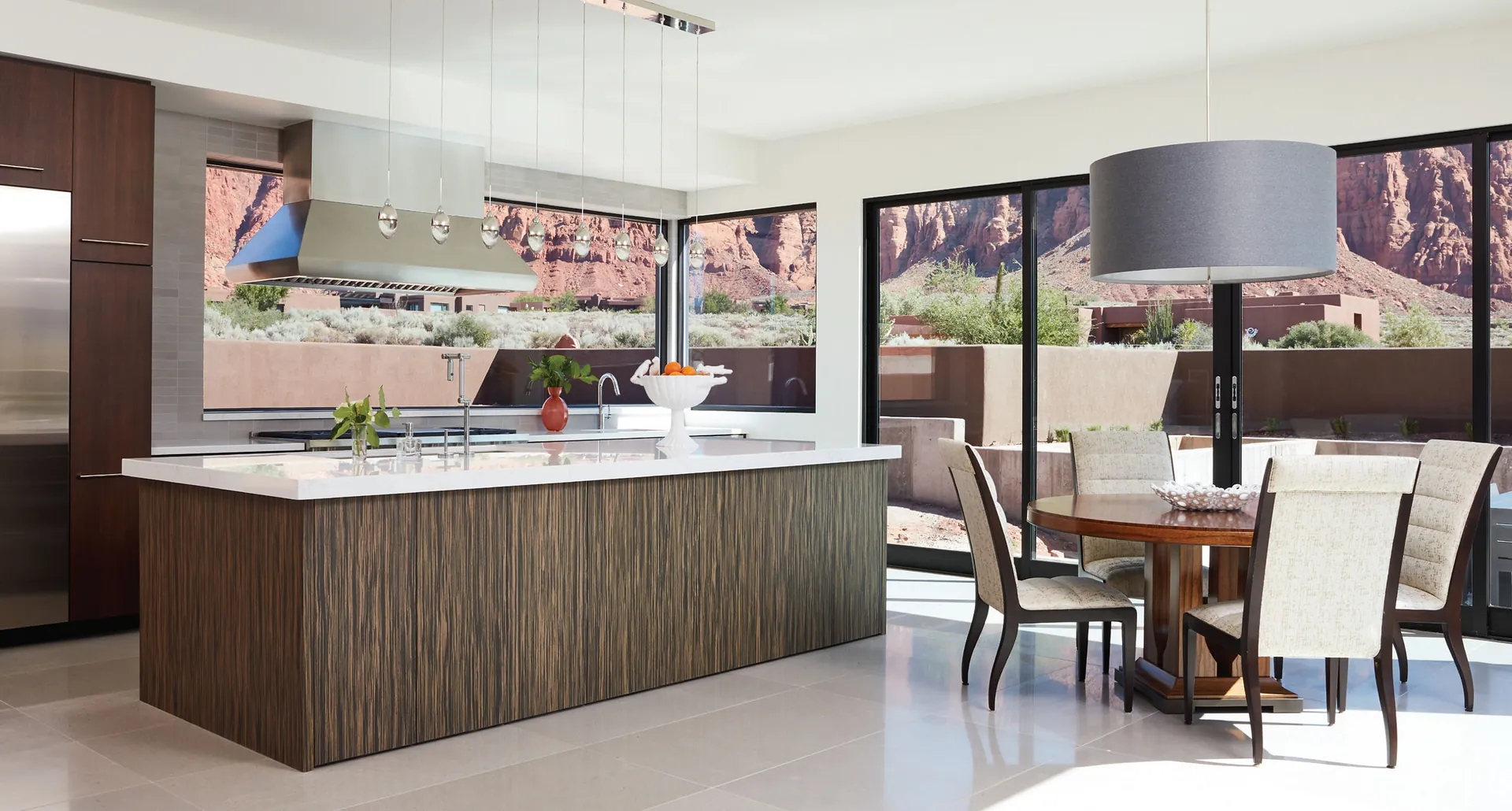
Outdoor kitchens look great in the showroom. They look great on the install day. The question, the only one that matters, is what they look like five years in, after Florida sun, summer rain, occasional salt spray, and pollen have been working on them. The answer depends almost entirely on the material you pick. Some hold up beautifully for decades. Others fade, crack, or chalk inside three years and you start over.
We install countertops across Polk County, indoor and out, and we get the same question every summer: "Will this slab survive outside?" Here's the honest read on every material people ask about: what works, what doesn't, and why.
What Florida Does to Outdoor Surfaces
Before the material list, the conditions. Florida is uniquely hard on outdoor counters for four reasons most homeowners underestimate.
UV Exposure
Polk County averages over 230 sunny days a year. Direct UV breaks down resins, plastics, sealers, and certain stones over time. The effect compounds. A counter that looks fine after one summer can look chalky and faded after three.
Heat
Counter surfaces in direct summer sun in Florida regularly hit 140°F to 160°F. Air temperature might be 92°F, but the slab itself runs much hotter. That heat cycles every day with sunset, expanding and contracting the material continuously. Materials that don't tolerate thermal cycling crack at edges and seams.
Humidity and Rain
Average summer humidity in Polk County runs 75% to 90%. Afternoon thunderstorms drop heavy water on every outdoor surface, then full sun evaporates it minutes later. Water that soaks into a porous material has nowhere to go but back out, slowly, repeatedly, season after season.
Salt and Pollen
Inland Polk County doesn't see coastal salt directly, but salt spray drifts inland during storms. More relevant for most homeowners: heavy spring pollen and acidic plant debris (oak, palm, pine) that lands on counters and stains anything porous if left to sit.
A counter that survives this gauntlet needs to handle UV, thermal cycling, water saturation, and acidic debris. All four. Materials that handle three of the four still fail eventually. Materials that handle all four last decades.
The Honest Verdict on Each Material
Granite: The Best Choice for Florida Outdoor Kitchens
Granite is essentially UV-stable, handles sun and grill heat well, and doesn't react to acidic pollen or rain. When sealed and resealed properly, it shrugs off humidity. We install it on nearly every outdoor kitchen we build in Polk County, and we've seen 20-year-old outdoor granite that still looks excellent.
The one caveat: granite needs to be sealed annually outdoors (versus every 1 to 3 years indoors) because UV and rain wear the sealer faster. Resealing is a 30-minute job with a $30 bottle. Easy DIY. Skip it for five years in a row and the granite can develop water marks or oil stains. Keep up with it and the slab lasts decades.
Granite color matters too. Darker granites (Absolute Black, Black Galaxy, dark browns) handle direct sun better than light-colored granites. They don't show pollen and water staining as visibly. Lighter granites work, but require more attention to sealing and cleaning.
Quartz: Usually a No for Florida Outdoor Use
This is where most homeowners get tripped up. Engineered quartz looks bulletproof indoors, and people assume the same toughness applies outside. It doesn't. Quartz contains 5 to 10% resin binder, and resins are not UV-stable. Direct Florida sun fades and yellows most quartz colors over 3 to 7 years, especially in darker pigments.
Cambria, Silestone, and Caesarstone all explicitly warn against outdoor installs in their warranty terms. Cambria names outdoor and partially exposed outdoor installations as excluded. Silestone's residential warranty is even shorter: it does not cover outdoor uses. Installing standard indoor quartz outside voids the warranty completely. We've replaced enough sun-damaged outdoor quartz to know the warning is real.
There is one exception: Caesarstone makes an outdoor-rated quartz line built with weather and UV-resistant technology. If your heart is set on a quartz-like look outdoors, ask about that specific outdoor-rated product. Standard indoor quartz is not the right choice.
We cover the full indoor comparison in Cambria vs Silestone vs Caesarstone if you're researching brands generally.
Sintered Stone (Dekton, Neolith): Not a Product We Carry
You will see sintered stone come up when you research outdoor counters. It is a newer kind of slab: natural minerals fused under extreme heat and pressure, with no resin. Cosentino says its Dekton is designed to withstand the heat of everyday cookware, though it tells owners to keep direct flame and very high barbecue heat off the surface. We do not carry sintered stone, so we cannot quote it or install it. For an outdoor kitchen from us, granite is the pick.
Concrete: Beautiful, But Florida Is Hard on It
Cast concrete counters are popular in design magazines and they look stunning when freshly poured. Florida's sun and rain cycle is unkind to them, though. Concrete is porous and needs aggressive sealing, every 6 to 12 months outdoors, versus every 1 to 2 years in dry climates. The sealer breaks down under UV faster than indoors.
Properly maintained, concrete works. Most homeowners don't maintain it that aggressively, and we see neglected concrete counters develop pitting, water staining, and surface chalking within 5 years. Pick it only if you genuinely love the look enough to maintain it.
Soapstone: Underrated
Soapstone is essentially impervious to chemicals, heat, and water. UV-stable. Doesn't need sealing. The catch: it scratches more easily than granite, and darkens over time as it absorbs oils. A great moderate-use option. The dark gray-green color blends naturally with most outdoor settings.
Stainless Steel: Workhorse for Heavy Cooking
If your outdoor kitchen does serious grilling, stainless steel is hard to beat. UV-stable, heat-proof, waterproof. The downside: it shows fingerprints and has a distinctly commercial look. Best used as a prep zone next to the grill, paired with a granite work counter for warmth.
Tile: Mixed Results
Outdoor-rated porcelain on a waterproofed substrate works fine. The challenge is grout. Joints absorb water, harbor pollen, and stain over years. If you go with tile, specify epoxy grout. Large-format porcelain with minimal grout lines is the best version of this category.
Laminate: Don't
The wrong material for any outdoor application. The substrate is particleboard, which swells with moisture. The plastic surface fades and cracks under UV. Save laminate for the indoor laundry room.
Sealers and Coatings
Any porous material outdoors, granite, concrete, soapstone, natural stone tile, needs an outdoor-rated sealer applied properly and refreshed on schedule. A few specifics:
- Use a sealer marked specifically for outdoor use. Indoor sealers don't have the same UV stability.
- Reseal granite annually in Polk County, not every 1 to 3 years like indoor granite
- Reseal concrete every 6 to 12 months. Yes, that often.
- Soapstone doesn't need sealing but benefits from a mineral oil rub every few months to keep the color even
- Stainless and Caesarstone outdoor quartz need no sealer ever
Test the seal annually by dripping water on the counter. If the water beads up, the seal is good. If it darkens the stone or soaks in, reseal.
Color Choice: A Real Performance Factor Outdoors
Indoor counters are picked entirely on looks. Outdoor counters add a performance dimension to color choice.
- Darker colors hide pollen and water staining better than lighter colors
- Lighter colors stay slightly cooler in direct sun (but only slightly; every outdoor counter gets hot)
- Heavy veining and complex patterns hide bird droppings and tree debris better than solid colors
- Glossy polished finishes show water spots more visibly than honed or leathered finishes
For most Polk County outdoor kitchens, our recommendation is a darker granite with a honed or leathered finish. Strong UV stability, hides debris well, looks good wet or dry, and doesn't get hammered by water spotting.
Common Outdoor Kitchen Mistakes We See
- Using indoor-rated quartz outside. The most common and most expensive mistake.
- Skipping the annual sealer renewal on granite. Fixable for years, then suddenly not.
- Installing slabs on cabinet boxes that weren't built for outdoor moisture. Particleboard cabinets rot in two summers.
- Picking a glossy finish in an open-sun location. Every water drop leaves a visible spot.
- Forgetting electrical and water rough-ins under the counter. Easy to add before fabrication, expensive to retrofit.
Most outdoor kitchen problems come from the planning stage, not the material itself. Pair the counter with new cabinets if you're remodeling at the same time. Want to pay over time? Ask about financing, subject to credit approval.
Frequently Asked Questions
How Long Should an Outdoor Granite Counter Last?
25 to 50 years with regular sealing. The slab outlives the cabinet base under it, the appliances, and usually the homeowner. The only real failure mode outdoors is staining from a lapse in sealer maintenance, and even those stains can usually be polished out by a professional.
Does My Outdoor Counter Need a Roof Over It?
Strongly recommended. A covered patio or pergola dramatically reduces UV exposure, lowers surface temperatures, and keeps direct rain off the counter. Fully exposed counters work fine on durable materials but age faster and get hotter.
Can I Have an Outdoor Kitchen in a Screened Lanai?
Yes, and it's a great compromise. Screening reduces UV, keeps pollen and palm debris off the counter, and lets you use lighter-colored materials with less wear. A screened-lanai outdoor kitchen with granite or even Caesarstone outdoor quartz will look new for decades with minimal maintenance.
The Bottom Line
Granite is the right answer for almost every outdoor kitchen in Polk County. Pick a darker color in a honed or leathered finish, seal it annually, and it'll outlast everything else in the yard. If you want a quartz look outside, ask specifically for Caesarstone's outdoor-rated line. Never install standard indoor quartz outside.
If you're planning an outdoor kitchen and want help matching the material to the conditions on your specific patio, contact us for a free in-home measure. We'll walk through sun exposure, cover, and intended use, and recommend the slab that'll still look great in 2046.
Sources
- Cosentino, Dekton Countertops Use and Care (REV. 06, 11/2023, PDF) (Dekton being designed to withstand utensil temperatures from domestic use, and the precautions against direct flame and very high direct heat such as barbecues)
- Cambria, Product Supply Terms and Conditions (cambria warranty terms excluding outdoor and partially exposed outdoor installations)
- Cosentino, Silestone 25 Year Warranty: Residential Limited Warranty for North America (silestone's residential warranty not covering outdoor uses)
- Caesarstone, Outdoor Countertop Collection (caesarstone's own weather and uv-resistant outdoor-rated quartz line)
More countertop tips
Have a project of your own?
Free in-home estimates across Polk County.