
Countertop Tips
Laminate Countertops in 2026: When It's Actually the Right Call
Modern laminate is not the laminate of 1995. Where it makes sense, where it doesn't, and the brands that still install beautifully in 2026.
- Published
- August 10, 2026
- Author
- Blackburn's Interiors, Winter Haven, FL
- Updated
- September 7, 2026
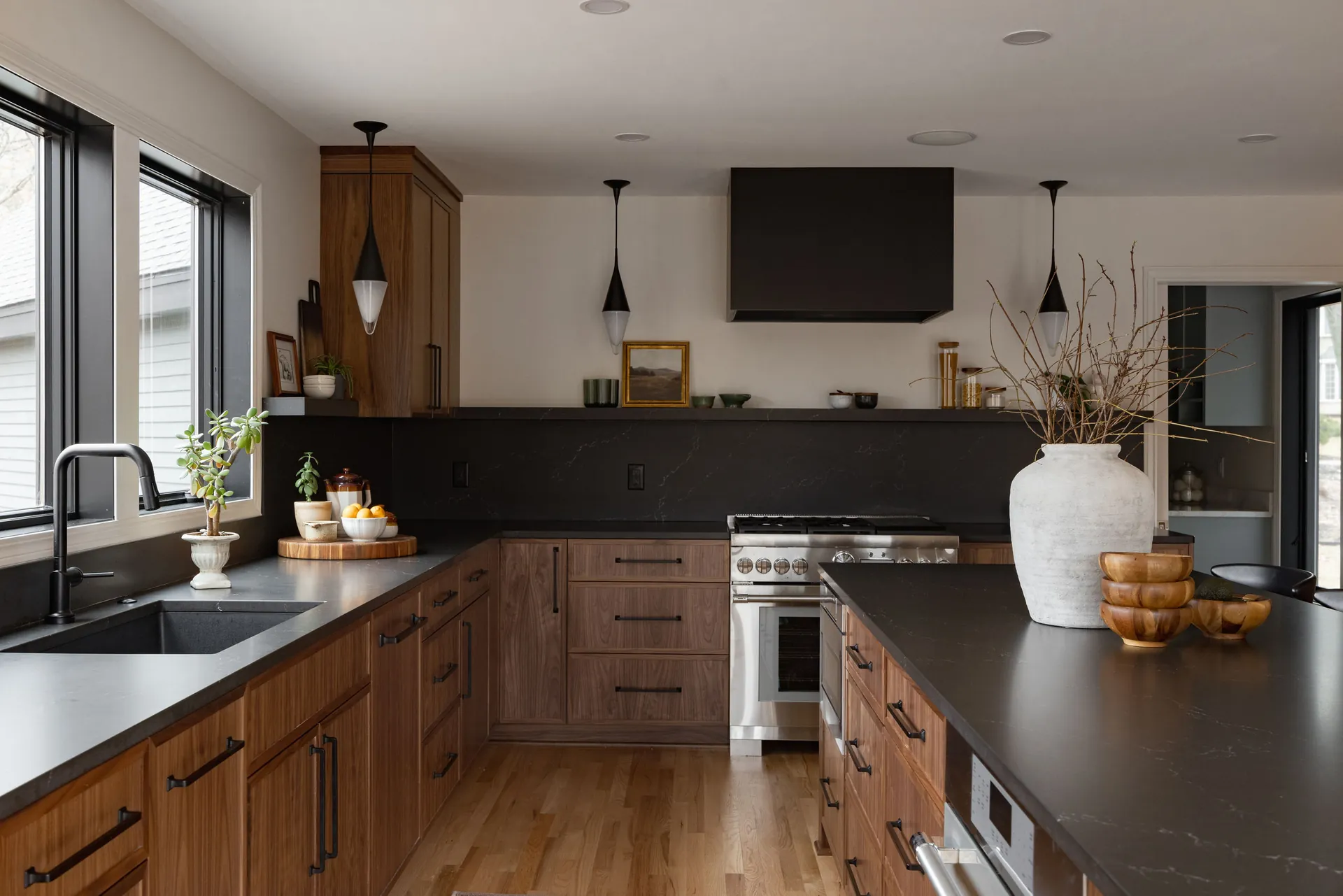
Laminate countertops carry a reputation. For most homeowners, the word still calls up beige speckled patterns, brown trim strips, and a bathroom in their childhood that hasn't been remodeled since 1992. That's outdated. Modern laminate, the products Wilsonart and Formica are making in 2026, looks dramatically different. The patterns now mimic marble, soapstone, concrete, and exotic stone convincingly. The edges can be made to look continuous instead of trimmed. The price is a fraction of stone. And for a real set of situations, it's the right call.
We carry laminate countertops alongside quartz and granite at our Winter Haven showroom, and we don't apologize for it. Used in the right place, modern laminate is a genuinely smart choice. Here's an honest read on when it makes sense and when it doesn't.
What Modern Laminate Actually Is
Laminate countertops start with a sheet built at a mill. The mill presses printed decorative paper (the part you see) over layers of resin-soaked kraft paper at more than 1,000 pounds per square inch and close to 300°F. That finished sheet is its own product. A fabricator then glues it to a particleboard or MDF substrate with contact adhesive, which is a separate step and not a press. The result is a hard, sealed, durable plastic surface bonded to a wood base.
Today's laminates have come a long way from the basic plastic-look products of decades past:
- High-resolution digital printing now reproduces marble, granite, and concrete patterns at near-photographic quality
- Textured surfaces (matte, leathered, woodgrain) match the feel of real stone or wood
- Premium products offer 'no drip' integrated edge profiles that eliminate the obvious trim strip
- Modern adhesives keep laminate sheets bonded for decades without delaminating
- Some lines (Wilsonart HD, Formica 180fx) print at full slab scale. Patterns don't repeat across a counter run.
Walk into a 2026 Wilsonart showroom and you'll see laminate that genuinely fools people standing five feet away. The compromises are real (more on that below), but the surface has caught up with the marketing.
When Laminate Is the Right Call
Rental Properties and Investment Homes
If you own a rental, a vacation property, or a flip that doesn't justify a $5,000 stone budget, laminate is the obvious answer. You get a clean, modern-looking kitchen for $20 to $50 per square foot installed instead of $50 to $150+. Tenants don't damage laminate any faster than quartz under normal use, and replacement after a long tenancy is cheap.
We install a lot of laminate counters for property owners in Davenport and Haines City. Short-term rental and vacation home markets where the math doesn't justify premium stone.
Laundry Rooms and Utility Spaces
A laundry room counter takes very little wear and almost no heat. Spending stone money on a folding surface that gets used 6 hours a week and stays mostly clean is overkill. Laminate looks great, costs a fraction, and frees the budget for the spaces that need real materials.
Garage Workshops
A garage workbench or utility counter doesn't need stone. Laminate is more impact-resistant than people think (the substrate flexes slightly without cracking), and easy to replace if you ever damage it badly. For a workshop where you actually work with tools and parts, laminate is the right material.
Tight Budget Primary Kitchens: When You Can't Skip the Remodel
Sometimes the kitchen has to get remodeled, selling the house, accommodating a growing family, replacing a damaged counter, and the budget genuinely doesn't allow for stone. The choice isn't between laminate and granite; it's between laminate now and waiting another two years to do anything. In that situation, modern premium laminate (Formica 180fx, Wilsonart HD) gives a finished kitchen for $1,500 to $3,000 installed instead of $5,000 to $10,000+.
Done well, a laminate kitchen looks intentional and clean, not cheap. Pick a current pattern, match it to good cabinets, and the room reads as a real, completed kitchen.
Specific Vintage and Mid-Century Design Choices
Some kitchens are intentionally designed in mid-century, retro, or specific period styles where laminate is the historically correct material. Pink linoleum-look counters in a 1950s ranch restoration, bright-color laminates in a Palm Springs-inspired remodel. Laminate isn't a budget compromise here. It's the right call for the design language.
When Laminate Is the Wrong Call
Heavy-Use Family Kitchens
Three meals a day with kids cooking and dragging plates across the surface. That's where laminate's wear starts to show. The surface chips at edges over years. A pan set down straight off the burner can crack or blister it, and heat that sits there long enough can loosen the sheet from the wood underneath. If the kitchen is your primary work surface for the next 15 to 20 years, the math favors stone.
Resale-Driven Kitchens
Real estate buyers in 2026 expect quartz or granite in kitchens above the entry-level price point. Laminate in a $400,000+ Polk County home reads as a downgrade and often costs more in negotiating leverage than the homeowner saved on the original install.
Heavy Cooking and Hot Pan Habits
The industry standard actually rates laminate's heat resistance as high. That is not permission to set a pan on it. Wilsonart's own care sheet says never put cookware straight from the oven or the burner on an unprotected top, because that kind of heat can crack or blister the surface. The standard also warns that prolonged heat above 150°F can separate the laminate from its substrate, and it says do not go above 275°F at all. Use trivets religiously or pick a more heat-tolerant material.
Around Undermount Sinks
The most common laminate failure isn't the surface. It's water getting into the seam at the sink edge and swelling the substrate underneath. Drop-in sinks are the safer pairing. Skip undermount installations on laminate.
How Modern Laminate Compares to Quartz and Granite
Cost
Laminate installs at roughly $20 to $50 per square foot. Quartz and granite typically run $50 to $150 per square foot installed. On a 50 square foot kitchen, that's a $1,500 to $5,000 difference. The price gap is the main reason laminate stays in the market, and it's not closing.
Durability
Quartz and granite scratch resistance: high. Heat resistance: high (granite) and moderate (quartz). Stain resistance: high. Lifetime: 30 to 50+ years.
Laminate scratch resistance: moderate. Surface marks and dulls over time. Heat resistance: rated high by the standard, with two hard limits. Prolonged heat above 150°F can separate the sheet from the substrate, and nothing above 275°F belongs on it. Stain resistance: high on the surface, low at any open seam. Lifetime: 10 to 20 years with normal home use, with HUD's useful-life table landing at 15 for family housing.
Appearance
Quartz and granite have real depth. Light catches mineral or crystal facets and produces visible variation as you move around the kitchen. Laminate is a printed image on a flat surface; no matter how good the print, the lack of physical depth is the tell. From across the room a premium laminate looks excellent; up close it reads as plastic to a trained eye.
Most non-trade-professional guests don't notice. If you're hosting for a magazine photographer, they will.
Resale Value
Mentioned above but worth restating. Real estate listings frequently call out 'granite counters' or 'quartz counters' as a feature. They rarely call out laminate as a positive. The premium-stone counter remains a marketable upgrade in 2026.
Our full breakdown comparing stone options is in quartz vs granite countertops. Worth a read if you're on the fence between materials.
Brands We Trust in 2026
Modern laminate is a two-name market for most American kitchens, and both names are excellent at the top of their range.
Wilsonart
We've worked with Wilsonart for years. Their HD (High Definition) line is the upper-tier laminate offering. The marble prints are why people pick it, and the concrete and woodgrain textures look current. We won't print pattern names here, because Wilsonart spells its own decors its own way and the deck turns over. Ask us for the live sample book instead. Wilsonart also makes our quartz, which speaks to their depth in the countertop space generally.
Formica
Formica's 180fx line uses oversized digital prints that don't repeat across a counter, solving the classic pattern-repeat problem that plagued earlier laminates. The 180fx marble looks (Calacatta Marble, Antique Mascarello, Calacatta Cava) are some of the best in the category. Standard Formica patterns work for utility installs at a lower price point.
Both brands offer 'no drip' edge profiles (a small built-up front edge that hides the laminate seam), 'beveled' decorative edges, and integrated backsplash options. Stick with these two for any laminate counter you actually care about.
Installation Details That Matter
- Substrate matters: premium particleboard or MDF, not generic plywood; thicker is better around sinks
- Edge profile choice affects how modern or dated the counter reads. Beveled and no-drip edges look current; old-school T-mold trim looks 1990s.
- Sink selection: drop-in (overmount) sinks are the safest pairing; undermount sinks on laminate are an installation challenge and a higher failure risk
- Caulking matters. A sealed silicone bead around every cutout and seam protects the substrate from water.
- Cooktop cutouts need heat-shield strips installed. Sustained heat coming through an unprotected cutout is what separates laminate from its substrate.
A well-installed laminate counter looks remarkably current. A badly installed one looks dated within a year. The difference is the installer.
Maintenance and Care
- Wipe with mild dish soap and warm water. No sealing, ever.
- Avoid heat at all costs. Trivets always, no exceptions.
- Check sink and cutout caulk yearly and reapply if it cracks
- Don't cut directly on the surface. Laminate scratches faster than quartz.
- Fix any edge chip within a week with seam filler before water gets behind it
When to Pick Laminate: Decision Tree
Quick decision framework. If you can answer yes to most of these, laminate is worth a real look:
- Is this a low-traffic counter (laundry, garage, secondary kitchen)?
- Is the budget genuinely tight, under $30/sq ft?
- Is this a rental, flip, or short-term-use property?
- Do you cook lightly and use trivets religiously?
- Is this a vintage or period-correct restoration?
- Is your sink a drop-in style (not undermount)?
If you're answering no to most of these, heavy-use family kitchen, primary residence, planning to host, regular hot-pan cooking, quartz or granite will serve better long-term. Ask about financing, subject to credit approval, if you want to pay for a stone upgrade over time.
Frequently Asked Questions
Will My Guests Be Able to Tell?
Modern premium laminate is genuinely convincing from normal viewing distance. Up close, especially when running a hand across it, the difference is real. No temperature change like stone, no crystal facets catching light. Most guests don't get close enough or know what to look for.
How Long Will a Laminate Counter Last?
10 to 20 years with normal home use. Heavy daily use shortens that. The substrate around sinks is usually the first failure point. By year 15, sink-edge damage from water exposure is common. The decorative surface itself can last longer than that with care.
Can I Switch From Laminate to Quartz Later?
Yes, easily. Laminate counters lift off cleanly because they're not adhered to the cabinets the same way stone is. You can swap a laminate counter for stone in a few days with no major remodel work. Many homeowners use laminate as a deliberate stepping stone: finish the kitchen now, upgrade later when the budget allows.
The Bottom Line
Modern laminate isn't a compromise. It's a category with a real, useful place in a real kitchen budget. For rentals, secondary spaces, tight-budget primary kitchens, and period-correct designs, it does the job well at a fraction of the stone price. For heavy-use family kitchens where the budget can stretch, quartz or granite is the smarter long-term investment.
We install both. If you want to see modern laminate samples side by side with quartz and granite slabs, contact us to visit our Winter Haven showroom. We'll walk through the trade-offs honestly and quote both options so you can decide with the numbers in front of you.
Sources
- NEMA, LD 3-2005 Annex B: Care and Cleaning of High Pressure Decorative Laminates (the heat rules we print: the standard rates HPDL heat resistance high, says exposure above 275°F is not recommended, and warns that prolonged exposure above 150°F can separate the laminate from its substrate. It also backs the no-cutting-on-the-surface rule and the edge-chipping caution.)
- NEMA, LD 3-2005 Annex A: Application, Fabrication, and Installation of High Pressure Decorative Laminates (that contact adhesive, not a press, bonds the finished sheet to the substrate, that exposed core edges and sink cutouts have to be sealed against water, and the good particleboard or MDF substrate rule)
- Wilsonart, Technical Data: Wilsonart HD Laminate (how the sheet is built at the mill, melamine-saturated decorative paper pressed over phenolic-resin kraft core at more than 1,000 pounds per square inch and close to 300°F, plus Wilsonart's own 275°F sustained-exposure ceiling)
- Wilsonart, Wilsonart Laminate Care & Maintenance (the rule that cookware straight from the oven or the burner can crack or blister an unprotected laminate top, which is why we say trivets every time)
- U.S. Department of Housing and Urban Development, CNA e-Tool Estimated Useful Life Table (the service-life comparison: HUD gives plastic laminate tops 15 years in family housing, against 50 years for granite, natural stone, and engineered stone tops)
- Formica, National Product Guide (July 2026) (which named decors are actually 180fx, including Calacatta Marble, Antique Mascarello, and Calacatta Cava, and the large-scale flowing print with no repeat in a sheet of laminate)
More countertop tips
Have a project of your own?
Free in-home estimates across Polk County.