
Countertop Tips
How to Match Your Countertops, Cabinets, and Floors
The secret to a room that feels pulled together is not one perfect color. It is matching undertones, choosing blend or contrast, and testing in your own light.
- Published
- September 30, 2026
- Author
- Blackburn's Interiors, Winter Haven, FL
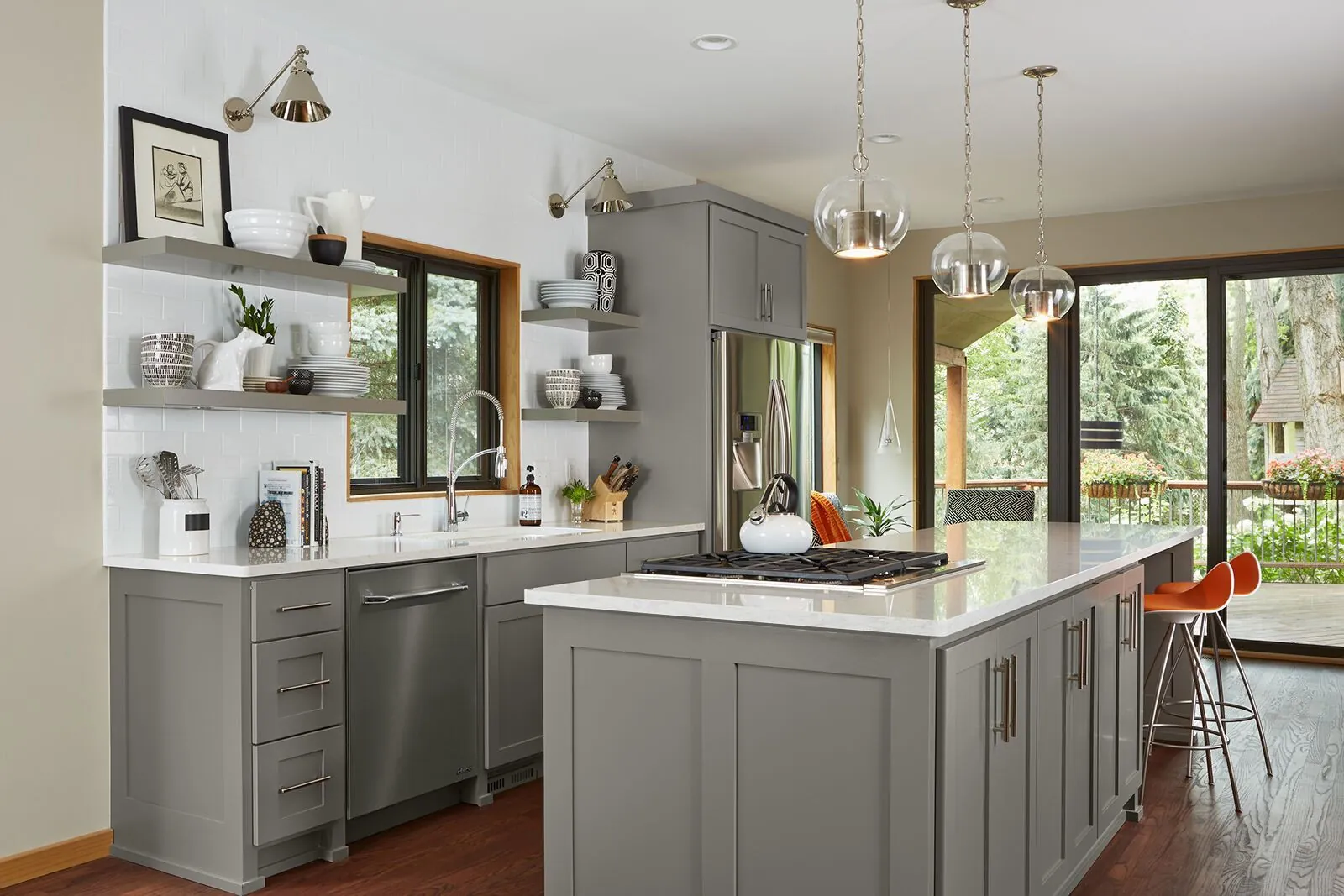
You have seen it before. Every piece is nice on its own. The countertops are beautiful. The cabinets are the exact color you wanted. The flooring looked gorgeous in the box. Then it all lands in one room and something feels off. Nobody can quite say why.
Most of the time the problem is not a bad choice. It is three good choices that do not talk to each other. The fix is not luck. It comes down to a few simple rules we walk Polk County families through every week at the showroom. Get these right and the room feels pulled together, even if a guest could never tell you the reason.
Rule 1: Match Undertones Before Anything Else
The first mistake people make is thinking only in light and dark. They pick a light floor, light cabinets, and a light counter and expect it to match. Sometimes it clashes anyway. The reason is undertone.
Every color has a temperature hiding under the surface shade. Warm materials lean yellow, gold, or peach. Cool materials lean gray, blue, or pink. A gray floor can be a warm gray or a cool gray, and the two do not mix well in the same room.
There is an easy test. Hold a plain sheet of white paper next to the sample and look at what color the material pulls toward against the pure white. Warm samples read slightly yellow, peach, or golden. Cool samples read slightly gray, blue, or pink. Do this with your floor, your cabinet door, and your counter sample side by side. If they all lean the same way, you are on solid ground.
This is a different question from how light or dark to go. That one has its own answer. If you are still weighing shade, read should your flooring be lighter or darker than your walls. Undertone comes first. Shade comes second.
Rule 2: Decide to Blend or Contrast on Purpose
Once your undertones agree, you have a choice to make. You can blend or you can contrast. Both are right. The mistake is doing one by accident when you wanted the other.
Blend
Blending keeps the floor in the same warm or cool family as the cabinets and walls. The room reads calm and cohesive. Surfaces flow into each other and the space feels larger. This is the restful choice, and it works best in smaller rooms and open floor plans where you do not want a lot of visual noise.
A blend might be warm oak floors, cream cabinets, and a soft warm-white quartz counter. Everything leans warm. Nothing jumps out. The whole room feels like one thought.
Contrast
Contrast pairs the floor and the cabinets from opposite temperature families. The floor stops being a background and becomes its own design element. The look is defined and a little editorial. It carries more energy. This works best in larger rooms that can hold the drama without feeling busy.
A contrast might be a cool, dark floor under warm wood cabinets, or a warm wood floor under crisp cool-white cabinets with a bold veined counter. The point is that you chose it. You are using the temperature difference as a tool instead of fighting it.
One Florida note. In most Polk County homes the floor is doing the warm work. Luxury vinyl plank with a wood-look grain shows up in kitchen after kitchen here because it stands up to humidity and spills, and many of those planks lean warm, though cool grays are common too. So we often start with the floor's undertone and build the cabinets and counter outward from there.
Rule 3: One Bold Surface, Two Supporting
Here is the rule that saves the most rooms. Pick one surface to be the star. Let the other two support it. When all three surfaces shout at once, the eye has no place to rest and every choice fights the others.
Designers have a simple version of this called the 60-30-10 rule. Think of it as visual weight, not exact math. Roughly 60 percent of the room is your dominant, quiet layer: the walls, the main run of cabinets, and the floor. About 30 percent is your secondary interest: the island, the counters, the base cabinets. The last 10 percent is the accent: the backsplash, the hardware, the lighting.
So if you fell in love with a dramatic veined counter, let it be the star and keep the cabinets and floor calmer so the counter has room to breathe. If your heart is set on a rich wood floor, let the counters and cabinets play a supporting role. You get one bold move per room. Spend it well.
Rule 4: Treat Trim and Walls as Connective Tissue
People agonize over trim and wall color as if it is a fourth big decision. It is not. Trim and walls are the connective tissue that ties the three surfaces together.
Pick your trim white from the same undertone family as whichever surface is doing the most work. If the floor is carrying the room, match the trim to the floor's temperature. If the cabinets are the star, pull the trim toward them. A warm room wants a warm white. A cool room wants a clean, cool white. The wrong white can make a whole room feel slightly off even when everything else is right.
Rule 5: Always Test in Your Own Light
This is the rule people skip, and it is the one that burns them. Showroom lighting can fool you. Store lights are bright, even, and chosen to make product look its best. Your kitchen is not lit like that.
A sample that looks perfect under our showroom lights can pull warm or cool the moment it gets home. There is no wrong color, only the wrong light for it. That matters even more in Florida. Big windows, sliders to the lanai, and bright afternoon sun push undertones around fast. A gray that reads neutral in the store can go blue by four o'clock.
So test for real. Take large samples home, not tiny chips. Set the floor, cabinet, and counter samples together on the actual floor, in the actual kitchen. Look at them in morning light, in afternoon sun, and under the bulbs you use at night. Give it a full day before you decide. This one habit prevents most matching regrets.
Where to Start: Floor, Cabinets, or Scratch
Most projects do not start with a blank slate. Here is how to run these rules depending on what is already set.
You Are Keeping the Floor
Read the floor's undertone first with the white-paper test. That temperature is now your anchor. Choose cabinets and counters that either blend into it or contrast it on purpose. Everything answers to the floor.
You Are Keeping the Cabinets
Do the same in reverse. Read the cabinet undertone, then pick a floor and counter that agree with it. When the cabinets are staying, they usually become the star, so let the floor and counter support them.
You Are Starting From Scratch
Lucky you. Pick your one bold surface first: the thing you love most. Build the other two around it, keep the undertones in one family unless you are contrasting on purpose, then choose trim and walls last to tie it all together. If you want a floor you will still love in fifteen years, these floor colors never go out of style.
Frequently Asked Questions
Do My Cabinets and Floor Have to Match?
No. They should coordinate, not match. Matching the floor and cabinets too closely can wash a room out. What matters is that their undertones agree, warm with warm or cool with cool, and that you decided whether they blend or contrast.
Can I Mix Warm and Cool on Purpose?
Yes, and it can look great. That is contrast, and it is a real strategy for larger rooms. The trick is to do it deliberately and let one temperature lead. Mixing warm and cool by accident is what makes a room feel off.
What If My Counter, Cabinets, and Floor Are All Different?
That is fine as long as one is the star and the other two support it. Three loud surfaces fight. One bold surface with two calmer ones reads as designed. The undertones still need to agree.
Should I Pick the Counter or the Cabinets First?
Start with whatever you love most, or whatever is already staying. If you fell for a slab, build the room around the counter. If the cabinets are set, they lead. There is no fixed order, only one bold surface and two that support it.
The Bottom Line
Matching your three surfaces is not about a magic color. Match undertones first. Choose blend or contrast on purpose. Let one surface be the star and keep the other two quiet. Tie it together with trim and walls. Then test it all in your own light before you commit.
This is the exact call we love helping with, and it is hard to get right from a phone screen. Come see full samples side by side at our Winter Haven showroom, under real light, with a family that has served Winter Haven since 1962. Book a free consult and bring your paint chips and photos. We will help you pull the whole room together. If the timing is right, ask us about financing with approved credit, so you can pay for the project over time. Thank you for considering our family. We know you have other options, and we would be honored to help.
Sources
- Caledon Floors, How to Match Floor Tone with Cabinets, Trim and Walls (The white-paper undertone test, the blend-versus-contrast strategy, treating trim as a connecting neutral, and testing samples in real room light)
- Cambria, Pairing Countertops and Cabinetry (picking an anchor surface you love and building the room around it)
- Kitchen Tune-Up, The 60-30-10 Rule for Selecting Kitchen Colors (The 60-30-10 dominant, secondary, and accent visual-weight split (the source maps the 60 percent dominant layer to the perimeter cabinets and walls; putting the floor in that quiet layer is our own application))
- Livingetc, How Does Lighting Affect What Your Paint Colors Look Like? (Testing samples across the day under the actual bulbs you will use, since there is no wrong color, only the wrong light for it)
More countertop tips
Have a project of your own?
Free in-home estimates across Polk County.