
Flooring Tips
Engineered vs Solid Hardwood in Florida: Which Survives the Humidity?
Most Polk County homes sit on a concrete slab, and that one fact usually decides it. Here is how engineered and solid hardwood really compare in Florida.
- Published
- October 5, 2026
- Author
- Blackburn's Interiors, Winter Haven, FL
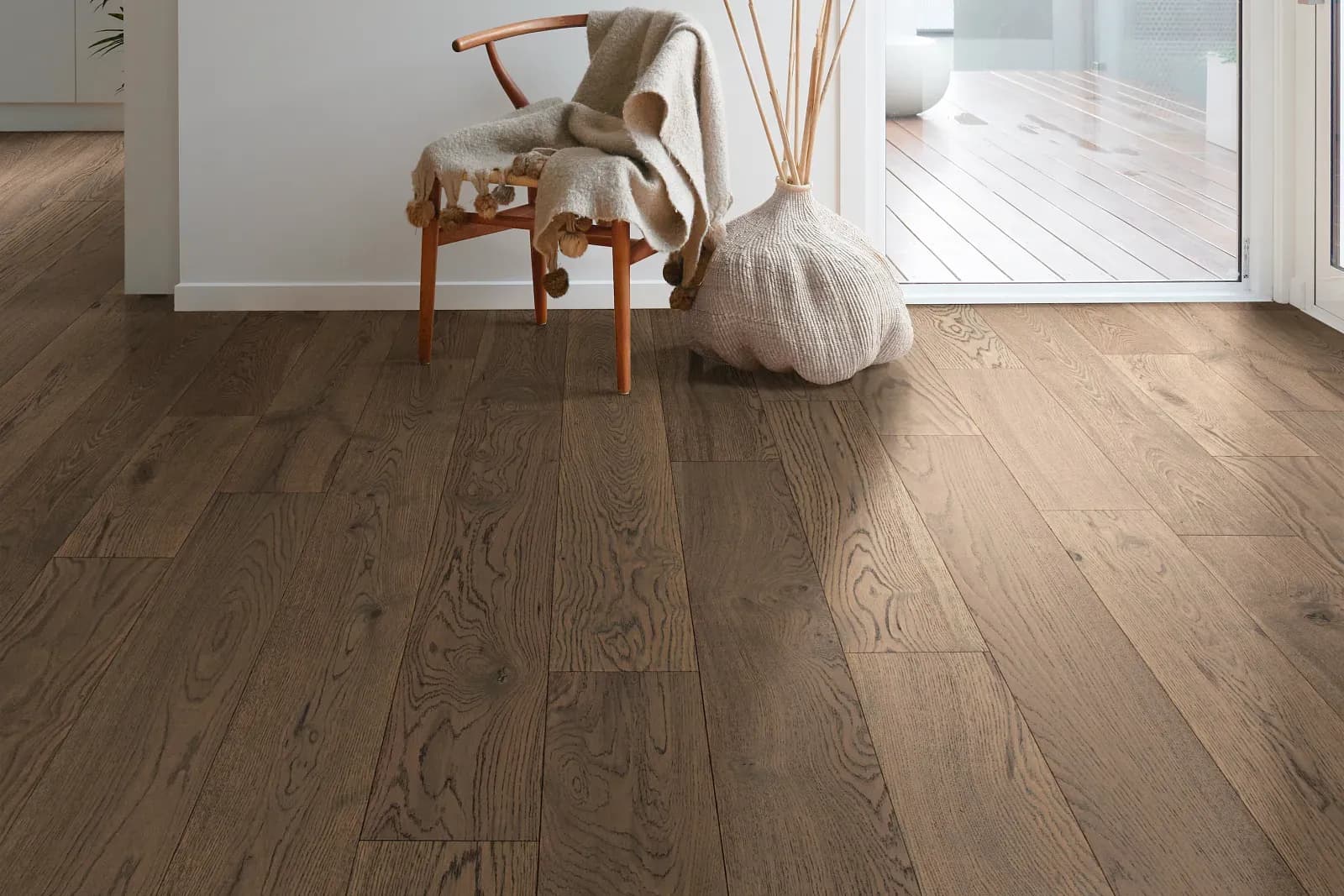
Most people ask this question the wrong way. They ask which wood is nicer. Both are real wood, and both can look beautiful. The question that actually matters in Florida is which one survives your slab and your air conditioning.
Nearly every home in Winter Haven, Lakeland, and the rest of Polk County sits on a concrete slab. No basement, no crawl space. That single fact does more to decide engineered versus solid than any grain or color ever will. Add our humidity, which soaks the air from April through October and then dries out fast once the AC runs, and you have the exact conditions that make wood floors move. Here is how the two products handle it.
What Engineered Hardwood Actually Is
Engineered hardwood is a real wood veneer bonded over a core of thin plywood layers. Each layer runs in a different direction. That cross-ply build fights the natural urge of wood to expand and shrink, so the plank stays flatter and steadier when the air changes. The top is genuine wood, so it looks and feels like the species you picked. It just moves less.
That stability is why engineered can be installed on all three grades: below ground, at ground level, and above. Industry guidance from the National Wood Flooring Association's magazine puts it plainly, noting engineered flooring's added dimensional stability to handle a slightly higher moisture level than solid can. On most Polk County slabs, engineered can go down directly over the concrete once the slab is prepped and tested.
What Solid Hardwood Actually Is
Solid hardwood is one piece of wood from the top face all the way through. There is no core to hold it steady. Every part of the board reacts to the moisture around it. That is part of the charm, because solid wood is the real, traditional floor, but it also means the board swells in humid weather and shrinks in dry weather.
Because of that movement, solid should only be installed on grade or above grade, never below. And on a slab, it is not a simple glue-down. The wood needs something to bite into and a barrier to keep slab moisture away from it.
The Slab Problem That Rules Out Most Solid Installs
This is where the Florida reality hits. To put solid hardwood over a concrete slab, you first have to build a wood subfloor for it to attach to. The American Hardwood Information Center describes laying a nailing surface of 3/4-inch exterior plywood panels over the slab, with a proper vapor retarder on top of the concrete first. Manufacturers back this up. Bruce states that solid hardwood typically requires a plywood subfloor, while engineered hardwood can be installed directly over concrete.
That plywood build-up costs money, raises the floor height, and adds a step to the job. It is doable, and in the right home it is worth it. But for a standard slab home it is often the deciding factor. Engineered skips that whole layer. It installs over the slab directly or floats above it, which is faster and usually kinder to the budget.
One rule holds for either product on a slab: the concrete has to be cured, flat, and moisture-tested first. Manufacturer install guides like Mohawk's spell out cure time, moisture testing, and flatness before any wood goes down. Central Florida slabs can release moisture for years after the pour, and older Polk County homes sometimes have no vapor barrier at all. That is why we test every slab before we quote a wood floor. Skipping that test is how good floors go bad.
Cupping and Gapping, Explained Simply
Two words come up whenever wood floors and humidity get discussed: cupping and gapping. Both are just wood reacting to moisture. Knowing the difference tells you what is normal and what is a real problem.
Cupping
Cupping is when the edges of a board rise higher than its center, so the floor looks a little wavy. The most common cause is a moisture imbalance, where the underside of the boards absorbs more moisture than the top and swells unevenly. In Florida that often means slab or subfloor moisture pushing up from below, a humid summer stretch, or wood that was installed before it reached the room's moisture level. Cupping is a summer, high-humidity problem, and it is one big reason engineered wins over a slab: less movement, less cupping.
Gapping
Gapping is the opposite. When the AC or winter heat dries out the indoor air, the boards lose moisture and shrink, and thin lines open between them. A small amount of seasonal gapping is normal, acceptable, and usually self-correcting once humidity comes back. Wide gaps that never close are a sign the air got too dry for too long. For any wood floor, the fix is the same on both ends: keep the indoor air steady.
The Humidity Range Your Floor Wants
Wood floors have a comfort zone. Industry guidance points to keeping indoor relative humidity in roughly the 30 to 55 percent range, with the temperature in a normal living band. Let it fall below 30 percent and you risk large gaps, splits, and even structural damage to the floor.
Florida makes that harder than most places, and not in the way people expect. Our problem is not just high humidity. It is the swing. Brutal outdoor moisture half the year, then dry AC air the other half. Vacation homes and snowbird houses are the hardest cases. When the thermostat gets shut off for months, the indoor air swings wide, and that is exactly the whipsaw that cups a floor in August and gaps it in January. If you keep a home here part-time, plan to keep the AC or a dehumidifier running, not just for comfort but for the floor. Our humidity is a big part of why we compare hardwood and luxury vinyl plank for Florida homes so often. Wood can absolutely work here. It just asks for steadier air.
Refinishing: How Many Lives Does the Floor Have?
This is where solid earns its reputation. A solid 3/4-inch floor can typically be sanded and refinished 4 to 7 times over its life. Sand off the scratches, change the color, and it looks new again. That is decades of second chances, and it is a real reason solid wood can outlast the people who install it.
Engineered is different because you are only sanding the real-wood veneer on top, not the whole board. How many times you can refinish depends entirely on how thick that wear layer is. A thin layer under about 2mm may not be safely sandable at all. A thicker 3mm-plus wear layer can usually be refinished once or twice, sometimes up to three times. So engineered runs roughly 0 to 3 refinishes against solid's 4 to 7.
Here is the honest way to read that. If you dream of passing a floor to the next generation and refinishing it every decade, solid has the edge. If you want real wood that stays flat on your slab and looks great for many years, a good engineered floor with a thick wear layer gives you plenty of life without the subfloor headache. We help you match the wear layer to how long you plan to keep the floor.
So Which One Wins in a Florida Slab Home?
For a typical slab-on-grade home in Polk County, engineered hardwood is usually the practical real-wood choice. It goes over the slab without a plywood build-up, it stays steadier through our humidity swings, and it resists the cupping that trips up solid wood on concrete. You still get a genuine wood floor. You just get one built for the way our homes are built.
Solid hardwood has its place. Over a raised wood subfloor, or over a proper plywood subfloor built on the slab with a vapor retarder, it brings its unmatched refinishing life. It is not a floor you can get from us, though. We install engineered hardwood, not solid.
And if a room sees real water, a kitchen sink, a full bath, a laundry, wood may not be the answer at all. In those spots luxury vinyl plank or tile often makes more sense. If your worry is standing water and rot rather than everyday humidity, our guide to which hardwood resists water and rot digs into species and sealing.
Frequently Asked Questions
Can I put solid hardwood over a concrete slab in Florida?
You can, but not directly. Solid needs a wood subfloor to attach to, which means building a 3/4-inch plywood layer over the slab plus a vapor retarder to block slab moisture. That adds cost and height. Engineered installs over the slab without that step, which is why most slab homes here go engineered when they want real wood.
Is engineered hardwood real wood?
Yes. The top surface is a genuine wood veneer of the species you choose, so it looks and wears like solid wood. The difference is underneath, where a cross-ply core replaces the rest of the solid board. That core is what keeps engineered flatter through humidity changes.
Will engineered hardwood still move in Florida humidity?
A little. No wood product is perfectly still. Engineered simply moves far less than solid because its layered core resists expansion and contraction. Keep your indoor humidity in the 30 to 55 percent range year-round and movement stays minor for either floor.
How many times can engineered hardwood be refinished?
It depends on the wear layer. A thin veneer under about 2mm may not be sandable at all. A thicker 3mm-plus layer can usually take one or two refinishes, sometimes three. If refinishing many times matters to you, ask about the wear-layer thickness before you buy.
The Bottom Line
In a Florida slab home, engineered hardwood is the wood floor that fits the way your house is built and the way our weather behaves. Solid hardwood is a beautiful, long-lived floor for raised or plywood subfloors and homes with steady climate control. The slab and the humidity swing decide it more than the color chip ever will.
Come see engineered hardwood in our 8,000-square-foot Winter Haven showroom, or contact us for a free in-home measure. We will test your slab, bring samples that make sense for your home, and walk you through wear layers and species with no pressure. Ask about financing with approved credit if you want to pay for the project over time. Family-owned in Polk County since 1962, we would be grateful for the chance to earn your floor.
Sources
- Hardwood Floors Magazine (NWFA-affiliated), Engineered Wood Floors Have a Comfort Zone Too (engineered's added stability and its use on all three grades, plus the 30 to 55 percent recommended indoor humidity range and the damage risk below 30 percent)
- American Hardwood Information Center, Installing a Hardwood Floor Over a Concrete Slab (solid hardwood over a slab needing a 3/4-inch exterior plywood nailing surface and a vapor retarder, with engineered as the better below-grade choice)
- Bruce Floors, The Best Engineered Wood Flooring for Basements (the manufacturer confirmation that solid typically requires a plywood subfloor while engineered installs directly over concrete)
- Wagner Meters, Can Wood Floor Cupping Be Fixed? (cupping caused by a moisture imbalance where the board underside absorbs more moisture than the top and swells)
- Urban Tree Flooring, The Lifespan of Your Wood Floors: How Many Times Can You Refinish? (the 4 to 7 refinish count for solid 3/4-inch wood and the wear-layer-dependent 0 to 3 for engineered)
- Mohawk Engineered Wood Installation Instructions (Home Depot-hosted PDF) (the manufacturer requirement to cure, flatten, and moisture-test a concrete slab before an engineered floor is installed)
More flooring tips
Have a project of your own?
Free in-home estimates across Polk County.