
Countertop Tips
How to Clean and Seal Granite Countertops in a Florida Home
Granite is porous, so it needs sealing. Here is the 15-minute water-drop test, an honest resealing schedule, the cleaners that ruin natural stone, and what Florida humidity changes.
- Published
- November 4, 2026
- Author
- Blackburn's Interiors, Winter Haven, FL
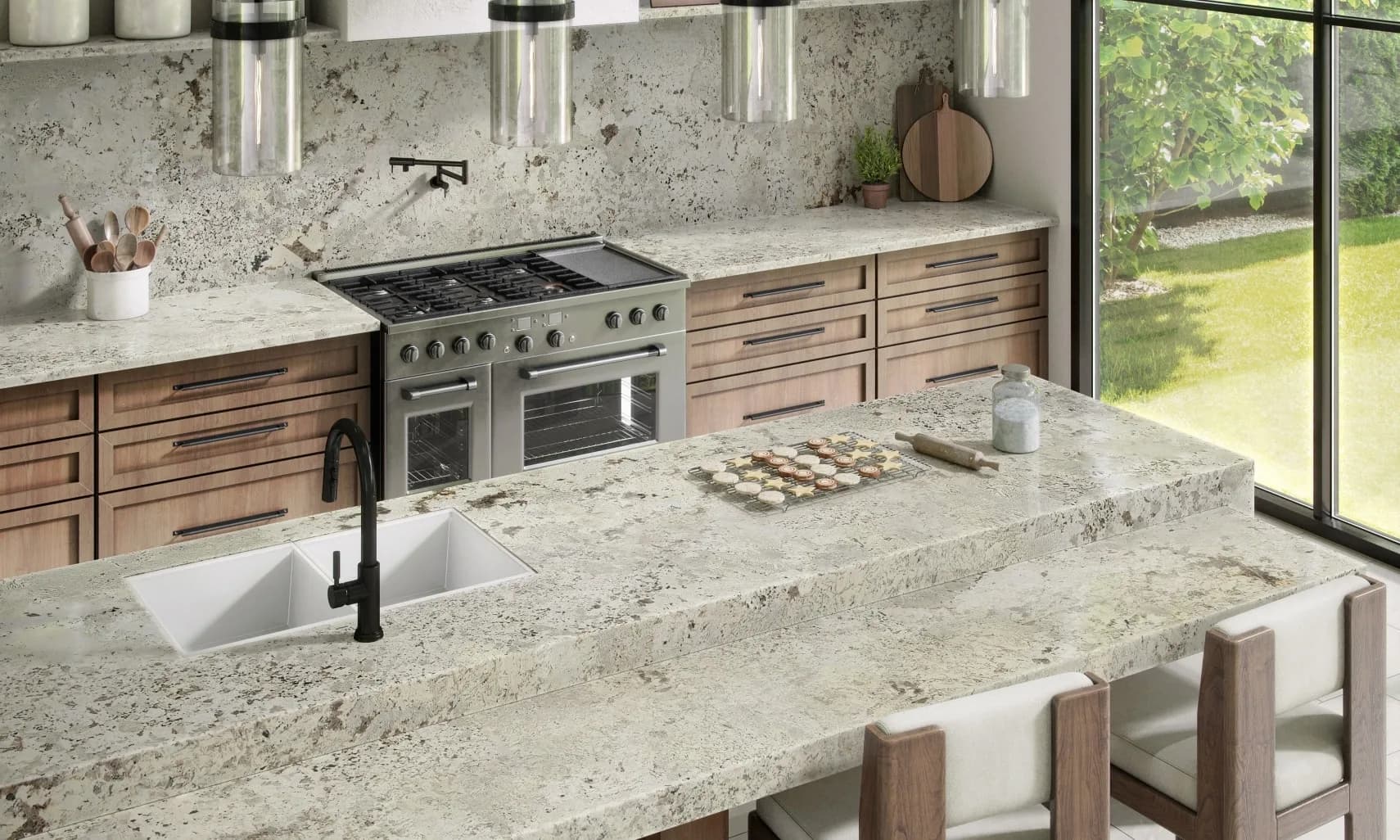
Granite needs to be sealed. Quartz never does. That one difference drives every rule in this guide, so start there and the rest follows.
Granite is real stone, cut out of the ground and polished. It has tiny pores. A penetrating sealer soaks into those pores so a spill sits on top long enough for you to grab a towel. Keep the seal fresh and granite countertops are one of the toughest surfaces you can put in a kitchen. Let it wear off and a puddle of olive oil can leave a dark shadow that will not wash out.
Granite Is Natural Stone, and That Changes Everything
Engineered quartz is crushed stone held together with resin. The resin closes the surface, so quartz is non-porous and never needs a sealer. If quartz is what you have, read how to care for quartz countertops instead. If you are still choosing between the two, we lay out the tradeoffs in quartz vs granite countertops.
Granite gets no resin. Nothing was added to close it up. MSI, one of the largest stone suppliers in the country, says it plainly: granite is naturally porous, and left unsealed it can absorb liquids like water, oil, and wine. That is not a flaw in the stone. It is just what stone is, and it only becomes a problem when nobody seals it.
What Sealing Actually Does (and What It Does Not)
A stone sealer is not a coat of varnish. Nothing sits on top of the slab. The product soaks down and lines the pores so liquid beads up instead of wicking in. The Natural Stone Institute is honest about the limits. The products the trade calls sealers are really impregnators, and they act as a repellent rather than a true seal. Sealing does not make stone stain proof. It makes it more stain resistant. A good seal buys you time. It does not buy you forever.
- A fresh seal does: give you minutes instead of seconds to wipe up a spill
- A fresh seal does: keep splash water from darkening the stone around the sink
- A fresh seal does not: save you if red wine sits on the counter overnight
- A fresh seal does not: protect against scratches, chips, or a hot pan
- A fresh seal does not: last forever, which is exactly why you test it
The Water-Drop Test Tells You When It Is Time
You do not have to guess, and you do not have to pay anyone to find out. The test takes about 15 minutes and costs nothing.
- Pick a spot you use hard, next to the sink or beside the cooktop.
- Sprinkle a few drops of water there.
- A few inches away, put down a few drops of cooking oil. Oil finds a tired seal faster than water does.
- Wait about 15 minutes, then wipe both spots and look at the stone.
If the water still beads up, the seal is doing its job and you are done. If the water or the oil soaked in and left a dark patch, the seal is worn and it is time to reseal. Bob Vila's granite guide uses the same test and the same 15-minute window. The dark spot itself usually fades as the stone dries out, so do not panic when you see it. MSI suggests running this test every six months. Put it on the calendar next to the smoke detector batteries and you will never have to wonder.
How Often Should You Reseal Granite? An Honest Answer
There is no single right number. Anyone who hands you one flat answer for every slab is guessing. Here is the actual range of published guidance.
- Bob Vila puts it at every 1 to 5 years. More porous stone with a honed finish lands around 1 to 2 years. Denser, less permeable, glossy slabs can go 3 to 5 years.
- MSI says experts generally recommend sealing once a year, and that it shifts with how hard you use the kitchen.
- The Natural Stone Institute will not name a number at all. It tells you to ask your supplier or the sealer manufacturer, because the answer depends on the stone, the finish, and the product used.
All three are right, which is the point. A dark, dense slab in a quiet guest bath is a different animal from a light, open-grain slab beside a busy range. Florida puts a thumb on the scale too. A stone care company over in Orlando, about an hour from our showroom, ties excess humidity straight to mold, staining, and mildew risk on natural stone. They call granite a permeable stone that may hold water when it is not sealed properly, and they recommend resealing every 6 to 12 months in this climate. That is one company's guidance and not an industry standard, but it points the same direction our experience does. In Central Florida, lean toward the short end of the range and let the water test settle the argument.
Daily Cleaning: Warm Water, Mild Soap, Soft Cloth
- Warm water
- A few drops of mild liquid dish soap, or a stone soap made for natural stone
- A soft cloth or sponge
- A dry towel
That is the whole list, and you already own it. It comes straight from the Natural Stone Institute, which calls for a neutral cleaner, stone soap, or a mild liquid dishwashing detergent and warm water. Bob Vila lands in the same place and says the best cleaner for regular granite cleaning is nothing fancier than dish soap diluted with water.
Wring the sponge out so you are not flooding the seams. Wipe the counter, rinse with clean water so soap film does not build up and go dull, then dry it with a towel. Drying is the step people skip, and it is the one that keeps water spots off a polished slab. In a humid house it matters twice as much around the sink rim and the faucet base, where standing water and mildew like to settle in.
The Cleaners That Are the Enemy of Natural Stone
- Vinegar, including a light vinegar and water mix
- Lemon, lime, and citrus cleaners
- Ammonia cleaners, which includes the standard blue window spray
- Bleach, especially at full strength
- Tub, tile, and grout cleaners off the bathroom aisle
- Abrasive powders like Comet or Ajax
- Steel wool and rough scouring pads
That list matters more than the routine, because most tired granite we see got that way from a spray bottle and not from cooking. Bob Vila's cleaning guide is direct about the cost: keep reaching for them and the polish dulls, the surface wears, and the sealer quietly breaks down. That last part is the piece homeowners miss. You can scrub the protection right off a counter and never see it happen. You only find out the next time something spills.
One Honest Note About Etching
You will read that acid etches granite the way it etches marble. That is not quite the whole story. The Natural Stone Institute scopes its warning carefully and says lemon, vinegar, and other acids may dull or etch calcareous stones, the family that includes marble, travertine, and limestone. Granite holds up to acid better than those do. But slabs sold as granite vary a lot in what is actually in them, and acid still breaks down the sealer and dulls the polish with repeated use. So the advice does not change. Keep the vinegar for the salad.
What Stains and What Dulls the Polish
Stains Soak In
A stain lives under the surface. Granite Gold, a stone care manufacturer, describes it simply: stone is porous, so when it is unsealed, liquid gets into the pores and leaves a mark beneath the surface. Oil is the usual culprit. Cooking oil, olive oil, butter, salad dressing. Wine and coffee do it too. In a Florida kitchen, add the two nobody thinks about: sunscreen off somebody's hands and fresh-squeezed orange juice from the morning. A stain feels smooth under your palm. The color is the only tell.
Etching Dulls the Shine
Etching is surface damage, not a stain. Acid eats at the polish and leaves a flat spot. Granite Gold names the usual liquids: vinegar, red wine, citrus, coffee, common household cleaners, and soda. In mild cases it looks like a clear water mark. In worse cases it shows up as a general dulling of the sheen across an area.
Here is the mean part. One spill can do both. Granite Gold points out that tomato sauce or coffee often etches and stains at the same time, because the acid opens up the surface and makes it easier to stain. That is the whole argument for wiping spills right away instead of finishing the episode first. The Orlando stone care company says the same thing about this climate: wipe leaks and spills as soon as they happen, because letting them sit leads to discoloration and damage.
How to Reseal Granite Yourself
Resealing is a Saturday job, not a project. Buy an impregnating sealer made for granite and read the label, because dwell times differ by brand.
- Clear the counters and clean them with mild detergent and warm water.
- Let the stone air dry. Bob Vila calls for a full 24 hours before you go any further, and a dry slab drinks the sealer better.
- Work in sections. Wipe the sealer on with a cloth in a circular motion, keeping the coverage even.
- Let it soak in for the time on the label. That is commonly 15 to 20 minutes, and sometimes much longer.
- Wipe off every bit of extra sealer with a clean dry rag before it dries on the surface.
- Let it cure. Bob Vila puts the cure window at 2 to 48 hours, and recommends waiting 48 hours before you wipe a freshly sealed counter.
- When the cure is done, run the water test one more time. MSI recommends that same confirm-it-worked step, and it takes 15 minutes.
When to Call a Pro
Some things are not a DIY fix, and pushing through usually makes them worse. Call your fabricator or give us a ring when you see any of these.
- A deep stain that soapy water and a poultice will not lift
- A dull patch that stays dull after the counter is clean and dry
- A chip in an edge or around the sink cutout. Small ones are sometimes repairable in place, but deep or highly visible damage belongs to a fabricator.
- A seam that has opened up or is trapping water
- A slab that never seems to hold a seal no matter how often you treat it
- Polish that is gone across a whole run. Restoring severe damage usually means wet polishing, which is messy enough that shops prefer to do it at the shop, not in your kitchen.
Frequently Asked Questions
Can I use the granite spray from the grocery store?
Usually yes, as long as the label says it is pH neutral and made for natural stone. Warm water and mild dish soap does the same job for less money. What you want to avoid is anything with vinegar, citrus, ammonia, or bleach in it, no matter what the front of the bottle promises.
Will sealing fix a stain I already have?
No. Sealing over a stain locks it in. Draw the stain out first with a poultice or a stone-safe cleaner, let the spot dry all the way, then seal. If the mark will not come out, stop and call a pro before you seal over it.
Is granite a bad choice for a Florida kitchen?
Not at all. Granite handles heat and Florida sun better than most surfaces, and it does fine outdoors, which is why it shows up so often in our guide to outdoor kitchen countertops in Florida. Humidity just means you check the seal a little more often than a homeowner in Arizona would.
The Bottom Line
Granite asks for two things. Clean it with warm water, mild soap, and a soft cloth, and dry it after. Test the seal with a few drops of water twice a year and reseal when the beading stops. Keep vinegar, lemon, ammonia, bleach, and scouring pads off the stone entirely. Do that and a granite counter will outlast the kitchen around it. If you are still weighing materials, our breakdown of countertop costs and the full countertops lineup will help you narrow it down.
Thank you for reading this far. You had plenty of other places to look this up, and we know it. Our family has been in Winter Haven since 1962, and we would rather you call with a question about a spill than guess and regret it. Come see the slabs in person at our 8,000 square foot showroom at 1507 Havendale Blvd NW, call us at (863) 294-7355, or reach out here. We are glad you are here.
Sources
- Natural Stone Institute, Caring for Natural Stone (stone sealers are impregnators that repel rather than seal and make stone stain resistant, not stain proof; daily cleaning with a neutral cleaner, stone soap, or mild dish detergent and warm water; and the refusal to name a reseal interval, directing homeowners to their supplier or the sealer manufacturer)
- Bob Vila, How to Seal a Granite Countertop (the water-and-oil drop test read after 15 minutes, a reseal range of 1 to 5 years (1 to 2 for more porous honed stone, 3 to 5 for less permeable glossy stone), and the DIY steps including a 24-hour air dry, a 15 to 20 minute dwell, wiping off excess, and a 2 to 48 hour cure)
- Bob Vila, How to Clean Granite Countertops Without Ruining Them (mild dish soap diluted with water as the best regular granite cleaner, drying with a soft cloth, and the warning that vinegar, citrus, ammonia cleaners, bleach, and steel wool can etch and dull granite and weaken the sealer over time)
- MSI Surfaces, The Essential Guide to Sealing Granite Countertops (granite being naturally porous and able to absorb water, oil, and wine when unsealed, the sealer creating a barrier against penetration, a general once-a-year sealing recommendation that varies with kitchen activity, and repeating the water test every six months)
- Granite Gold, How to Differentiate Between Staining and Etching (stains forming below the surface when liquid penetrates unsealed pores, etching being acid dissolving the surface and showing as a dulling of the sheen from vinegar, red wine, citrus, coffee, household cleaners, and soda, and one spill such as tomato sauce or coffee causing both at once)
- Orlando Stone World, How Does Humidity Affect Natural Stone Countertops in Orlando? (one Central Florida stone-care company's guidance that excess humidity brings mold, staining, and mildew risk, that granite is permeable and may retain water if not properly sealed, that resealing every 6 to 12 months is recommended in this climate, and that spills should be wiped immediately to avoid discoloration)
More countertop tips
Have a project of your own?
Free in-home estimates across Polk County.