
Countertop Tips
Can You Put Hot Pans on Quartz Countertops? What the Makers Say
No. Quartz is heat resistant, not heat-proof. Here is what Cambria, Silestone and Caesarstone say about hot pans, slow cookers, air fryers and trivets.
- Published
- October 15, 2026
- Author
- Blackburn's Interiors, Winter Haven, FL
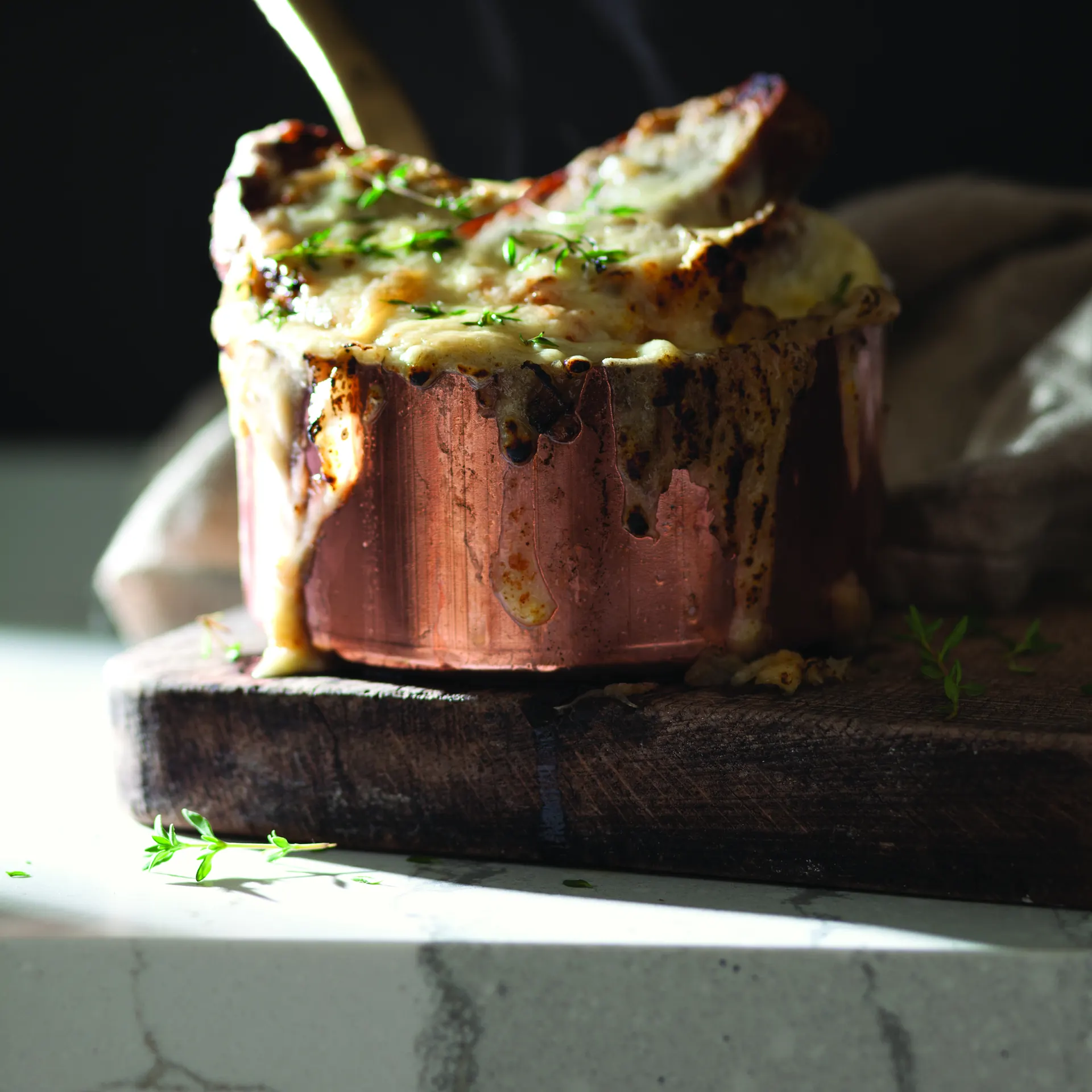
The skillet is smoking, the stove is full, and the only open spot is the counter. You have about two seconds to decide. Somebody told you quartz is tough as nails. Somebody else told you it would scorch. You would like to know which one of them is right before you set the pan down.
Blackburn's has been family-owned in Winter Haven since 1962, and we sell and install countertops across Polk County, including Cambria quartz. We pulled the care guides and warranties from three big quartz makers and read what they tell their own customers. They agree with each other, and the answer is short.
The Short Answer
No. Do not put a hot pan on a quartz countertop. Set it on a trivet, a hot pad, or a wood cutting board. Quartz resists heat better than a lot of surfaces, but no maker calls it heat-proof, and the damage does not wipe off.
- Hot pans, pots and baking sheets: trivet or hot pad, every time.
- Slow cookers, air fryers, electric skillets and griddles: same rule. Put something under them.
- A coffee mug or a warm dinner plate: fine.
Why Quartz and Heat Do Not Mix
A quartz countertop is engineered. It is crushed quartz mineral held together with a resin binder and pressed into a slab. The mineral is rock, and rock handles heat well. The resin is the part that does not. It is a plastic, and plastics and high heat have never been friends.
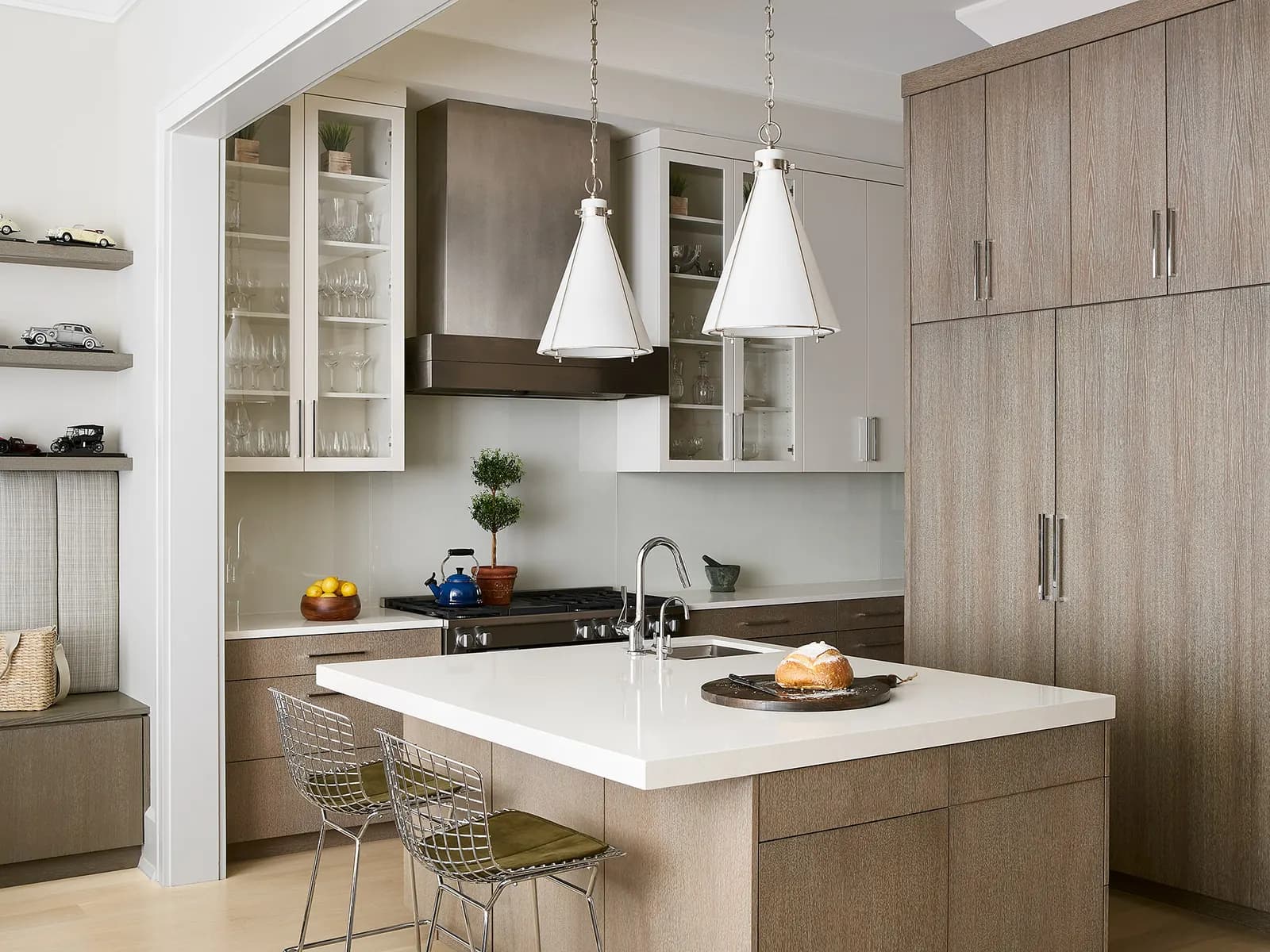
The second problem is uneven heat. A pan heats one small circle of the slab while the stone around it stays at room temperature. The makers call the result thermal shock. Cambria's care guide warns about "sudden and/or rapid change of temperature, especially near the edges, as well as direct and/or sustained heating of the top." Notice the two halves of that sentence. A quick blast of heat is one risk. Steady heat in one spot is the other.
That is also why "heat resistant" and "heat-proof" are different promises. The resin is the same thing that makes quartz so easy to live with, and our quartz care guide covers the daily routine. Heat is simply the price of it.
What Heat Damage Looks Like
Cosentino, the maker of Silestone, put it in one line in a care sheet from 2015. Hot pans, pots or small electrical appliances set directly on the surface "can cause scorching, dull areas and cracks." Those are the three things to look for.
- A scorch mark. A discolored ring or patch the shape of the pan bottom.
- A dull area. The finish loses its shine in one spot and looks hazy next to the rest.
- A crack. Often a thin line that starts at an edge, a seam or a cutout.
From our side of the counter, the first two are surface damage and they are permanent. No cleaner brings the shine back, because nothing is sitting on top of the slab to clean off. A crack is a bigger conversation, and we have a full post on cracks and chips in quartz and granite coming soon.
What the Makers Say in Their Own Words
Web articles argue about this. The companies that make the slabs do not. Here is each one, from its own paperwork.
Cambria
Cambria is a line we carry, so we start there. Its care guide says its product "is not heat-proof, chemical-proof, or fracture-proof in any form." It says the quartz "may not withstand the direct transfer of heat from pots and pans," and that a closed-weave hot pad or a solid trivet, like a bread board, "is always recommended." The word is always. Cambria does not carve out an exception for a quick set-down.
Silestone
Cosentino's files say the same thing years apart. An older Silestone warranty for North America, a file dated 2015, tells owners not to use "crock pots, skillets or other hot items directly" on the surface, and to "always place them on a trivet or cutting board." A later Silestone warranty, a revision dated September 2021, lists "the direct application of heat on the surface" as one of the main causes of cracking.
Caesarstone
Caesarstone's U.S. residential warranty, a revision dated November 2020, says thermal shock "can occur when a hot pan, dish or other receptacle or object is left on the countertop for more than a brief period." Then it adds one plain sentence: "Trivets or hot pads should always be used."
That makes three companies with the same rule. When three competitors agree on something that makes their own product sound less tough, you can take it as true.
Slow Cookers, Air Fryers and Other Sneaky Heat
Most people know not to drop a skillet on the counter. The damage we hear about more often comes from an appliance nobody thought of as hot.
A slow cooker is the classic one. It never gets as hot as a frying pan. It just sits in one spot for eight hours, which is the opposite of the "brief period" Caesarstone describes. Cambria's care guide lists the cooking units it means by name: electric frying pans and griddles, slow cookers, roaster ovens and heat lamps. Its care FAQ puts air fryers on that list too.
So the habit is simple. Any appliance that makes heat gets something under it.
- Slow cookers and roaster ovens: a wood cutting board works well. It is the "bread board" Cambria describes.
- Air fryers: a board or a solid trivet under the whole unit.
- Electric skillets and griddles: same, and pull them back from the counter edge.
- Holiday buffets: a row of slow cookers along one counter is a lot of steady heat. Line the whole run with boards or thick pads.
Pay extra attention near edges and seams. Cambria's warning singles out the edges, and a seam is where two pieces of stone meet.
How Hot Is Too Hot?
You will find a number for this on plenty of websites. The trouble is where the number comes from.
We did not find a number in the Cambria care guide, the Silestone documents or the Caesarstone warranty we read. So we could not trace one back to the makers' own paperwork. They give a rule instead, and the rule is a trivet every time. That is why we are not printing a number here. A number invites people to guess how hot the pan is, and nobody cooks with a thermometer on the bottom of the skillet.
A fair kitchen test is your own hand. If you would not hold your palm flat on it, it does not go on the quartz.
How Granite, Quartzite and Laminate Compare
If you cook a lot and you know your own habits, this may matter more than the color.
| Material | Hot pan straight down? | Why |
|---|---|---|
| Quartz | No | Resin binder. Every maker we read says trivet, always. |
| Granite | Still use a trivet | Natural stone, far more forgiving. Heat in one spot can still start a crack. |
| Quartzite | Still use a trivet | Natural stone with no resin. This Old House calls it highly heat resistant. |
| Laminate | No | The maker warns of cracking or blistering. |
Granite is the forgiving one. The Natural Stone Institute says granite is typically heat resistant up to about 480°F. It still discourages direct, localized heat, "since strong thermal gradients within the stone can initiate cracking." So granite takes a mistake far better than quartz does. It is not a license to skip the trivet. Our quartz vs granite comparison covers the rest of that choice.
Quartzite sounds like quartz and is a different thing. It is natural stone from a quarry, with no resin in it, and This Old House calls it "highly resistant to heat." Our quartzite guide explains how to tell a true slab from a look-alike.
Laminate is the least forgiving. Wilsonart's care sheet, dated 2019, says never to place pots or dishes straight from the oven or burner on an unprotected laminate top, because "such extreme heat can cause cracking or blistering." We cover where laminate does shine in our laminate countertops guide.
Heat is one line on the list. Our guide to the best countertops for kitchens weighs it against sealing, upkeep and cost.
Common Questions
Is quartz heat resistant?
Yes, but it is not heat-proof. Quartz handles everyday warmth like a coffee mug or a warm plate. A pan off the burner, a baking sheet out of the oven, or an appliance that runs hot for hours can scorch it, dull it or crack it.
Can you put a hot pot on Cambria quartz?
No. Cambria says its quartz may not withstand the direct transfer of heat from pots and pans, and that a closed-weave hot pad or solid trivet is always recommended. Its care guide states the product is not heat-proof in any form.
What temperature can quartz countertops withstand?
The Cambria, Silestone and Caesarstone documents we read do not give a number. Plenty of websites quote one, but we could not trace it back to those documents. The makers give a rule instead: use a trivet or hot pad under anything hot.
Can a slow cooker crack a quartz countertop?
It can. Cosentino's older Silestone warranty names thermal shock from crock pots as a cause of cracks, and Cambria lists slow cookers among the cooking units to keep off the bare surface. Put a wood cutting board or a solid trivet under it.
Does the warranty cover heat damage on quartz?
No, not from the three makers we checked. Cambria's lifetime warranty excludes damage from direct or sustained heat and thermal shock. Caesarstone's excludes damage from excessive heat. Cosentino's 2015 North American Silestone warranty excludes damage from excessive heat and scorching, and says cracks from thermal shock are not covered.
The Bottom Line
Quartz is a great countertop that asks for one habit. Put something between the heat and the stone. That goes for the skillet, and it goes double for the slow cooker that sits there all day. A few trivets and a spare cutting board are cheap insurance for a surface meant to last for decades.
If you are still choosing, tell us how you really cook. If hot pans tend to land wherever there is room, we will show you granite and quartzite next to the quartz, and you can decide with the slabs in front of you. Come by our Winter Haven showroom, or ask for a free in-home measure. We would be glad to help.
Sources
- Cambria, Product Care and Maintenance Information (Cambria stating its product is not heat-proof in any form, that sudden or rapid temperature change, especially near the edges, and direct or sustained heating can damage the top, that it may not withstand direct heat from pots, pans, electric frying pans and griddles, slow cookers, roaster ovens and heat lamps, and that a closed-weave hot pad or solid trivet such as a bread board is always recommended)
- Cambria, Product Care FAQs (air fryers being named alongside slow cookers, griddles and roaster ovens as cooking units Cambria may not withstand direct heat from)
- Cambria, Full Lifetime Warranty (PDF) (Cambria's warranty not applying to damage from direct or sustained heat, sudden or rapid changes in temperature, or thermal shock)
- Cosentino, Silestone Care and Maintenance (U.S. care sheet, 2015, PDF) (hot pans, pots or small electrical appliances used directly on Silestone being able to cause scorching, dull areas and cracks)
- Cosentino, Silestone 25 Year Warranty for North America (2015, PDF) (the caution not to use crock pots, skillets or other hot items directly on Silestone and to place them on a trivet or cutting board, and thermal shock from crock pots being named as a cause of cracks the warranty does not cover, and the exclusion of damage from excessive heat and scorching)
- Cosentino, Silestone 25 Year Warranty (REV.01, 09/2021, PDF) (the direct application of heat on the surface being listed as one of the main causes of cracking, and the warranty covering manufacturing defects)
- Caesarstone US, Residential Lifetime Warranty (Rev. 11/2020, PDF) (thermal shock occurring when a hot pan, dish or other object is left on the countertop for more than a brief period, trivets or hot pads always being used, and the exclusion of damage from excessive heat)
- Natural Stone Institute, Granite (granite typically being heat resistant up to about 480°F, with direct localized heat still discouraged because strong thermal gradients within the stone can initiate cracking)
- This Old House, All About Stone Countertops (quartzite being highly resistant to heat)
- Wilsonart, Laminate Care and Maintenance (2019, PDF) (pots or dishes straight from the oven or burner on an unprotected laminate surface being able to cause cracking or blistering)
More countertop tips
Have a project of your own?
Free in-home estimates across Polk County.