Cabinet Tips
Open Shelves vs Upper Cabinets: When Each One Wins
Open shelves vs upper cabinets: when each one fits, real storage trade-offs, the maintenance reality, and how to mix them well.
- Published
- August 3, 2026
- Author
- Blackburn's Interiors, Winter Haven, FL
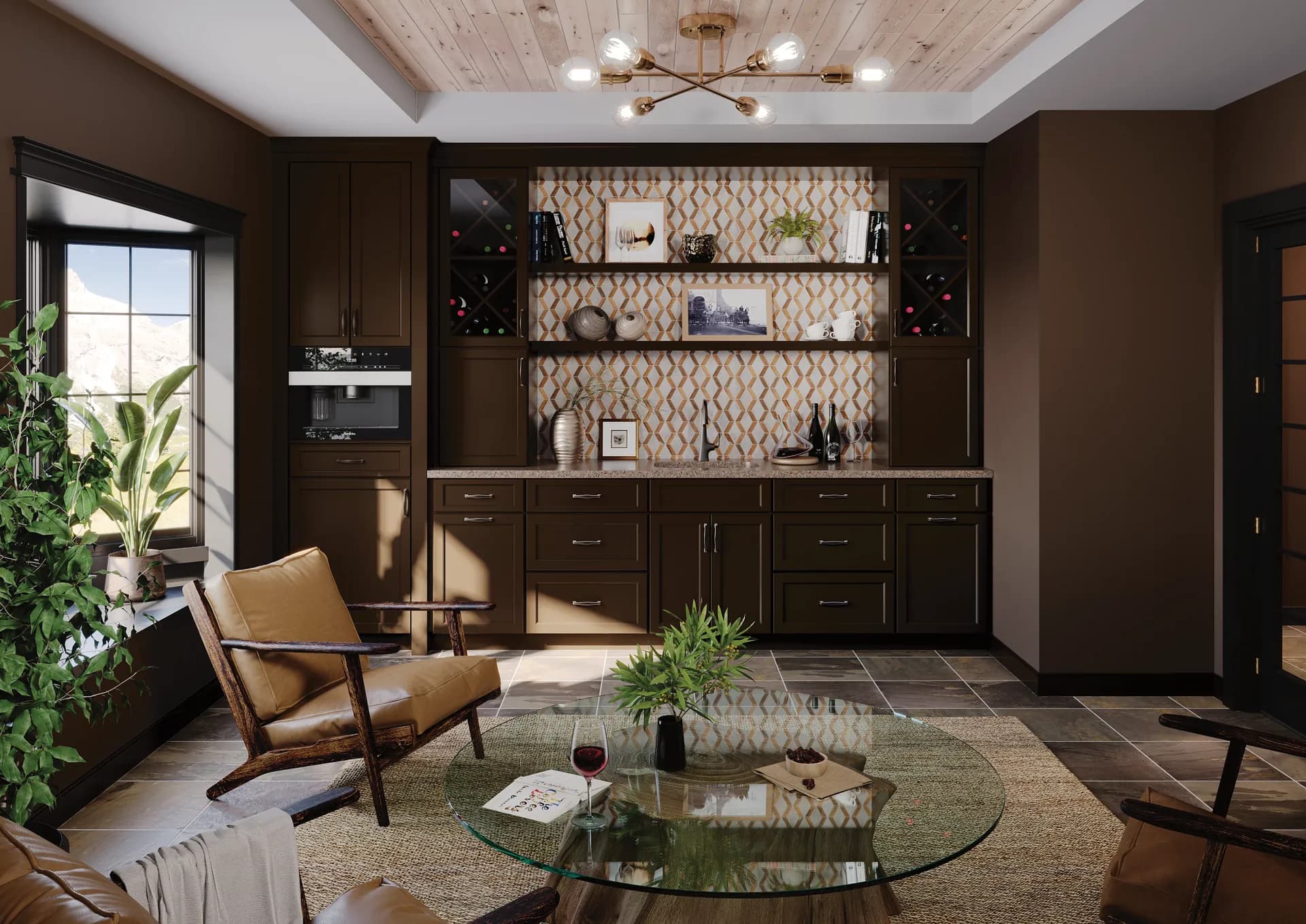
Open shelves are everywhere on home design feeds. Floating wood shelves stacked with white dishes, a few green plants, a couple of cookbooks displayed like museum pieces. The look is beautiful in a magazine photo, and there's a reason designers keep using it. It adds warmth, breaks up a wall of cabinetry, and shows off the things you actually use.
The question is whether open shelves work for a real kitchen, used by real people, in a real Florida home. Sometimes yes, sometimes no, and sometimes a mix beats either one. After installing every combination of upper cabinets and open shelves across Polk County kitchens, here's what we've learned about when each one wins.
The Quick Version
- Upper cabinets store more, hide clutter, and protect contents from dust and grease
- Open shelves look lighter, add display value, and put your most-used items within reach
- Open shelves require more daily maintenance than cabinets: dust, grease, and visible clutter
- Two-thirds cabinets, one-third open shelves is the most-installed mix in 2026
- A full wall of open shelves rarely works in a primary kitchen. Too much exposure, too much upkeep.
What Upper Cabinets Actually Do
Upper cabinets handle the unglamorous work of a kitchen. They store the cereal boxes, the half-empty bag of rice, the mismatched coffee mugs, the spice bottles with faded labels, the food storage containers that don't quite stack. They hide all of it behind a door, where it doesn't show up in your kitchen's visual story.
That hiding job is more valuable than people realize until they go without it. A real home kitchen accumulates visual clutter quickly: packaging, brand graphics, color mismatches across products. Behind cabinet doors, none of it matters. On open shelves, every box and bottle is part of the room's look.
Upper cabinets also store more per linear foot than open shelves. A 36-inch-wide cabinet 30 inches tall holds three full shelves of usable depth. Open shelves of the same dimensions usually hold less because you can't stack as densely without it looking chaotic, and you typically install fewer shelves at wider spacing for the visual effect.
What Open Shelves Actually Do
Open shelves do three things upper cabinets don't.
First, they make a kitchen feel lighter and more open. A wall of upper cabinets reads heavy, especially in a small kitchen or one with limited natural light. Replacing some or all of those cabinets with open shelves opens up the wall visually and can make a 100-square-foot kitchen feel substantially bigger.
Second, they put your most-used items right at hand. There's no door to open, no reach into the back. Coffee mugs, daily dishes, drinking glasses, and the bowl you use every morning are visible, grabbable, and back in place in seconds.
Third, they're a display surface. Beautiful dishes, cookbooks, a hand-thrown pottery collection, a piece of art. Open shelves let you show them off. In a kitchen where you've invested in nice things, that display value is real. In a kitchen where you don't have a curated collection to show, it's not.
The Maintenance Reality
This is the part of the conversation that magazine photos skip. Open shelves require more maintenance than cabinets. Three reasons.
Dust
Open shelves collect dust faster than the inside of closed cabinets. In a kitchen, dust mixes with airborne grease from cooking, and the result is a sticky film that requires regular wiping. The dishes, glasses, and other items stored on open shelves also collect dust. Items you grab regularly, like daily dishes, stay clean by use, but the ceramic mixing bowl you use twice a year will need wiping before service.
In a Florida kitchen, where air conditioning runs nearly year-round and the air moves constantly, dust is a real factor. Plan to wipe open shelves and their contents weekly. Plan to deep-clean once a quarter.
Grease
Open shelves near the cooking zone (over the stove, over the prep counter, above any zone where sautéing or frying happens) collect airborne grease. The shelves themselves and everything on them get a thin film of cooking oil over time. Wood shelves can become discolored if not sealed and maintained. Items on the shelves need wiping or running through the dishwasher more often than the same items behind cabinet doors.
In kitchens that cook heavily, daily home cooking, frequent sautéing, deep-frying, we typically recommend keeping upper cabinets directly above the cooktop and any wide prep zones. Open shelves work better away from grease, on a side wall, or above the coffee station.
Visible Clutter
Open shelves only look like magazine photos if they're styled like magazine photos. That means a small, intentional collection of well-coordinated items: a stack of white plates, three matching glasses, a couple of plants, a cookbook with a quiet cover. In a real home kitchen, the open shelves tend to accumulate the actual contents of life: a mismatched coffee mug from a vacation, a child's plastic cup, an open bag of crackers.
If you're a person who naturally curates and edits, open shelves will look great in your home. If you're a person who lives a full life and accumulates real-world stuff, open shelves will require ongoing willpower to keep looking the way you imagined.
When Open Shelves Win
Small Kitchens That Need Visual Space
In a small kitchen, under 100 square feet or one with limited natural light, replacing some upper cabinets with open shelves can dramatically open up the room. The wall reads lighter. The space feels bigger. The visual airiness can be worth the modest storage hit.
Kitchens Where Display Is the Point
If you've invested in a beautiful set of dishes, glassware, pottery, or cookbooks, open shelves give you a permanent stage for them. In a kitchen designed for entertaining or one that's part of an open-plan great room, the display value of open shelves can be a real plus.
Coffee Stations and Bar Areas
Coffee stations are an ideal place for open shelves. Mugs are typically attractive, color-coordinated, and used daily. That's exactly the kind of contents open shelves do well. Bar areas with nice glassware work the same way. We've installed plenty of Polk County kitchens with open shelves in the coffee or beverage corner and traditional uppers everywhere else.
Above Open-Plan Kitchen Islands
Some open-plan kitchens use a row of open shelves suspended above the island as a visual divider between the kitchen and the great room. This works well when the shelves hold a thoughtful collection and when the kitchen below has enough closed storage elsewhere. The shelves create a sense of separation without closing off the rooms.
When Upper Cabinets Win
Larger Households
Families of four or more typically need every cubic inch of storage they can get. Replacing upper cabinets with open shelves means losing capacity that has to be made up somewhere, usually a pantry, an island, or a less convenient location. In a household where the kitchen works hard every day, upper cabinets are usually the right call.
Heavy Cooking
If you cook daily, the steam, splatter, and airborne grease in your kitchen will coat any open surface. Closed cabinets protect their contents. Open shelves accumulate grime. Heavy cooks are usually happier with the protection.
Kitchens with Real Storage Needs
If your kitchen holds 50 different cooking ingredients, multiple sets of dishes, holiday-only serving pieces, and family-sized cooking equipment, open shelves rarely accommodate the volume gracefully. Closed cabinets are organized, layered, and out of sight.
Kitchens with Resale in Mind
Buyers respond strongly to traditional, well-organized upper cabinets in kitchens. Open shelves divide opinion. Some buyers love them, others see them as a maintenance burden. If you're remodeling with a sale in the next 3 to 5 years, lean toward traditional uppers (or a modest mix) rather than committing the whole wall to open shelves.
The 2026 Mix: Cabinets and Shelves Together
The combination most often installed in Polk County kitchens in 2026 isn't all-cabinet or all-shelf. It's a mix. The dominant pattern looks something like this:
- Traditional upper cabinets along the main run and above the stove
- Open shelves in one focused area, usually flanking a window, in a coffee corner, or above an open-plan island
- A glass-front cabinet or two for display value with the protection of doors
This combination gives a kitchen the visual lightness of open shelves without committing the whole wall to the maintenance burden. It also gives you flexibility. The closed cabinets handle real-world storage, and the open shelves stay curated because they're small enough to maintain.
Two-thirds closed storage and one-third open is a common ratio. One-half and one-half works in smaller kitchens. Going below one-third closed storage is risky in a primary kitchen. You usually end up missing storage you need.
Glass-Front Cabinets: The Middle Ground
If you love the look of open shelves but worry about dust, grease, and the willpower required to keep them styled, glass-front cabinets are the middle path. The dishes inside are visible. The contents are protected. The cabinet door (even with glass) cuts dust and grease accumulation significantly. And the glass doors add visual interest to a wall of solid cabinetry without giving up storage capacity.
Mullion doors (cabinet doors with divided-light panels) are a particularly handsome version of this. They read traditional or transitional, depending on the kitchen style. We install glass-front and mullion cabinets often in Winter Haven and Lakeland kitchens designed in the transitional style.
Practical Considerations for Open Shelves
If you commit to open shelves (full wall or partial), here are the practical specs that make them work:
Shelf Material
Solid wood, usually 1.5 to 2 inches thick, is the standard. White oak, walnut, and rift-cut oak are the most popular species in 2026. Stained finishes hide minor wear better than painted shelves. In a Florida kitchen, the shelves need to be sealed against humidity and grease with a quality finish (conversion varnish or hard-wax oil work well). Floating shelves can be solid wood or wood-veneered MDF over a steel bracket. The wood look matters more than the construction.
Shelf Depth
Open shelves typically run 8 to 12 inches deep. Deeper than 12 inches starts to look heavy and shelf-bracket-prone. Shallower than 8 inches limits what you can store. Standard upper cabinet depth is 12 inches, so matching that depth keeps things visually consistent.
Shelf Spacing
10 to 14 inches between shelves works for most kitchen items: plates, mugs, glasses, cookbooks. Tighter spacing limits what fits. Wider spacing wastes vertical real estate. Plan the spacing around the actual items you'll display, not the maximum dimensions of every possible item.
Brackets and Hardware
Hidden brackets (the shelf bracket is built into the wall and the shelf slides onto a steel rod) give a clean floating look but require more careful installation and more wall reinforcement. Visible brackets, black iron, brass, or wood corbels, read more traditional and are easier to install. In a Florida kitchen with humid air, stainless or quality finished brackets hold up better than budget brackets that can rust at the wall connection.
Installation Considerations
Open shelves need solid wall backing: a stud, a piece of blocking, or a beam. Drywall alone won't hold the weight of a wood shelf full of dishes. If you're planning open shelves during a remodel, have the framing checked or upgraded during demo so you have something to anchor into. Adding open shelves after the fact often requires opening the wall to install blocking.
Lighting matters too. Upper cabinets often have under-cabinet lighting that illuminates the counter below. Open shelves don't have that bottom surface to mount lights against, which can leave the counter under-lit. Consider integrated LED strips, picture lights, or pendant lights to compensate.
Cost Comparison
Open shelves typically cost less per linear foot than upper cabinets. Fewer materials, less construction, no doors or drawers. Rough 2026 pricing in Polk County:
- Stock upper cabinets: $80 to $200 per linear foot installed
- Semi-custom upper cabinets: $200 to $500 per linear foot installed
- Custom open wood shelves: $50 to $150 per linear foot installed (including blocking, install, and finish)
On a single-wall kitchen, replacing 8 feet of upper cabinets with open shelves can save $1,000 to $3,000. But you also lose storage, gain maintenance, and may need to add storage capacity elsewhere. The real budget impact depends on the whole kitchen design.
Bottom Line
Open shelves are a real design tool, not a passing trend. They work in the right kitchen, with the right contents, for the right kind of household. They don't work as a wholesale replacement for upper cabinets in a hardworking family kitchen. The storage hit and maintenance burden add up.
The smart 2026 move for most Polk County kitchens is a mix: upper cabinets where you need storage, glass-front cabinets where you want display value with protection, and a small section of true open shelves where they earn their keep. Come walk through real examples in the Winter Haven showroom and we'll help you find the right balance for the way you actually live. Contact us to schedule a visit.
More cabinet tips
Have a project of your own?
Free in-home estimates across Polk County.