Flooring Tips
How to Choose Carpet Fiber: Nylon, Polyester, Triexta, Olefin, and Wool
A room-by-room, household-by-household guide to picking carpet fiber, plus the density, twist, and warranty details that decide whether the carpet still looks good in year seven.
- Published
- September 5, 2026
- Author
- Blackburn's Interiors, Winter Haven, FL
- Updated
- October 10, 2026
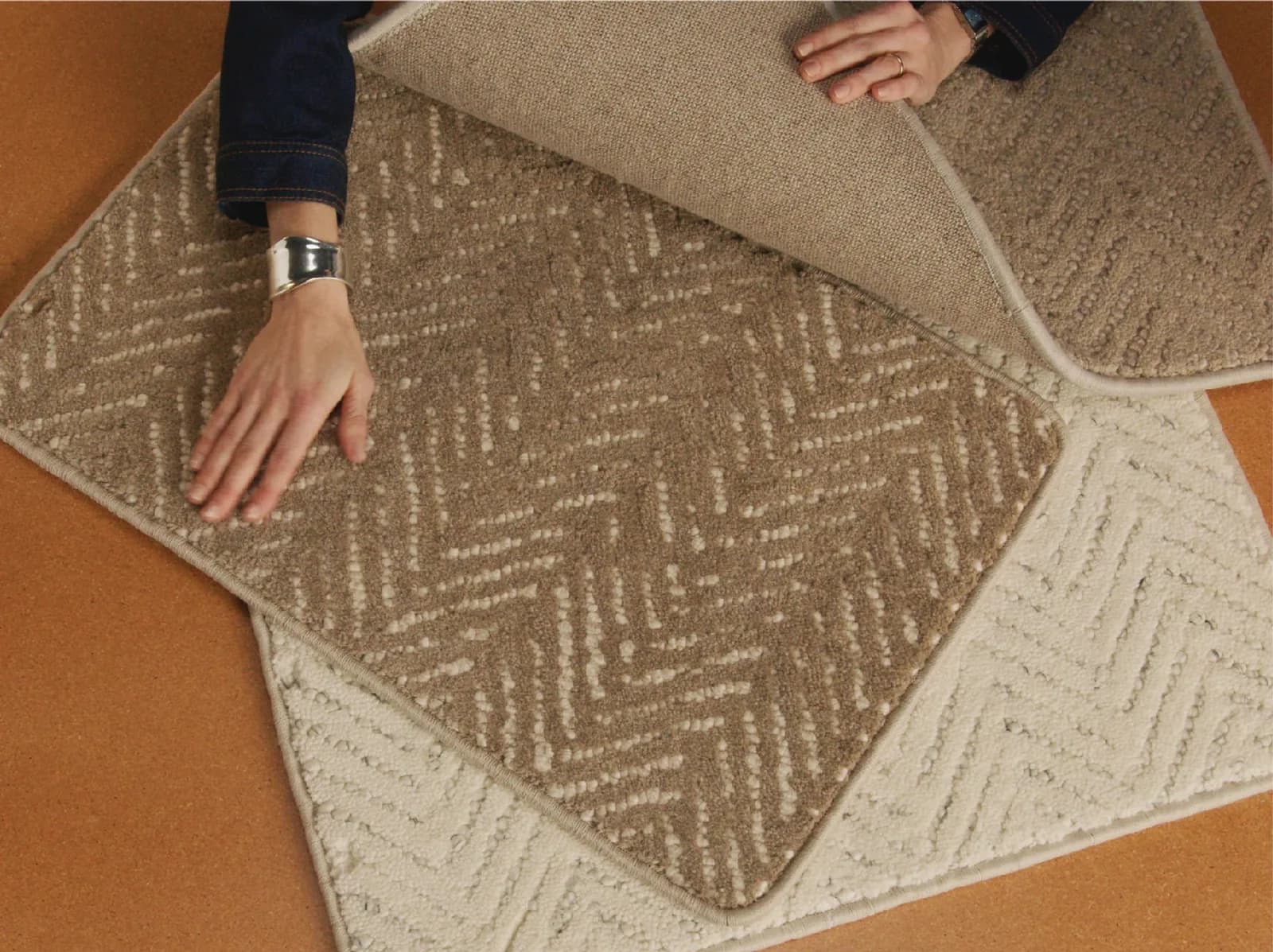
Here is the decision, before the explanation. Buy nylon for the rooms your family actually lives in. Buy polyester for bedrooms and quiet rooms where you want deep color and a soft hand. Buy olefin when the budget is the budget, and buy it in a low loop. Buy wool when you want the floor to outlive the decorating.
That is the whole matrix. The rest of this page is why, and what the brand pages leave out.
You will also read about triexta, and it gets a fair section below. It is a polyester-family fiber that other brands sell. We sell Shaw carpet, and Shaw's carpet page sorts its styles into nylon and polyester. So when we pick between those fibers for your room, we are picking from nylon and polyester.
We have been selling carpet in Winter Haven since 1973, and the same conversation happens on the showroom floor every week. Somebody comes in with a fiber name they read online and a face weight number they were told to look for. Neither one, by itself, predicts how the carpet will look in seven years. What predicts that is the fiber matched to the room, built at the right density, with enough twist to hold up.
The Five Fibers, and What Each One Is Actually Good At
American carpet is not an infinite menu. The Carpet and Rug Institute says the majority of carpet made in the United States uses one of five pile fibers: nylon, polyester, polypropylene (olefin), triexta, and wool. Everything on a showroom rack is one of those five, or a blend of them.
CRI publishes a plain characteristics list for four of them, and reading what is missing from a list is as useful as reading what is on it.
- Nylon: durable, resilient, abrasion-resistant, versatile in color, wet-cleaning friendly, excellent colorfastness and color clarity.
- Polyester: excellent color clarity, excellent colorfastness, resistant to water-soluble stains. CRI scopes it to homes and some low-traffic commercial work, and does not list it as resilient.
- Olefin (polypropylene): resists fading, generates low static, resists chemicals, moisture, and stains, and is favorably priced. Resilience and durability are not on the list.
- Wool: inherently resilient, durable, and its scaly fiber surface scatters light so soil shows less. It also chars instead of melting when burned.
- Triexta: named on CRI's list of the five main fibers, but not rated in its characteristics table. It is the newest of them, and it is worth its own section below.
Resilience is the word to watch. Resilience is the fiber's ability to spring back after a foot presses it down. Two of these fibers are the resilient ones. CRI calls wool's resilience an inherent property and lists nylon as durable and resilient, and both of them cost more than the alternatives. A University of Florida extension guide rates the same trait and lands in the same order: wool excellent, nylon very good, olefin good only if you avoid a high pile, and polyester crush-resistant only in its newer versions.
Which Fiber Should You Buy for Which Room?
This is the section people came for. Match the fiber to the traffic and the household. The sample that felt softest in your hand is the wrong tiebreaker, because every sample feels soft in the store.
Stairs, halls, and family rooms
Buy nylon. CRI lists nylon as durable, resilient, and abrasion-resistant, and among the synthetics its characteristics table rates, nylon is the only one credited with all three. Traffic lanes are the failure mode in these rooms, and traffic lanes are a resilience problem. Pay for nylon here and save somewhere else if you have to. Dogs change this answer, and the room question comes before the fiber question. Best flooring for dogs and pets settles whether carpet belongs in the room at all. Stairs get their own treatment too: best flooring for stairs covers whether carpet belongs on the staircase and how it gets installed, and this page just picks the fiber that goes on it.
Bedrooms, guest rooms, formal living rooms, home offices
Polyester is a smart buy here, and the value is real. Traffic is light, the pattern is a few steps a day, and resilience matters less when nothing is grinding a lane into the floor. CRI credits polyester with resistance to water-soluble stains, which covers juice, soda, and coffee. It rates polyester's color clarity and colorfastness excellent, but it gives nylon those same two marks, so color is not the tiebreaker either way. What polyester actually buys you, on our racks, is more density for the same money. Spend the savings on density and pad instead of fiber.
Long-term rentals, bonus rooms, sunrooms, and budget jobs
Olefin, in a low loop or a cut-and-loop pattern. Olefin resists fading, which matters in a Florida room with a wall of glass, and it is favorably priced. It also shows traffic patterns. The University of Florida guide is direct about the fix: the soiled and crushed look decreases when olefin is combined into a carpet of cut and loop pile yarns. So do not buy olefin in a tall plush. Buy it low and looped and it behaves. Short-term rentals are a different call, and best flooring for rental property owns it. In a vacation home with weekly turnover, we tell investors to skip carpet in the rooms guests use.
The room you never want to buy carpet for twice
Wool. It is the fiber CRI credits with inherent resilience, it is durable, and its scaly surface scatters light so dirt reads less on the floor. It costs what you would expect a natural fiber to cost. In a formal room, a primary bedroom, or a stair you want to look right for twenty years, it is a long-term buy.
A whole house on one budget
Split it. Nylon on the stairs and in the high-traffic rooms, polyester in the bedrooms. Nobody notices a fiber change at a bedroom door, and everybody notices a matted hallway. If you want the room-by-room argument for where carpet belongs in the first place, we made it in is carpet still in style.
Triexta: The Newest Name on the List
Triexta is a fiber other brands sell. We sell Shaw carpet, and we do not see triexta among the fiber types on Shaw's carpet page, so it is not part of our pick. You will still meet it while you shop, and it gets marketed like a separate category, so here is where it actually sits. In 2009 the Federal Trade Commission approved triexta as a generic fiber subclass name inside the existing definition of polyester. In the federal rule that lists generic names and definitions for manufactured fibers, triexta still appears under polyester.
That matters for your expectations. Triexta's headline is built-in stain resistance, and the polyester family's stain story is a water-soluble stain story. CRI credits polyester with resistance to water-soluble stains, which is juice, soda, and coffee. It is not an oil story, and the lifetime stain warranties written on these carpets say so out loud. More on that below.
So if you are weighing a triexta carpet somewhere else, treat it the way you would treat a good polyester: excellent color, a strong answer for spills that dissolve in water, and a fiber you should buy dense and tightly twisted, because crush resistance is where the polyester family has historically been weakest.
That is also the honest split with the brand pages, ours included. The polyester-family case and the nylon case run on two different axes. The polyester family, triexta included, makes its case on spills that dissolve in water. Nylon makes its case on traffic. So a pet family shopping with us buys polyester for the bedrooms and nylon for the hallway those same dogs run down. Every manufacturer writes its own warranty on its own construction, so we confirm the exact terms for the style you pick instead of promising a category. For the brand-level comparison, that is a different post: best flooring brands.
Polyester Earned Its Bad Reputation, Then Fixed a Lot of It
Older polyester matted and crushed. That is not a rumor spread by nylon salespeople. The University of Florida guide says the fiber has been improved greatly from the early polyester that matted and crushed, which is an acknowledgment of both halves: the problem was real, and the fiber moved.
Where it lands today: newer polyester types are more crush resistant, but the trait still is not on CRI's characteristics list the way it is for nylon and wool. That is a spec sheet talking. Polyester is a very good buy in a low-traffic room and a risky buy in a hallway. That is the entire tradeoff.
Face Weight Is the Most Misused Number in the Store
Somebody told you to look for a certain ounce weight. Here is what that number can and cannot do.
Face weight is only a comparison tool inside a single fiber. The University of Florida guide puts it plainly: judge face weight only against another carpet made of the same generic fiber. Compare one nylon to another nylon, not to a polyester. Fibers have different densities, so the same ounce figure describes two different carpets.
That does not make the number useless. A shorthand like 12 ounces is a reasonable floor to hold once you have already settled on the fiber. Before that, it is noise. When you see a face weight quoted in a room-by-room spec, including the one we give in is carpet still in style, read it as a minimum for the fiber you already chose.
The bigger number on the sample tag is worse. CRI is blunt about total finished carpet weight: it is not considered descriptive of quality or performance, and it is primarily used as an indication of roll weights for determining trucking costs. CRI is describing a line item in a construction specification rather than a showroom tag, but the figure gets copied onto tags anyway. If a salesperson quotes you the total weight as proof of quality, they are quoting you a shipping figure.
CRI also names the habit directly. There is a tendency to believe that more is better, more pile weight, more plies, more rows. Each of those plays a role, but more specification may not relate to better performance. That is the industry's own trade association saying the spec race oversells itself.
And here is the line that reframes the whole purchase. With synthetic fibers, CRI says it is almost impossible to wear the face fiber out, regardless of weight. Crushing is what happens instead, and crushing happens when the density is too low.
Density and Twist Are What You Are Really Buying
The University of Florida guide says construction has as much or more influence on durability as the fiber itself. That single sentence should change how you shop.
CRI describes cut pile durability as three things working together: the type of fiber, the density of the tufts, and the amount of twist in the yarn. Highly twisted yarn holds its shape longer, which is what makes it the smart choice for high-traffic areas. The failure mode runs the other way too. A low twist, or a poorly heat-set yarn in a cut pile carpet, tends to mat, tangle, and appear worn.
Manufacturers agree, in the one document where they have every reason to be conservative. The care pages of Shaw's residential warranty book advise that to minimize crushing you should select a dense, low pile carpet construction with tightly twisted tufts. That is the specification, written by the company that has to pay claims.
The showroom test that takes four seconds
Bend a corner of the sample back over your finger. Look at how much backing shows through the pile. That gap is called grin, and it should be minimal. Tufts should sit close together, and the backing should not be visible through the pile. If a lot of backing grins through, the pile is too thin, and no fiber name on the label fixes thin.
Do that test on every sample you are considering, at the same fold, and you will rank them faster than any spec sheet will. Bring the two or three finalists to our Winter Haven showroom and do it side by side. The samples are all in one place for a reason.
What the Warranty Actually Promises
Fiber tiers show up most honestly in the warranty book, because that is where a manufacturer puts its money behind the fiber. Shaw is a line we carry. Its published residential warranty book gives texture retention coverage of 20 years on Anso nylon, 15 years on EverTouch nylon, and 10 years on its 25 percent recycled ClearTouch PET polyester. That polyester carries a lifetime stain warranty but only 15 years on soil.
Then Shaw complicates its own ladder, and that part is worth more than the ladder. ClearTouch Platinum PET, the 50 percent recycled version, carries the same warranties as EverTouch nylon, which puts a polyester level with a nylon at 15 years of texture retention. That is the argument for reading the specific style's warranty instead of buying by fiber name. Fiber tells you where to start looking. The style's own paperwork tells you what you are getting.
Read the ladder anyway. The stain coverage is generous across the board. The texture coverage is where the terms spread out, and texture is the thing you look at every day.
What texture retention covers
Shaw's texture retention warranty promises the carpet will not exhibit significant twist loss or loss of texture from foot traffic for the stated period. It comes with conditions: an owner-occupied home, a proper indoor installation, and a pad meeting FHA and HUD requirements, installed to the Carpet and Rug Institute standard. Skip the right pad and you can void the coverage you paid for.
Mohawk writes the same promise a little more explicitly. Its residential warranty guide warrants that the carpet will retain its texture, not showing excessive pile crushing or matting from ordinary foot traffic as a result of the tufts losing twist. So the clause names crushing and matting as the covered failure, and it names twist loss as the cause it is written around.
It is also scored on a scale. Mohawk measures texture retention against a standardized international scale running from 5.0 for new or no change down to 1.0 for severe change, and the carpet has to hold a rating of at least 3.0 to perform as warranted. A carpet that looks tired to you can still be inside the warranty.
Which clause covers what
This is the part nobody reads until they need it, and it is where most of the confusion starts. Crushing and matting live in the texture retention clause and nowhere else. Shaw's separate quality assurance warranty, which covers manufacturing defects in material or workmanship, states that matting and crushing, or any change in appearance retention, are not manufacturing defects and are excluded from that warranty. The SoftBac Platinum warranty excludes them too. So if a salesperson waves at a twenty-year warranty, ask which of the several twenty-year clauses that is.
The abrasive wear warranty is narrower still. It covers surface pile that abrasively wears away by more than 10 percent in any area, and Shaw spells out that abrasive wear means fiber loss, and not changes in appearance such as crushing or matting. Your carpet has to physically shed more than a tenth of its pile before that clause does anything.
The texture retention clause has real limits of its own. It excludes crushing caused by furniture, including the impressions left by furniture legs, and it excludes carpet in areas subject to other than ordinary shoe traffic. Shaw also notes that the texture of any carpet will change to some degree in heavy traffic areas, that such change is normal wear and tear, and that the coverage is intended to protect against excessive appearance change rather than any change.
Put it together and the shopping rule falls out. The one clause that covers how your carpet will look is the texture retention clause, it pays only above a severity threshold, and it pays only when a furniture leg or the wrong pad is not the cause. The stain warranty, the quality assurance warranty, and the abrasive wear warranty all point somewhere else. Twist is the whole ballgame, which is why we keep coming back to it.
The cheapest upgrade in the whole project
Pad. A cushion meeting FHA and HUD requirements, installed to the CRI standard, is a stated condition of the texture retention warranty in the first place, so the wrong pad can cost you the clause you were counting on. One manufacturer once went further: in its 2009 warranty guide, Mohawk doubled the texture retention period on its Wunda Weve carpet styles when they were installed over Wunda Weve's own premium pad. That was one brand's offer on its own cushion, not a rule that covers every carpet or every pad upgrade, and current terms are the kind of thing we confirm in writing for the style you actually pick. Nobody sees the pad, and few dollars in the job do more work.
One more thing on warranties. Manufacturer coverage is separate from our labor warranty, which is a residential warranty on the work the installers we train and certify perform. We put both in writing before anything gets ordered so you know which document covers what.
Stain Resistant and Soil Resistant Are Two Different Promises
These get used as if they mean the same thing. They do not, and they are handled by different treatments doing different jobs.
CRI describes soil treatments as coating the fibers with a low-surface-energy polymer that resists wetting from oil, which is a common component of most soils and many staining agents. Stain-resist treatments work differently. They act like colorless dyes that block or provide a barrier against many common food stains. One fights the greasy film that dulls a carpet. The other blocks the food dye that leaves a red spot. You want both, and neither makes a carpet stain proof.
The University of Florida guide adds the distinction worth asking about by name. Fluorochemical treatments protect against water and oil stains. Silicone treatments protect against just water-borne stains. Both protect against dry soiling. If the sample is treated, ask which one it is.
Now the fine print. Shaw's limited lifetime stain warranty specifically excludes stains from substances such as bleaches, caustic chemicals, insecticides, paints, shoe polish, lipstick, plant food, iodine, very strong dyes, acids, feces, oil-based substances, and vomit. A lifetime stain warranty is a real benefit and it is also a list of exceptions. The polyester and triexta stain advantage is a water-soluble story, and oil is not on the guest list.
Soil is warranted separately, with its own definition: the carpet's ability to resist retaining the common dry dirt normally associated with carpet. The same warranty notes that light-colored carpets show soiling more than dark ones and need more frequent maintenance to hold their appearance. That is a color decision, not a fiber decision, and it is worth making with your eyes open.
The Florida Part
Sand is the local variable, and it is not a small one. Shaw makes the mechanism plain in the care pages of that same warranty book: most dirt, even dust, is made of hard particles, and when those gritty, sharp particles are left in the carpet they abrade the pile as effectively as sandpaper.
In Polk County, that grit rides in on every pair of shoes from a driveway, a job site, a ball field, or a lake. It means two things when you shop. First, walk-off mats and a real vacuum schedule are structural work. They protect the pile itself. Second, a dense pile keeps that grit near the surface where a vacuum can reach it, while a thin, loose pile lets it fall to the backing and grind. Density is doing real work in a Polk County house.
Common Questions About Carpet Fiber
Is nylon really worth the extra money?
In a hall, on stairs, or in a family room, yes. Nylon is the fiber CRI lists as durable, resilient, and abrasion-resistant, and Shaw's warranty book runs 15 to 20 years of texture retention on its nylons against 10 years on its 25 percent recycled ClearTouch polyester. One Shaw polyester does match a nylon term, so read the specific style rather than the fiber name. In a guest bedroom that sees a few steps a week, the premium buys you very little. Put the money where the feet are.
Is triexta the same thing as polyester?
Close. In 2009 the FTC approved triexta as a name manufacturers may use in place of polyester, and the federal fiber list still places it inside the polyester family as a subclass. Practically, that means you should expect polyester family behavior: strong color, good resistance to water-soluble stains, and a need to buy it dense and tightly twisted so crushing does not become the story. It is a fiber other brands sell. Our own picks come from nylon and polyester, the two types on Shaw's carpet page.
Does a higher face weight mean a better carpet?
Only within the same fiber, and even then it is one input among several. CRI warns that more pile weight and more plies do not necessarily relate to better performance, and it says total finished carpet weight is not descriptive of quality or performance at all, because that figure exists to work out roll weights for trucking. Density and twist tell you more than ounces do.
Will a stain resistant carpet stop every stain?
No. Stain treatments block many common food stains and soil treatments resist oily soil, but a lifetime stain warranty comes with an exclusion list that includes oil-based substances, bleach, strong dyes, paint, and more. Treat stain resistance as extra time to blot, not as a force field. We have a whole library of stain-by-stain removal guides for when something does land.
Does the pad matter as much as the carpet?
It matters more than most people expect. A pad meeting FHA and HUD requirements is a condition of the texture retention warranty in the first place, so the wrong cushion can cost you the clause that tracks how the carpet looks. One manufacturer went further in a past warranty guide and doubled the texture retention period on certain styles installed over its own premium pad. We confirm the current terms for whatever style you pick.
How to Shop It in Ten Minutes
- Name the room and the traffic first. The fiber follows from that.
- Compare face weight only against the same fiber, and ignore total finished weight entirely.
- Bend every finalist over your finger and reject the ones that grin.
- Ask for the twist level and whether the yarn is heat set, especially on any cut pile.
- Read the texture retention years before you read the stain headline.
- Price the pad as part of the floor, because the warranty already treats it that way.
The Bottom Line
Fiber sets the ceiling. Construction decides whether you get there. Nylon and wool are the resilient fibers, polyester is the color and value fiber for quieter rooms, triexta is its polyester-family cousin that other brands sell, and olefin is the budget fiber that needs a low loop to behave. Under all of it, density and twist are what keep a carpet from looking tired in year seven, and the warranty language proves it, because twist loss is exactly what the manufacturers wrote their texture clauses around.
Bring your room list to the showroom and we will match a fiber to each one, do the bend test with you, and put the pad and the coverage in the same conversation as the carpet. We measure free, we install with installers we train and certify, and we have been doing it in Winter Haven since 1973. Contact us to set up a measure, or start with our full flooring guide if you are still weighing carpet against a hard surface.
Sources
- Carpet and Rug Institute (CRI), The Carpet Primer (Technical Publication) (the per-fiber characteristics lists for the four fibers its table rates, nylon, polyester, olefin, and wool, the fact that synthetic face fiber almost never wears out while low density causes crushing, the warning that more pile weight and more plies do not necessarily mean better performance, total finished weight not being descriptive of quality and being used for roll weights and trucking costs, low twist and poor heat setting causing matting, and the difference between soil treatments and stain-resist treatments, which block many common food stains)
- Carpet and Rug Institute (CRI), Selecting the Right Carpet (the five primary pile fibers used in American carpet, and cut pile durability coming from fiber, tuft density, and yarn twist together)
- University of Florida IFAS Extension, FCS 3108, What's Underfoot: Carpet Quality and Construction (archival) (the resiliency ratings by fiber, olefin showing traffic patterns and improving in a cut-and-loop construction, the improvement of early matting polyester, the rule that face weight compares only within the same fiber, the fluorochemical vs silicone treatment distinction, the bend-the-corner grin test, and construction mattering as much as or more than fiber)
- Shaw Industries, Residential Carpet Warranty Information (retailer-hosted copy of Shaw's warranty booklet; no manufacturer-hosted copy is currently reachable) (the texture retention tiers of 20 years on Anso nylon, 15 years on EverTouch nylon, and 10 years on 25 percent recycled ClearTouch PET polyester, ClearTouch Platinum PET carrying the same warranties as EverTouch nylon, the texture retention grant covering significant twist loss and its owner-occupied and FHA/HUD pad conditions, that clause's own exclusions for furniture crushing and other-than-ordinary shoe traffic, the note that texture change in heavy traffic is normal wear, the separate quality assurance warranty calling matting and crushing non-defects and excluding them, the 10 percent abrasive wear threshold covering fiber loss and not appearance, the care-page advice to pick a dense low pile with tightly twisted tufts, the lifetime stain exclusion list including oil-based substances, the separate soil resistance definition, and dirt particles abrading pile like sandpaper)
- Shaw Floors, Carpet (fiber type filter) (Shaw's carpet page sorting its styles by type into Nylon, Polyester and ANSO High-Performance, with no triexta choice among them)
- Mohawk Industries, Residential Carpet Warranty Guide, 2009 edition (retailer-hosted copy of Mohawk's warranty booklet; no manufacturer-hosted copy is currently reachable) (the texture retention warranty covering excessive pile crushing or matting from ordinary foot traffic when the tufts lose twist, that coverage scored on the ISO 9405 scale from 5.0 to 1.0 with a 3.0 minimum to perform as warranted, and the 2009 doubling of the texture retention period on Wunda Weve styles installed over Wunda Weve's premium pad)
- Federal Trade Commission, FTC Approves Federal Register Notice Establishing New Fiber Name and Definition (triexta) (triexta being approved in 2009 as a generic fiber subclass name established within the existing definition of polyester)
- 16 CFR 303.7, Generic names and definitions for manufactured fibers (triexta appearing in the federal generic fiber name list as a subclass of polyester)
More flooring tips
Have a project of your own?
Free in-home estimates across Polk County.