
Flooring Tips
Best Carpet for Bedrooms: The Right Fiber, Pile Style, and Pad
The best carpet for a bedroom depends on who sleeps there. Here is the fiber, pile style, and pad we would pick for each room, and why.
- Published
- October 11, 2026
- Author
- Blackburn's Interiors, Winter Haven, FL
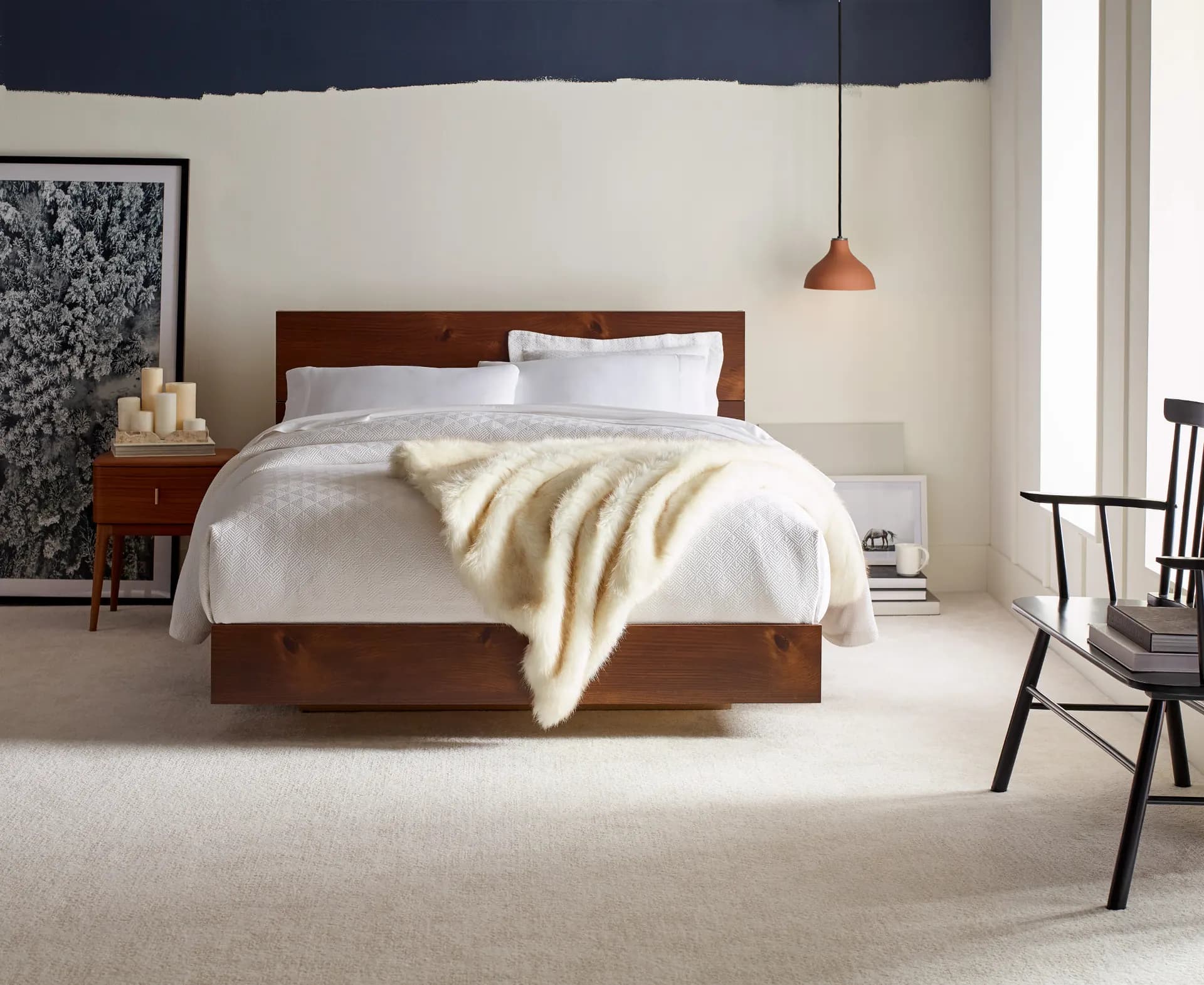
It is six in the morning and your feet hit the floor. That first step is the whole reason bedrooms still get carpet. Then you walk into a store, face forty feet of samples that all feel nice, and the easy decision turns into a hard one.
It gets easier when you stop asking which carpet is best and start asking who sleeps in the room. Blackburn's has been family-owned in Winter Haven since 1962, and we sell and install carpet across Polk County. Here is what we would put in each bedroom of the house, and why.
The Short Answer
For most bedrooms, buy a dense textured cut pile in polyester, and put a soft pad under it. A bedroom gets a few steps a day, so you can spend on comfort instead of toughness. Then adjust for the person, or the pet, who lives there.
- Primary bedroom: the softest dense carpet you like, textured or plush.
- Kids' room: a textured or cut-and-loop style in a stain-fighting fiber.
- Guest room: a good-value polyester. It will look new for a long time.
- Room with pets: a cut pile from a pet line. Skip loops if you have a cat.
- Allergies: think about a hard floor first. If you keep carpet, go low and dense.
Why a Bedroom Is the Easy Room
Carpet has a hard life in a hallway. In a bedroom it mostly gets walked on in socks. Nobody tracks the driveway in, the path from the door to the bed is short, and half the floor sits under furniture.
That changes what you should pay for. In a hall, you pay for a fiber that springs back. In a bedroom, that money does more good spent on softness and on a thicker pile. If you are still deciding whether the room should have carpet at all, we made that case in is carpet still in style. It also covers how much quieter a carpeted bedroom is.
Which Fiber Belongs in a Bedroom?
The Carpet and Rug Institute, the carpet trade group, says most American carpet is made from one of five fibers: nylon, polyester, olefin, triexta, and wool. We sell Shaw carpet, and Shaw's carpet page sorts its styles into nylon and polyester. So those are the two you will mostly choose between here, with wool as the splurge.
- Polyester: our usual bedroom pick. The Institute's Carpet Primer, a 2017 technical guide, credits polyester with excellent color and resistance to water-soluble stains. Shaw prints it as PET, short for polyethylene terephthalate, the chemical name for polyester. On a Shaw spec sheet it reads ANSO High Performance PET or Solution Dyed PET.
- Nylon: the Primer calls it durable and resilient. That matters most where traffic is heavy. In a bedroom it is a fine choice, but you pay for strength the room rarely uses. Shaw's nylon carries the ANSO name, as in ANSO High Performance Nylon.
- Wool: a natural fiber the Institute describes as durable and resilient by nature. It is the splurge. Anderson Tuftex, a line we carry, makes wool styles along with nylon and polyester ones. Those are special order, so we order them in.
You may also read about triexta. It is a polyester-family fiber that other brands sell. We do not see it among the fiber types on Shaw's carpet page, so it is not part of our pick.
One plain note. The carpet we keep in stock is builder grade, for people who need a floor fast. The better bedroom carpet is ordered for your room.
So polyester is the smart buy for a room this quiet, and nylon earns its price in the hall outside the door. That is the short version. Our guide to nylon, polyester, and triexta carpet fiber has the long one, with face weight, twist, and a quick way to judge density by bending the sample over your finger.
Plush, Textured, Frieze, or Loop?
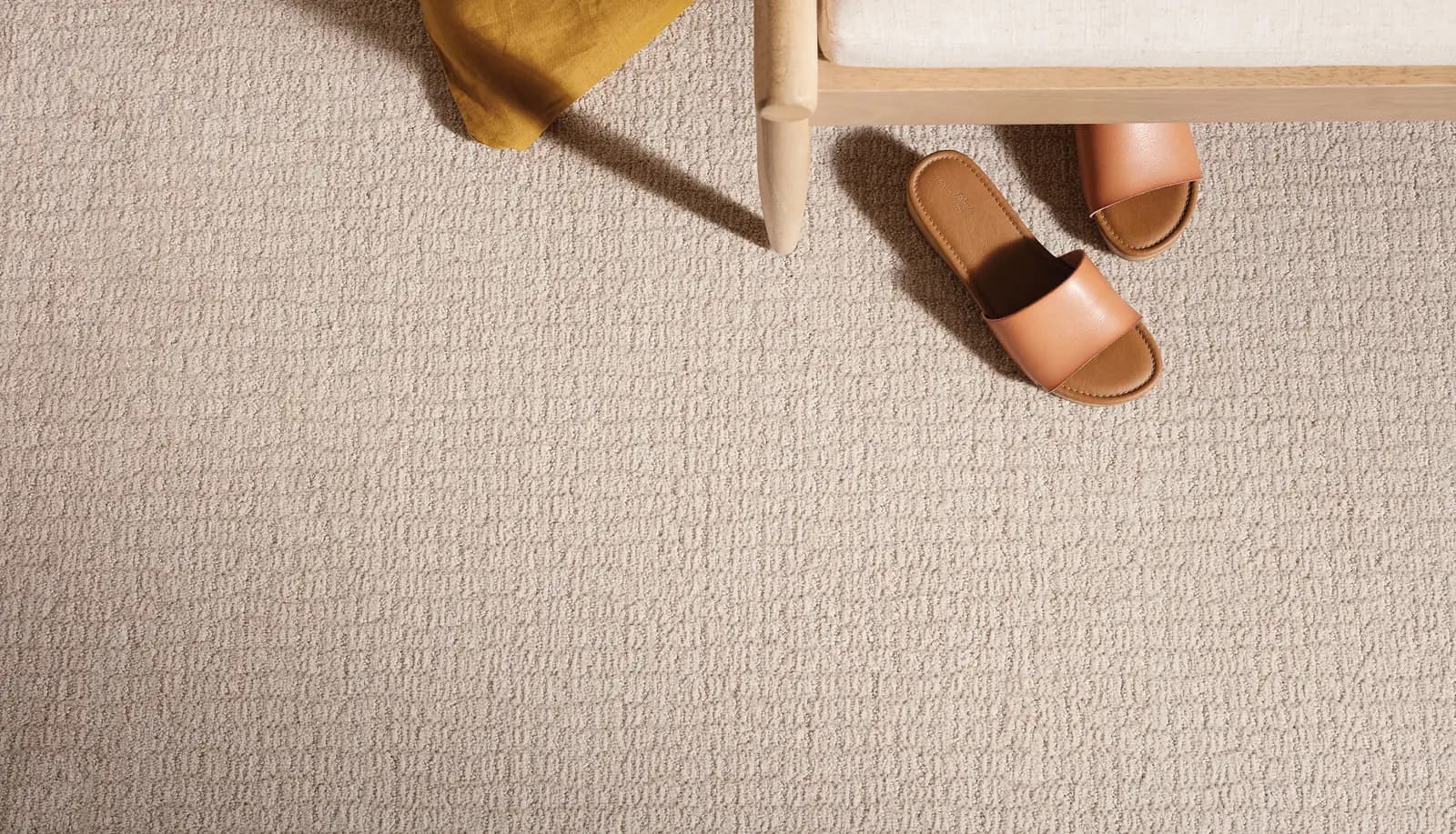
Pile style is how the yarn is cut and shaped. It decides how the carpet looks after you walk across it, which matters more than people expect. Some folks love fresh vacuum lines. Some folks cannot stand seeing every footprint. Know which one you are before you buy.
| Style | What it is | In a bedroom |
|---|---|---|
| Plush | Smooth, even cut pile | Feels rich. Shows footprints and vacuum marks. |
| Textured | Cut pile with a twisted, uneven surface | Our everyday pick. Hides footprints. |
| Frieze | Cut pile with tightly twisted, curly yarn | Casual and forgiving. Hides footprints. |
| Loop | Uncut loops of yarn | Tidy and tough. Firmer underfoot. |
| Cut and loop | Cut and looped yarn in a pattern | Multi-color styles hide soil. Good in a kids' room. |
The Institute backs up most of that chart. It says plush shows footprints and vacuum marks easily and suits low-traffic and formal rooms. It says textured surfaces help hide those marks, and that the curly yarn in a frieze helps minimize them. It says same-height loops hold up well in high-traffic areas, and that the multi-color look of cut-and-loop styles is effective at hiding soil and stains.
A bedroom is low traffic, so plush is allowed here in a way it is not in a family room. If you want that smooth, velvety look, this is the room for it. Just go in knowing you will see where you walked.
The Pick for Each Bedroom
The primary bedroom
This is your room, so buy the one that feels best under bare feet. A dense textured cut pile in polyester gives the most softness for the money. If the budget allows, this is where plush or wool makes sense. One note on wool: the Institute recommends a suction-only vacuum for it, with no beater bar.
A kid's room
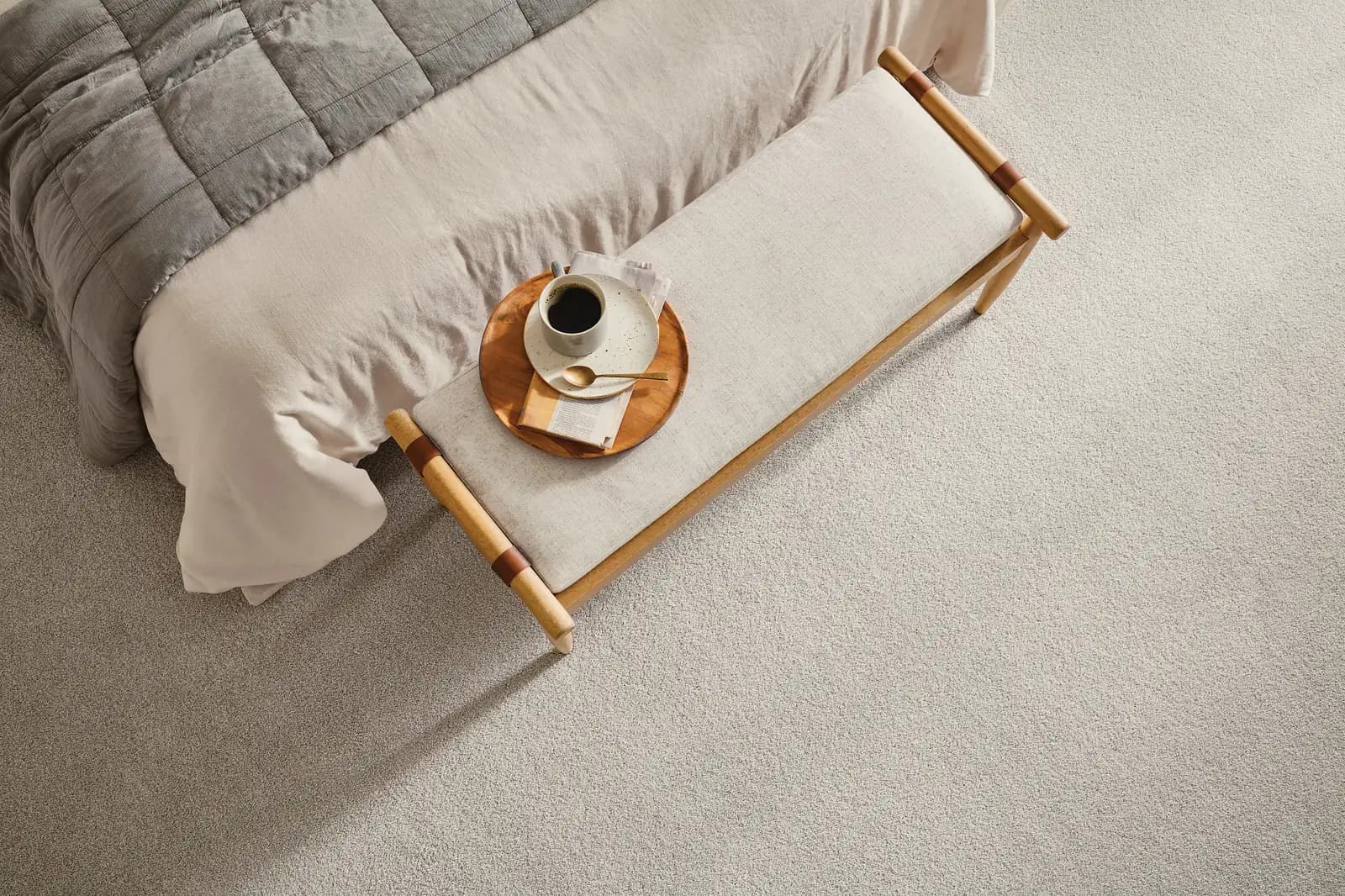
Kids live on the floor, so softness counts double. So does cleanup. Polyester's resistance to water-soluble stains is useful here, because that group includes most of what a child spills. Choose a textured or cut-and-loop style in a mid-tone color with some fleck in it. It hides the crumbs you have not found yet.
Do not overspend. A nursery becomes a Lego room, and then a teenager's room, faster than seems fair. Buy a good dense carpet now and expect to pick again when tastes change.
The guest room
A guest room gets used a few weeks a year. Almost any decent carpet will last here. Buy a good-value polyester in a neutral color, and put the money you saved into the rooms you walk through every day.
A bedroom with pets
If the dog or cat sleeps in the room, plan for claws and accidents. Claws are the reason we steer cat owners away from loop carpet. A claw can catch a loop and pull it. A cut pile has no loop to catch.
For accidents, ask about a pet line. Shaw, a line we carry, sells one called Pet Perfect. Shaw says it repels spills, stains, and soil and resists snags from pet claws, and that a spill-proof backing is available on its Pet Perfect+ styles. Those are Shaw's claims for its own carpet, and the warranty has terms, so we show you the paperwork for the exact style. Pet Perfect is a special order, so we order it in for your room. We wrote more about carpet with dogs and which rooms it suits.
A bedroom for someone with allergies
Start with an honest question: should this room have carpet? A hard floor is easier to keep free of dust and dander, and our guide to flooring for allergies explains the options. A hard floor with a washable rug by the bed is a fair trade for many people.
If you want carpet anyway, choose a low, dense pile that a vacuum can clean all the way down. The Institute suggests that shoppers with asthma or allergy concerns ask about products with its Green Label Plus mark, a voluntary testing program for low emissions from carpet, pad, and adhesive. That mark is about what the carpet gives off. It does not promise anything about dust. This is cleaning advice, not medical advice, so ask the doctor too.
The Pad Under a Bedroom Carpet
Most of what feels soft about a carpet is really the pad. And the bedroom is the one place the rules let you go soft. The Institute says bedrooms, dens, and other rooms with light or moderate traffic can use thicker and softer cushion, while halls and stairs need thinner and firmer.
There is still a limit. The Institute's general rule for a home is a pad no more than 7/16 inch thick and no less than 1/4 inch, with a density of 6 pounds per cubic foot. Loop and low-profile carpets call for a thinner, firmer pad than that. The carpet maker's own requirement comes first, because the wrong pad can wrinkle a carpet and may void its warranty.
So do not ask for the thickest pad in the building. Ask for the softest one the carpet maker allows. A full carpet padding guide is coming to this blog soon, with the pad types and what to use over a Florida slab.
Living With It: Vacuuming and That New Carpet Smell
Bedroom carpet is easy to forget about. Dust still settles in it. The Institute says it is best to vacuum at least twice a week, and to have carpet cleaned about every 12 to 18 months, the way the manufacturer specifies. It also runs a testing program for vacuums that checks soil removal and dust containment, and it says a HEPA filter is not required to do the job well.
New carpet has a smell, and you will be sleeping next to it. The Institute says most of the off-gassing behind it is done within the first 24 hours or so, and it recommends good ventilation for about 48 to 72 hours. Its advice is to open the windows. In a Polk County summer that also lets in a lot of humidity, so open them when the air is drier if you can. The rest of the time, run the air conditioning and the fans and keep the bedroom door open.
Common Questions
What is the most comfortable carpet for a bedroom?
A dense cut pile over a soft pad. The fiber matters less than people think. Take your shoes off in the showroom and stand on the sample with the pad under it. Your feet will sort the finalists quickly.
Is plush or textured carpet better for a bedroom?
Textured, for most people. It hides footprints and vacuum marks, and plush shows them. Plush is the better pick only if you want that smooth, formal look and do not mind seeing where you walked.
Is nylon or polyester better for bedroom carpet?
Polyester is usually the better buy in a bedroom. Nylon's strength is bouncing back under heavy traffic, and a bedroom does not have any. Buy nylon for the hall and the stairs.
How thick should the pad be under bedroom carpet?
No more than 7/16 inch, by the Carpet and Rug Institute's general rule, and no less than 1/4 inch. Bedrooms can sit at the softer, thicker end of that range. Check the carpet maker's requirement before you choose.
Is carpet in a bedroom bad for allergies?
Carpet holds more dust and dander than a hard floor, so it takes more work to keep clean. If allergies are serious, a hard floor is the easier answer. If you keep carpet, choose a low, dense pile and vacuum at least twice a week.
The Bottom Line
The best carpet for a bedroom is the one that fits the sleeper. For most rooms that means a dense textured cut pile in polyester, on the softest pad the carpet maker allows. Go softer in your own room, tougher on stains in the kids' rooms, and loop-free anywhere a cat naps.
Samples look different in your light than in ours. Stop by our Winter Haven showroom and stand on a few, or ask for a free in-home measure and we will bring them to you. We also offer special financing, subject to credit approval.
Sources
- Carpet and Rug Institute (CRI), Selecting the Right Carpet (the five primary carpet fibers, plush showing footprints and vacuum marks and suiting low-traffic and formal rooms, textured and frieze styles hiding those marks, same-height loops holding up in high-traffic areas, the multi-color attribute of cut-and-loop hiding soil and stains, bedrooms being able to use thicker and softer cushion, the 7/16 inch, 1/4 inch and 6 pound general cushion rule, thinner and firmer cushion for loop and low-profile carpet, the wrong cushion causing wrinkling and possibly voiding warranties, and Green Label Plus as a voluntary testing program to ask about with asthma or allergy concerns)
- Carpet and Rug Institute (CRI), The Carpet Primer (Technical Publication, 2017) (nylon being durable and resilient, polyester (polyethylene terephthalate, or PET) having excellent color clarity and colorfastness and resistance to water-soluble stains, wool being a natural fiber that is durable and inherently resilient, and frieze being a cut pile of highly twisted yarns with a curled effect)
- Carpet and Rug Institute (CRI), Frequently Asked Questions (vacuuming at least twice a week, cleaning about every 12 to 18 months the way the manufacturer specifies, the tested vacuum program covering soil removal and dust containment, a HEPA filter not being necessary, a suction-only vacuum for wool carpet, most new carpet off-gassing being complete within about 24 hours, and opening the windows and ventilating for approximately 48 to 72 hours)
- Shaw Floors, Pet Perfect and Pet Perfect+ Carpet (Shaw's own claims that Pet Perfect carpet repels spills, stains, and soil and resists snags from pet claws, and that a spill-proof backing is available on Pet Perfect+ styles)
- Shaw Floors, Carpet (fiber type filter) (Shaw's carpet page sorting its styles by type into Nylon, Polyester and ANSO High-Performance, with no triexta choice among them)
- Shaw Floors, Vintage Motif carpet specifications (Shaw printing a carpet fiber as 100% ANSO High Performance PET)
- Shaw Floors, Ramped Up carpet specifications (Shaw printing a carpet fiber as 100% Solution Dyed PET)
- Shaw Floors, Pure Comfort I carpet specifications (Shaw printing a carpet fiber as 100% ANSO High Performance Nylon)
- Anderson Tuftex, Carpet (Anderson Tuftex offering wool carpet styles along with nylon and polyester ones)
More flooring tips
Have a project of your own?
Free in-home estimates across Polk County.