
Countertop Tips
Cambria vs Silestone vs Caesarstone: How the Big Three Quartz Brands Compare
Cambria, Silestone, and Caesarstone compared on hardness, warranty, country of manufacture, color range, and where each one wins.
- Published
- April 11, 2026
- Author
- Blackburn's Interiors, Winter Haven, FL
- Updated
- September 7, 2026
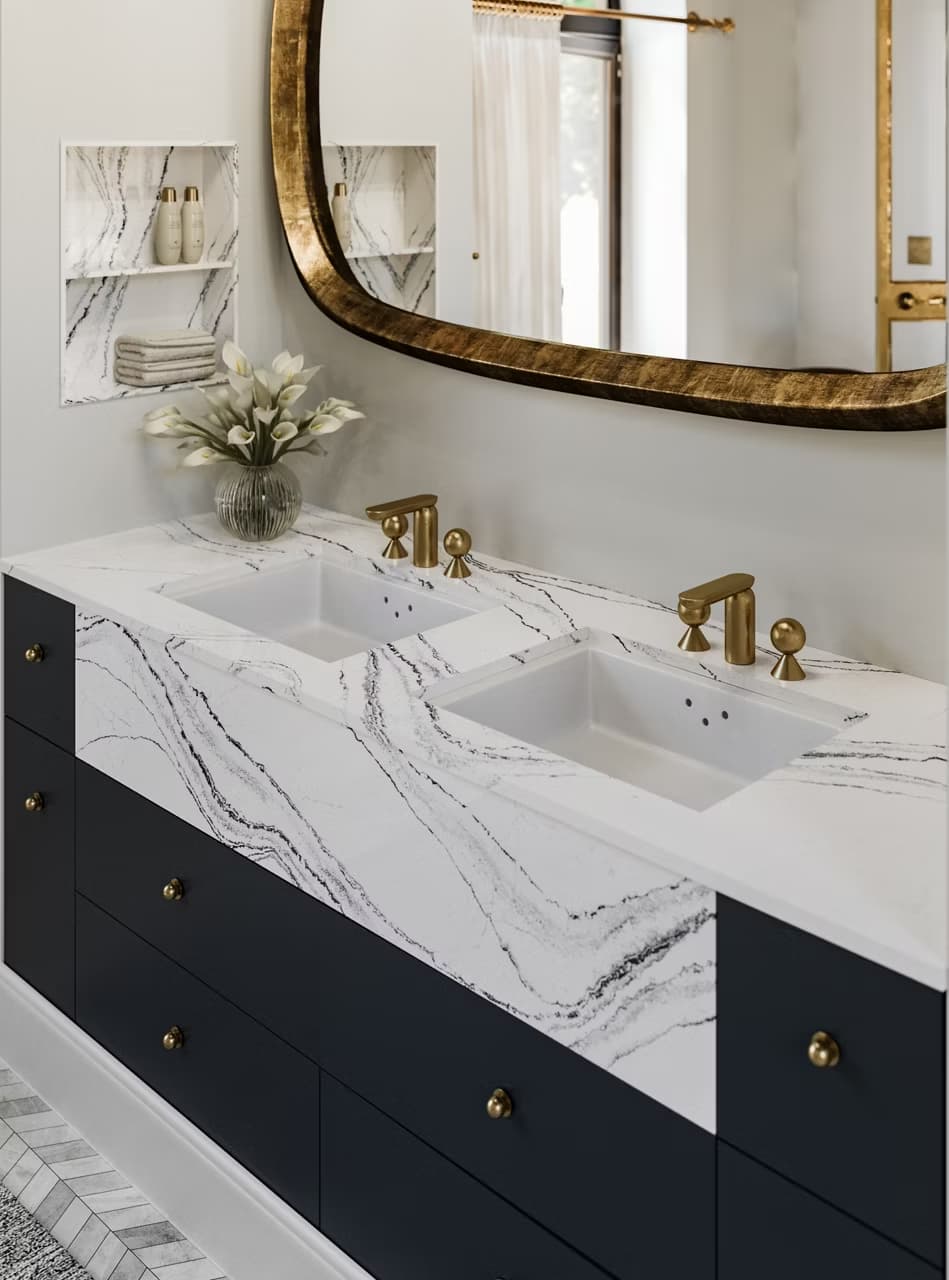
Once a homeowner decides on quartz for their kitchen, the next question is always the same: which brand? Three names dominate the conversation: Cambria, Silestone, and Caesarstone. They're all engineered quartz. They all install the same way. But they differ in some real, practical ways that matter for a 20-year decision.
Here's how the big three stack up. We're a Cambria dealer, so we'll be straight: Cambria is the line we recommend most and install most often. But Silestone and Caesarstone are excellent products too, and the right brand depends on what you value most.
The Quick Version
- Cambria: American-made (Minnesota), lifetime warranty, premium price tier, deepest natural-stone-look palette
- Silestone: Spanish-made (Cosentino), 25-year transferable warranty, broad price range, strongest antibacterial story
- Caesarstone: Israeli-founded, imported since its US plant closed in January 2024, residential lifetime warranty with conditions, contemporary palette
All three are real engineered quartz: crushed mineral bound in resin under high heat and pressure. The recipes are not identical. Cambria and Caesarstone both publish a 93% quartz blend. Silestone is built differently. Cosentino's own safety data sheet puts the mineral filler at 85 to 95%, and quartz is only one filler in that mix, alongside silica sand, cristobalite, glass, feldspar, and ceramic, in proportions that change by product. So treat "over 90% quartz" as a brand claim to check, not a category rule. The rest of the difference is manufacturing standards, design library, warranty depth, and who stands behind the slab when something goes wrong.
Cambria
What It Is
Cambria is the only major engineered quartz brand made entirely in the United States. Every slab is manufactured at their facility in Le Sueur, Minnesota. They're family-owned and have been since the company started in 2000. As a family business ourselves, that's one of the reasons we like working with them.
Hardness and Performance
Cambria measures around 7 on the Mohs scale, among the hardest commercially available quartz. The slabs are dense, non-porous, and never need sealing. Like all quartz, they're not heat-proof. Keep trivets between hot pans and the surface.
Warranty
Cambria offers a full lifetime limited warranty on residential installations, the strongest in the category. The warranty is transferable if you sell the house, which is a real value-add at resale.
Color and Pattern Library
Over 150 designs, with a heavy emphasis on natural stone looks: Calacatta marble, Carrara, soapstone, and quartzite-inspired patterns. Cambria leads the industry on convincing marble-look quartz. If you want quartz that reads as natural stone from across the room, Cambria is the brand most often picked.
Price Tier
Premium. Installed pricing typically lands in the upper end of the $50–$150 per sq ft range, with the most popular designs in the $80–$130 installed band. The price reflects the warranty, the USA manufacturing, and the depth of the design library.
Silestone
What It Is
Silestone is made by Cosentino, a Spanish company headquartered in Almería. Cosentino is the largest natural-stone and engineered-stone producer in the world. Silestone has been around since 1990, which makes it one of the longest-running quartz brands. Caesarstone got there first, in 1987.
Hardness and Performance
Silestone is rated at roughly 7 on the Mohs scale and performs comparably to Cambria in scratch and stain resistance. Cosentino has aggressively reduced the crystalline silica content in newer Silestone lines (the HybriQ+ technology) to meet evolving workplace safety standards for fabricators.
Warranty
25-year limited warranty on residential installations, and it transfers to the next owner. The condition is on you, not the dealer. Register the slab with Cosentino within six months of purchase and keep the original invoice. Twenty-five years is shorter than Cambria's lifetime coverage, but it still runs well past the point where most homeowners redo the kitchen.
Color and Pattern Library
Wide-ranging. Silestone offers everything from clean solid colors to bold marble-look patterns to terrazzo-inspired designs. The Eternal Calacatta Gold series is one of the most-installed marble looks in the country. Silestone tends to skew slightly more contemporary than Cambria.
Price Tier
Broad. Silestone covers more price points than Cambria, with entry-level solid colors in the $50–$70 installed range and high-end marble looks in the $100–$140 range. This makes it easier to fit Silestone into a wider variety of budgets.
Caesarstone
What It Is
Caesarstone is the brand that essentially invented modern engineered quartz countertops, founded in Israel in 1987. Caesarstone closed its only US plant, in Richmond Hill, Georgia, in January 2024. Every Caesarstone slab sold here is imported now. We will confirm where your specific slab was made before you order.
Hardness and Performance
Caesarstone is also in the 6–7 Mohs range and performs in line with the other premium brands. Their finishes include polished, honed, and concrete-look textures.
Warranty
Residential Lifetime Warranty, with real conditions attached. It runs to the original owner of a single-family residence they occupy, the work has to be done by a Caesarstone Certified Fabricator, and you have to register the product within thirty days of install. Meet those and the coverage is lifetime. Sell the house and it drops. The next owner gets a prorated 10-year warranty, capped at ten years from the original install date. That transfer cap, not the length, is the real gap between this warranty and Cambria's.
Color and Pattern Library
Caesarstone's strength is its clean, contemporary library: neutral whites and grays, concrete-look textures, and a handful of strong marble-inspired patterns. If your kitchen leans modern or minimalist, Caesarstone has some of the cleanest designs in the category.
Price Tier
Mid to premium. Most popular designs install in the $70–$120 per sq ft range. Comparable to mid-tier Silestone and slightly under most Cambria.
Side-by-Side Comparison
- Country of manufacture: Cambria USA | Silestone Spain | Caesarstone imported, no US plant since January 2024
- Warranty (residential): Cambria lifetime, transfers in full | Silestone 25 years, transfers with registration | Caesarstone lifetime to the first owner, prorated 10 years after a sale
- Hardness (Mohs): All three around 6–7
- Design library: Cambria 150+ heavy on stone looks | Silestone broad and varied | Caesarstone contemporary leaning
- Price tier: Cambria premium | Silestone broad | Caesarstone mid-premium
- Family-owned: Cambria yes (US) | Silestone parent yes (Cosentino) | Caesarstone publicly traded
How to Pick Between Them
Pick Cambria If
- You want lifetime coverage that carries over in full when you sell
- USA manufacturing matters to you
- You want the most convincing marble-look quartz on the market
- You're remodeling a forever home and want the strongest long-term coverage
Pick Silestone If
- You want flexibility on price across a broad design library
- You like the contemporary terrazzo-inspired or bold-pattern looks
- Antibacterial protection is a priority. Silestone bakes Microban into the slab.
- You're working with a tighter budget but still want a top-three brand
Pick Caesarstone If
- Your kitchen leans modern or minimalist
- You want clean whites, grays, or concrete-look textures
- You can meet the certified-fabricator and 30-day registration conditions
- You found a specific pattern you love that only Caesarstone makes
What About Other Brands?
There are plenty of other quality quartz brands: MSI Q Premium, LG Viatera, HanStone, Pompeii, Wilsonart, Quantum Quartz. We carry several of these in addition to Cambria, and they perform well at a range of price points. The big three just have the biggest design libraries and the strongest dealer networks, which matters if you ever need a warranty claim or a replacement slab years down the road.
Installation Is What Makes or Breaks a Quartz Counter
Here's the part no brand markets: a $130-per-sq-ft slab installed badly looks worse than a $70 slab installed well. Quartz fabrication and installation is precision work. Seam placement, edge profile, sink cutout tolerances, and overhang support all matter. A bad seam in front of the sink will haunt you for 20 years.
Whichever brand you pick, ask the installer how many years they've worked with that specific product, where they fabricate, and whether they templating digitally. We have been fabricating and installing quartz across Polk County for years, and we'll walk you through the full process from slab pick to final polish at our Winter Haven showroom.
Edges, Thickness, and Finish Options
All three brands offer the same edge profile options: eased, beveled, ogee, bullnose, mitered. Cambria has the strongest catalog of textured surface finishes (matte, honed, rustic) beyond the standard polished look. Silestone offers a wider range of leathered and suede finishes. Caesarstone's concrete-look textures are a standout in the contemporary category.
Slab thickness across all three brands is typically 2 cm or 3 cm. Three centimeter is the standard for kitchen counters. Two centimeter is often used for bathroom vanities and waterfall edges where slabs are mitered together. Confirm thickness when you're picking a specific design. Not every pattern is available in both thicknesses.
Frequently Asked Questions
Which Brand Is Hardest?
All three are in the 6–7 Mohs range, which is harder than steel and softer than topaz. In real-world residential use, the differences are negligible. Any of the three will outlast almost everything you do to it short of dropping a cast-iron pan on the edge.
Can I Install Any of These Outside?
All three manufacturers recommend against direct outdoor exposure. UV light can affect the resin binder over time, leading to discoloration. For outdoor kitchens, granite is the better material. Caesarstone has published a separate outdoor line with its own 10-year residential warranty. Ask us whether it is still being made before you plan a project around it.
Are These Brands Worth the Premium Over Generic Quartz?
For most homeowners, yes, but not always. The big three give you stronger warranty backing, more design choices, and better dealer support for replacements years later. If you're tightly budget-constrained and find a generic brand you love, it'll likely perform comparably. Just verify the wear and warranty terms in writing.
How Hard Is It to Get a Replacement Slab Years Later?
Major brands maintain pattern libraries for years, but exact slabs can vary. The natural quartz crystals in each batch create slight differences. For practical purposes, replacing a damaged section years later usually requires accepting a slightly different look. This is one reason careful seam planning matters at install. Major damage is rare, but partial replacement is harder than people expect.
What About Color and Trend Considerations?
All three brands release new designs annually to reflect changing kitchen trends. White and gray patterns have dominated the last decade. Newer collections are pushing into warmer tones like cream, taupe, and soft browns, along with bolder veined patterns inspired by quartzite and exotic marble. Cambria's recent collections lean into deeper, moodier palettes; Silestone's collections range from very neutral to very dramatic; Caesarstone stays cleaner and more minimal.
If you're worried about a counter going out of style, the classic white-with-subtle-gray-veining options across all three brands are essentially future-proof. They've been popular for 20+ years and will keep selling homes for the next 20.
The Bottom Line
All three brands make exceptional countertops. Cambria is the top-shelf pick when warranty and natural-stone looks matter most. Silestone gives you the broadest range of styles and prices. Caesarstone is the cleanest choice for modern kitchens.
Come walk through full slabs at the showroom. Pictures and 4-inch samples don't show how a slab actually moves across a kitchen counter. Contact us to book a showroom visit, or ask about financing so you can pay over time, subject to credit approval. Pair your new counters with fresh cabinets for a full kitchen remodel.
Sources
- Cambria, Warranty (Cambria's residential coverage being a full lifetime warranty that transfers to the next owner)
- Cambria, Are Quartz Countertops Durable? (Cambria publishing a 93 percent quartz blend, the Cambria half of the composition paragraph)
- Caesarstone US, Residential Lifetime Warranty (PDF) (the actual term and conditions of Caesarstone's US residential warranty: lifetime to the original owner of a single-family residence, certified fabricator required, registration within 30 days, and a prorated 10-year cap on the coverage a new owner inherits)
- Caesarstone US, We Warranty Our Quartz Surfaces for Life (Caesarstone blending its quartz at a 93 percent ratio, and Caesarstone describing its own residential coverage as lifetime rather than a fixed term)
- Caesarstone US, About (Caesarstone inventing the quartz surfaces category in 1987, which is why this post no longer calls Silestone the oldest quartz brand)
- Caesarstone Ltd., Caesarstone Provides Business Updates (the closure of Caesarstone's Richmond Hill manufacturing facility effective mid-January 2024, the reason this post no longer lists the United States as a country of manufacture)
- Cosentino, Silestone Limited 25-Year Tranferrable Residential Warranty (PDF) (Silestone's residential warranty running 25 years and transferring outright, conditioned on owner registration within six months rather than on the dealer, and its exclusion of exterior exposure)
- Cosentino, Silestone Safety Data Sheet REV. 13 (PDF) (Silestone's composition being 85 to 95 percent assorted inorganic mineral fillers, of which quartz is only one, with crystalline silica graded by series, and the reduced-silica newer lines described in the Silestone section)
More countertop tips
Have a project of your own?
Free in-home estimates across Polk County.