
Flooring Tips
How Often Should You Replace Your Flooring?
Carpet runs about 5 years and tile about 75. Vinyl plank varies by line. Here is how to read the signs and decide when your floor is done.
- Published
- May 26, 2026
- Author
- Blackburn's Interiors, Winter Haven, FL
- Updated
- August 4, 2026
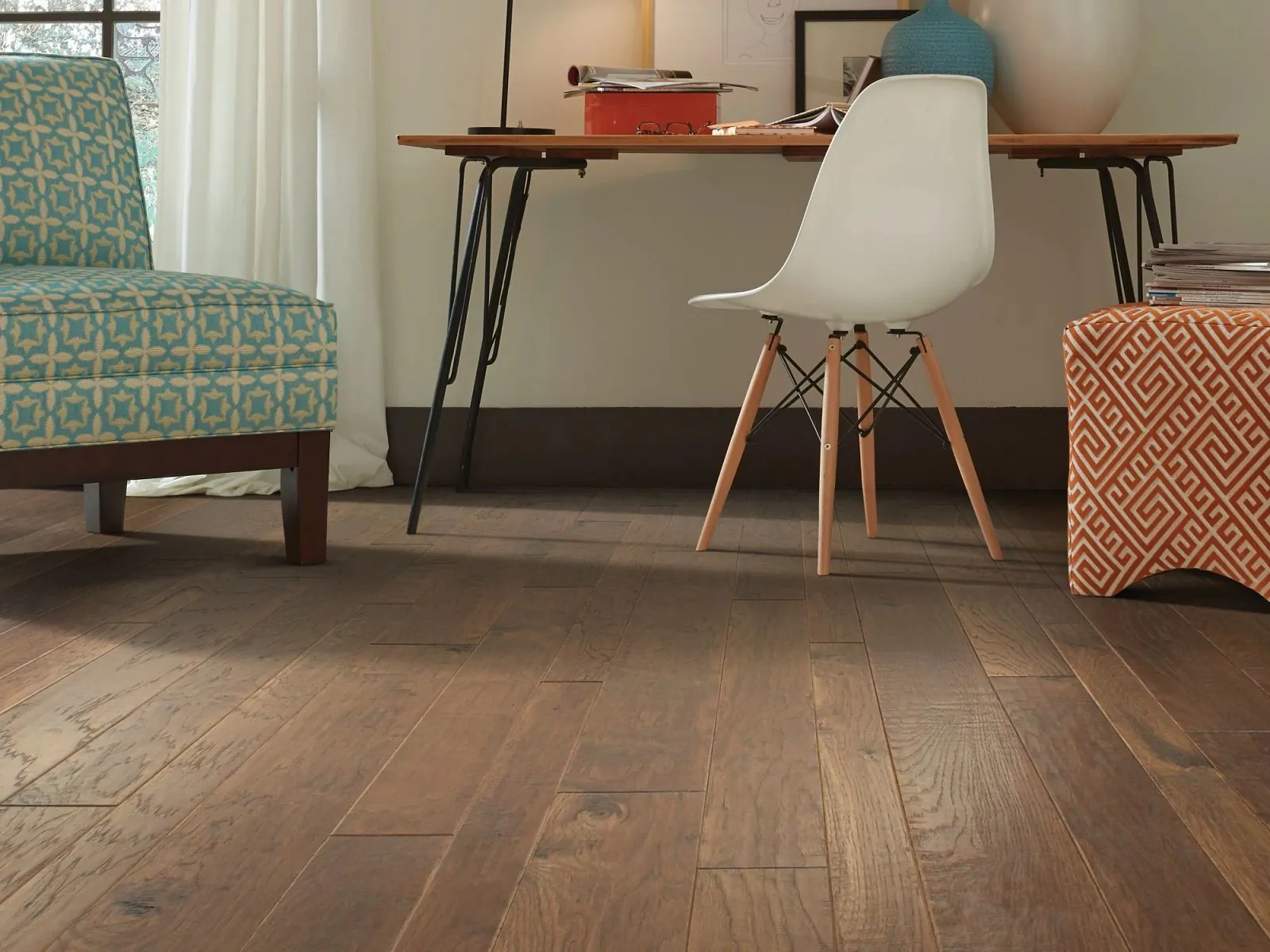
How often should you replace your flooring? The short answer depends on the material. Carpet: about every 5 years in a well-used home. Luxury vinyl plank: it varies by line, so check the warranty for yours. Laminate: 10 to 20 years. Hardwood: potentially never, if you refinish it. Tile: about 75 years, and almost never all at once unless the grout or the subfloor fails. Those numbers come from published life-cycle studies, and how hard you use a floor moves them. They are a fair starting point for any Polk County homeowner.
At Blackburn's Interiors, we have been helping families in Winter Haven and across Polk County choose, install, and replace flooring since 1973. We see what lasts and what does not. This post covers the lifespan by material, the warning signs that a floor is done, and the one material where refinishing beats replacing almost every time.
Lifespan by Material
Every floor has a natural life. Good installs, light traffic, and proper care stretch it. Heavy use, ignored moisture, and sloppy maintenance shorten it. These are published estimates, not guarantees.
Carpet: About 5 Years
Carpet is the shortest-lived floor in most homes. The fibers mat down under foot traffic, the pad compresses and loses its cushion, and stains build up in the spots that see the most use. The Tile Council of North America's life-cycle study puts the estimated useful life of broadloom carpet and carpet tile at 5 years. That study measures light to medium commercial use, and it says much of what it found carries over to homes. A quiet guest bedroom can beat 5 years. A busy living room or a staircase usually does not. Pet homes often see carpet replaced sooner, because odor moves into the pad and eventually into the slab.
Color and fiber type also matter. A Mohawk SmartStrand or similar solution-dyed carpet holds its appearance longer than a budget polyester. But even the best fiber has a limit. When traffic lanes are permanently visible and cleaning no longer refreshes it, the carpet has run its course.
Laminate: 10 to 20 Years
Laminate lasts longer than carpet and costs more per square foot, but it has one real limit: water. The fiberboard core swells when it takes on moisture. In a dry bedroom or a home office, a good laminate floor holds up well for fifteen to twenty years. In a Florida home on a concrete slab, especially in a kitchen or a room that has seen any flooding, the life can be much shorter. Swollen edges, bubbling, and joints that separate are the signals that water has won.
Luxury Vinyl Plank: It Varies by Line
Luxury vinyl plank is the workhorse of modern Florida homes. It is 100% waterproof, installs flat over a concrete slab, and shrugs off the humidity that makes other materials swell and warp. How long it lasts varies from one line to the next, so the maker's warranty for your floor is the figure to go by. As a general yardstick, the same TCNA study gives both flexible luxury vinyl and rigid core plank a 15-year estimated useful life. Our post on how long luxury vinyl plank lasts shows what four makers put in writing. Wear layer is the spec to ask about in our showroom. A 12 mil wear layer is our minimum for a quiet house. Homes with big dogs or heavy foot traffic should step up to 20 mil.
Unlike hardwood, LVP cannot be refinished when the wear layer is gone. Once the surface scratches through to the print layer below, the floor needs replacing. That is why the wear layer spec you buy matters so much up front.
Hardwood: 100-Plus Years With Refinishing
Hardwood is in a category by itself. A solid hardwood floor does not have a replacement schedule the way other materials do. It has a refinishing schedule. Sand away the surface wear every 10 to 15 years and the floor looks new again. A 3/4-inch solid plank can take several full sandings before the wood gets too thin. The National Wood Flooring Association says a properly maintained wood floor can exceed 100 years. A floor installed today can still be here for your grandkids.
In Florida, most of our homes sit on concrete slabs. Solid hardwood needs a raised wood subfloor to perform well over a slab, so engineered hardwood is the practical choice for most Polk County builds. We install engineered hardwood, not solid. Engineered wood has a real veneer over a stable plywood core, and it can be refinished one to three times depending on veneer thickness. Still a long-lived floor, just not quite as infinite as solid. The refinish vs. replace decision below covers when each makes sense.
Tile: About 75 Years
Porcelain tile is the lifespan champion. TCNA's life-cycle table gives porcelain, ceramic, and quarry tile a 75-year estimated useful life. Quality porcelain is fired at very high temperatures and does not absorb water, scratch, or fade in normal residential use. In bathrooms and laundry rooms, porcelain tile can outlast the rest of the house. The usual culprits are cracked individual tiles from an impact, grout that crumbles or discolors over time, or a subfloor that has shifted and caused hollows. In most cases, these are repair jobs, not full replacements.
Signs It Is Time to Replace Your Flooring
Lifespan ranges are guidelines. The real trigger is what you see and feel underfoot. Here are the clear signals that a floor has reached the end of its useful life, regardless of age.
Cupping and Warping
Cupping is when the edges of a plank or board curl upward, leaving the center lower than the sides. It is one of the most common signs of moisture damage on a Florida slab. Warping and buckling follow the same logic: the floor is moving because water is getting in. A floor that cups slightly and has its moisture source fixed sometimes flattens back over several weeks. A floor with severe cupping, or cupping caused by a long-standing leak, is usually done.
Persistent Odor
Odor that returns after cleaning is almost always in the pad or the subfloor, not the surface. With carpet, pet urine soaks through the fiber, through the pad, and into the slab. Cleaning the carpet treats only the top layer. Our FIDO subfloor odor treatment seals the slab before new flooring goes down so the smell does not bleed back through. A musty smell from a hard floor is often mold or mildew under the planks. That floor needs to come up.
Peeling, Chipping, or Delamination
When the surface layer of a floor starts to peel, chip, or separate from the core, it is past its useful life. This happens with older sheet vinyl, with low-quality LVP past its wear layer, and with laminate whose top coat has failed. Once the wear layer is compromised, the floor picks up moisture, dirt, and damage much faster and there is no repair that restores it.
Wide Gaps Between Boards
Some seasonal movement is normal in wood and wood-based floors. A small gap in winter that closes back up in summer is the floor doing what it is supposed to do. Gaps that stay open year-round, that are wide enough to catch a toe, or that are uneven across the floor tell you the floor is no longer stable. On a laminate floor, permanent gaps usually mean moisture got into the core.
Matted, Traffic-Stained Carpet
Run your hand against the grain on a high-traffic area of carpet. If the fibers lie flat and do not recover, the pile is gone. Professional cleaning can remove surface stains, but it cannot restore crushed fibers or a pad that has lost its spring. When the traffic lanes are permanently visible or the carpet feels hard underfoot, replacement is the better call.
Water Damage and Dark Staining
Dark staining at the edges of boards, around a toilet base, or under a dishwasher is almost always water that has been sitting too long. On solid wood or engineered hardwood, water staining can sometimes be sanded out if the damage is shallow. If the stain goes deep or the wood is spongy underfoot, the structural integrity is already compromised and the floor needs to come up.
Refinish vs. Replace for Hardwood
Hardwood is the one material where this question genuinely has two good answers. Refinishing is the right call more often than most people expect.
A hardwood floor that is dull, scratched, or showing light wear from years of foot traffic is a perfect refinish candidate. A hardwood refinisher sands the surface back to bare wood, fixes any minor cracks or gouges, applies a fresh stain if you want a new color, and lays down new coats of finish. We do not sand and refinish floors, so that job goes to a refinisher. The floor looks as good as new, and you get another 10 to 15 years before the next sand.
Refinishing becomes the wrong answer when the wood is structurally damaged. Deep moisture staining, cupped boards that did not flatten after the moisture source was fixed, boards with cracks through the face, or wood that is simply too thin to sand again all point to replacement. A professional can gauge veneer thickness and tell you how many sands are left. When in doubt, ask before you commit to either path.
The cost comparison usually favors refinishing by a wide margin. A full replacement includes the material, the labor, the removal of the old floor, and subfloor prep. Refinishing is just the labor and the finish product. If the structure is sound, refinish it.
How Replacing Tired Flooring Protects Home Value
A floor is the first surface a visitor reads. Before they notice a fresh coat of paint or new light fixtures, they feel the floor give under their feet and see the traffic lanes or the water stains. Buyers and appraisers across Polk County register that impression immediately, and they let it color how they see the whole house.
Worn carpet, warped laminate, and cupped wood do not just look bad. They raise questions. If the floor was left to go this far, what else was ignored? That doubt is expensive. Fresh flooring removes the doubt at the front door. It does not have to be the most expensive floor in the showroom. A clean, neutral, well-installed floor signals care, and care is what holds value.
For homeowners who are not selling, there is still a practical case. A floor past its life holds dust and allergens that cleaning cannot fully reach. Carpet with a failed pad is hard on joints. A floor with persistent gaps or cupping can be a tripping hazard. Replacing it when it is done is not a luxury. It is maintenance.
Not sure how much a replacement would run? Our flooring calculator gives a square-footage estimate you can run before you call anyone. If you are also weighing which material makes the most sense the second time around, our guide to choosing the right flooring covers every option we carry.
The Bottom Line
Plan on about 5 years from carpet in a busy home, and 10 to 20 from laminate. Vinyl plank varies by line, so check its warranty. Refinish hardwood every 10 to 15 years and the floor can pass 100. Tile runs about 75 years and almost never needs full replacement. The real trigger for any material is the condition: cupping, odor, peeling, permanent traffic staining, and water damage are the signals that a floor is done regardless of its age.
We have helped families across Polk County get this decision right since 1973. Whether you need a free second opinion on whether a floor can be saved or samples for a full replacement, we are at 1507 Havendale Blvd NW in Winter Haven, Monday through Friday 9 to 5 and Saturday 9 to noon. Reach out for a free in-home measure or call us at (863) 294-7355. If the budget is the hold-up, ask about financing, which is subject to credit approval. We would be grateful for the chance to help you get it right this time.
Sources
- National Wood Flooring Association (NWFA), Invest in Your Home with Wood Floors (maintained wood floors exceeding 100 years, refinishable numerous times)
- Tile Council of North America (TCNA), Tile: The Natural Choice 2025, Life-Cycle Costs for Flooring in Commercial Buildings (the 75-year tile, 15-year luxury vinyl and rigid core, and 5-year carpet estimated useful lives)
More flooring tips
Have a project of your own?
Free in-home estimates across Polk County.