
Flooring Tips
Before We Quote a Historic Bartow Floor, We Look at the One You Have
A historic Bartow house asks a different question than a newer one does. Here is the walk-through we do before we ever quote one, and when we tell you the floor you already have is worth keeping.
- Published
- April 7, 2026
- Author
- Blackburn's Interiors, Winter Haven, FL
- Updated
- September 7, 2026
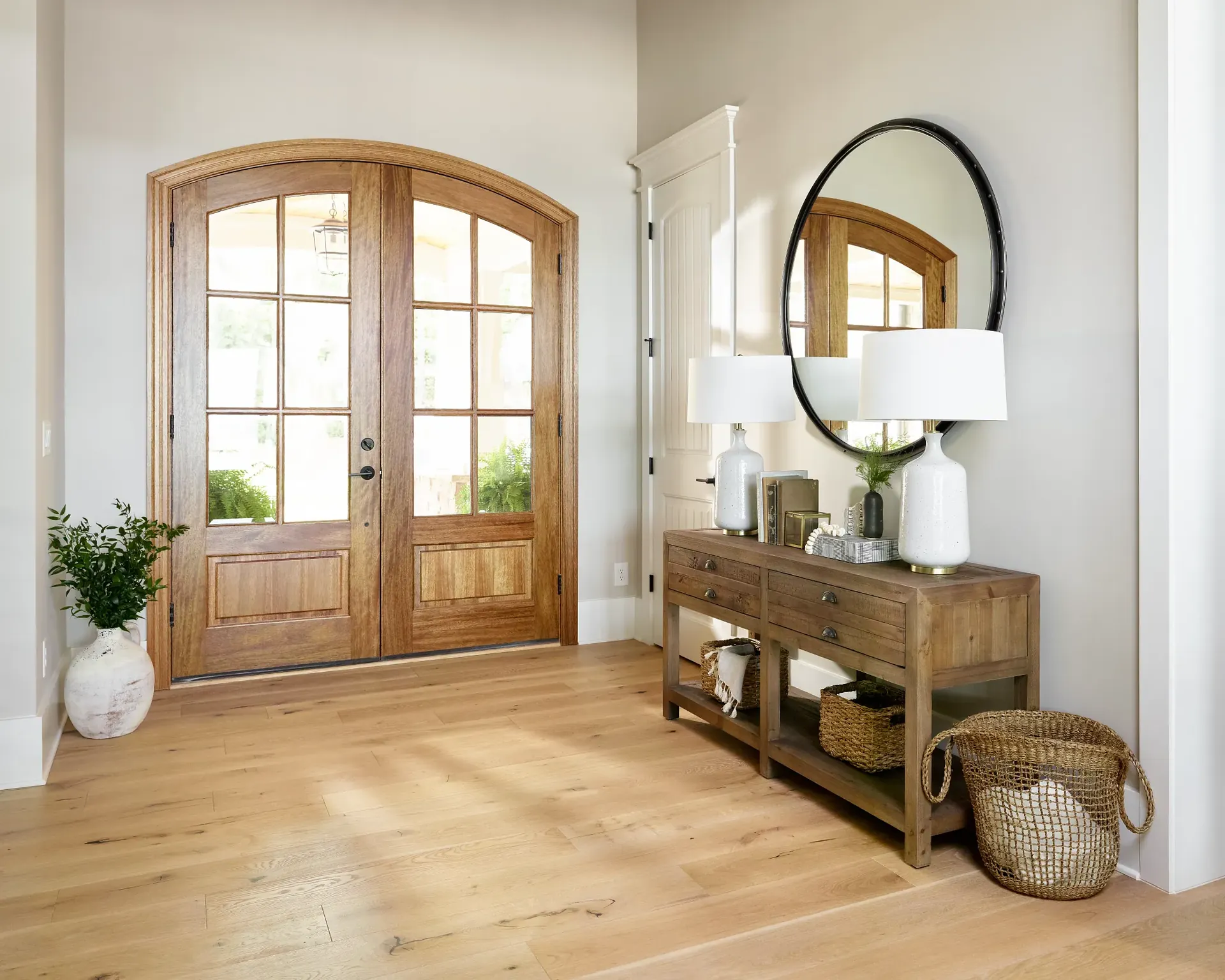
A house in the Northeast Bartow Residential Historic District can sit on a completely different floor than one two streets over, so before anybody opens a sample book, we find out what is actually under your feet.
What we check before we quote
A quote for a newer Bartow house starts and ends with the room you are standing in. A quote for one of the old ones starts underneath it. That is not about doubting your home. It is about not guessing. Here is what we go through first.
- The subfloor, for stability and for any obvious water damage.
- The baseboards and the thresholds between rooms, and how high they sit off the floor.
- What you want to keep, before we plan around anything new.
- Whatever is already down, once the old flooring comes up.
We do all of that before the sample book comes out, because the order matters. A quote built on assumptions can miss a soft board, guess wrong about a threshold, or plan away something the owner never wanted touched. A quote built on the actual house does not have those problems, because it was never guessing.
Most of the housing in the Northeast and South Bartow districts predates the slab era. Those homes went up from the 1890s through the 1940s, framed in wood and set over a crawl space. Heart pine and longleaf pine are common down there. A board that has carried a household for a century can still be perfectly sound, or it can hide a soft spot nobody noticed under old carpet. We check for both before we plan anything on top of it. A hard floor follows every dip underneath it and hands the problem straight back to you. A soft board gets fixed first, not covered up.
Whoever finished these houses cut the baseboard and the room-to-room thresholds for one floor height and no other, in a profile no home center stocks now. Any new floor arrives at whatever thickness the factory made it, and that number has to meet the old trim somewhere. We measure it at the walk-through, before a single box is ordered, so we know whether the trim stays where it sits or something has to change.
We ask what you want to keep instead of assuming. Some owners want to save an original threshold or a run of baseboard that came with the house. Others have no preference either way. Both are fine answers. They are just answers we need before we plan the room, not after the material shows up.
And when the old flooring comes up, whether it is carpet or tile or something a previous owner glued down, we look at what is underneath before we talk about anything new. That is the part that leads straight into the harder question.
When we tell you to keep the floor you have
In a good number of these houses the original wood is still down there, under newer carpet or tile. Some of it is worth keeping. We do not know which is true for your house until somebody looks at the actual boards, so that call comes before any product conversation, not after it. How much life is left in an old floor is its own question, with its own answers, and we go through it on our Bartow hardwood page.
What we settle at the walk-through is bigger than one room. Keeping an original floor changes the plan for everything around it: where new material stops, how the doorway between the two reads, and what happens in the rooms that old wood was never built for. A bath or a laundry in a house like this usually still needs something waterproof, which is a Bartow tile or luxury vinyl plank conversation rather than a refinishing one. A project like that can be part keep and part replace. That is a good outcome, not a compromise.
Telling somebody their floor is fine is the smaller sale. We would still rather say it than sell a tear-out nobody needed. If the honest answer is to leave the old wood alone and put the money into the two rooms that really need it, that is what you will hear at the walk-through.
FIDO subfloor treatment goes down on the bare subfloor of every flooring install we do, at no charge. Where dampness is part of the picture, whether from a crawl space that has stayed damp or a house closed up for a long stretch, it changes what else the subfloor needs: sealing, extra drying time, or a different material. That is one more thing we look for before we quote, not after.
We approach these homes the way the city approaches its history
Bartow works hard to protect what makes its historic districts worth protecting. Three of them carry a National Register designation, and the streets near landmarks like the L.B. Brown House and the old Polk County Courthouse hold real age and real character most of the county does not have. We approach these homes the same way the city approaches its landmark buildings: carefully, with respect for what is there. That is not a sales line. It is the standard we hold ourselves to. If you have been putting off a flooring project because you did not want somebody tearing out something worth keeping, that is exactly the conversation to have first, not last. Tell us what matters to you about the house, and we build the plan around that instead of around whatever is easiest to install.
One note on commercial spaces
We do commercial flooring work in Bartow too, and the older buildings downtown carry some of the same considerations as the historic homes near them. In an office or a professional space, carpet tile is usually the practical choice, because a worn or stained tile gets swapped on its own instead of pulling the whole floor. Commercial jobs carry their own paperwork. The warranty on one is set with that job's bid, put on paper, and signed before anybody starts. It does not run on the residential labor warranty that covers a home.
When you are ready, we will walk the house first
Every one of these houses is a little different, even the ones that look alike from the street. That is why we walk a historic Bartow home in person before we say anything about product or price. Northeast Bartow, South Bartow, or anywhere else in town, the visit comes first. See our Bartow flooring page for what we carry, or schedule a free in-home estimate and we will bring the checklist with us. For a general sense of what a project runs, see our flooring cost guide.
Thank you for even considering us for a house like that. You have other places you could call, and we know it. We have been serving Polk County, including Bartow, since 1962, and every quote still starts the same way: with a walk through the house, not a walk through a catalog. No obligation, no pressure. Just an honest look at what is already there.
Common questions about reflooring an older Bartow home
What do you check before you quote a floor in a historic Bartow home?
The subfloor comes first, for stability and for any obvious water damage. Then the height of the existing baseboards and thresholds, since those profiles are not sold at a home center today. We ask what you want to keep. And if there is wood under the old carpet or tile, we look at its condition too. All of that happens before we talk about products or price.
Will you ever tell us not to buy a new floor?
Yes. If the wood already in your house is worth keeping, that is what you will hear, even though it is the smaller sale. How much life is left in an old floor is a separate question, and we go through it on our Bartow hardwood page. What we settle at the walk-through is whether keeping it is the right plan for the whole house, not just for one room.
Two houses on our block look almost the same. Why would you check them differently?
Age alone does not tell us what is under a floor. One house may have had an addition put on later, a section rebuilt after damage, or a room set on a different foundation than the rest of it. We look at each house on its own instead of assuming from the block or the era.
Why carpet tile instead of broadloom in a Bartow office?
Because commercial rooms wear unevenly. The floor by a doorway or a reception desk ages faster than the rest of the space. With carpet tile the worn ones get replaced on their own, so a whole office does not shut down over one tired entry. Commercial work is priced and warrantied one job at a time, and those terms live in the bid for that job rather than in the residential labor warranty.
Should we decide what to keep before the quote or after?
Before, if you can. Tell us up front about an original threshold, a run of baseboard, or a section of wood you want saved. It changes how we read the room, and it can change what we recommend for the rest of the floor. We would much rather have that conversation at the walk-through than after material has already been ordered.
More flooring tips
Have a project of your own?
Free in-home estimates across Polk County.