
Countertop Tips
Countertops in Bartow, FL: Historic Homes, New Construction, and Florida Humidity
Bartow's historic districts and newer South Bartow homes call for very different countertops. Here is what our Polk County installs have taught us.
- Published
- March 15, 2026
- Author
- Blackburn's Interiors, Winter Haven, FL
- Updated
- September 7, 2026
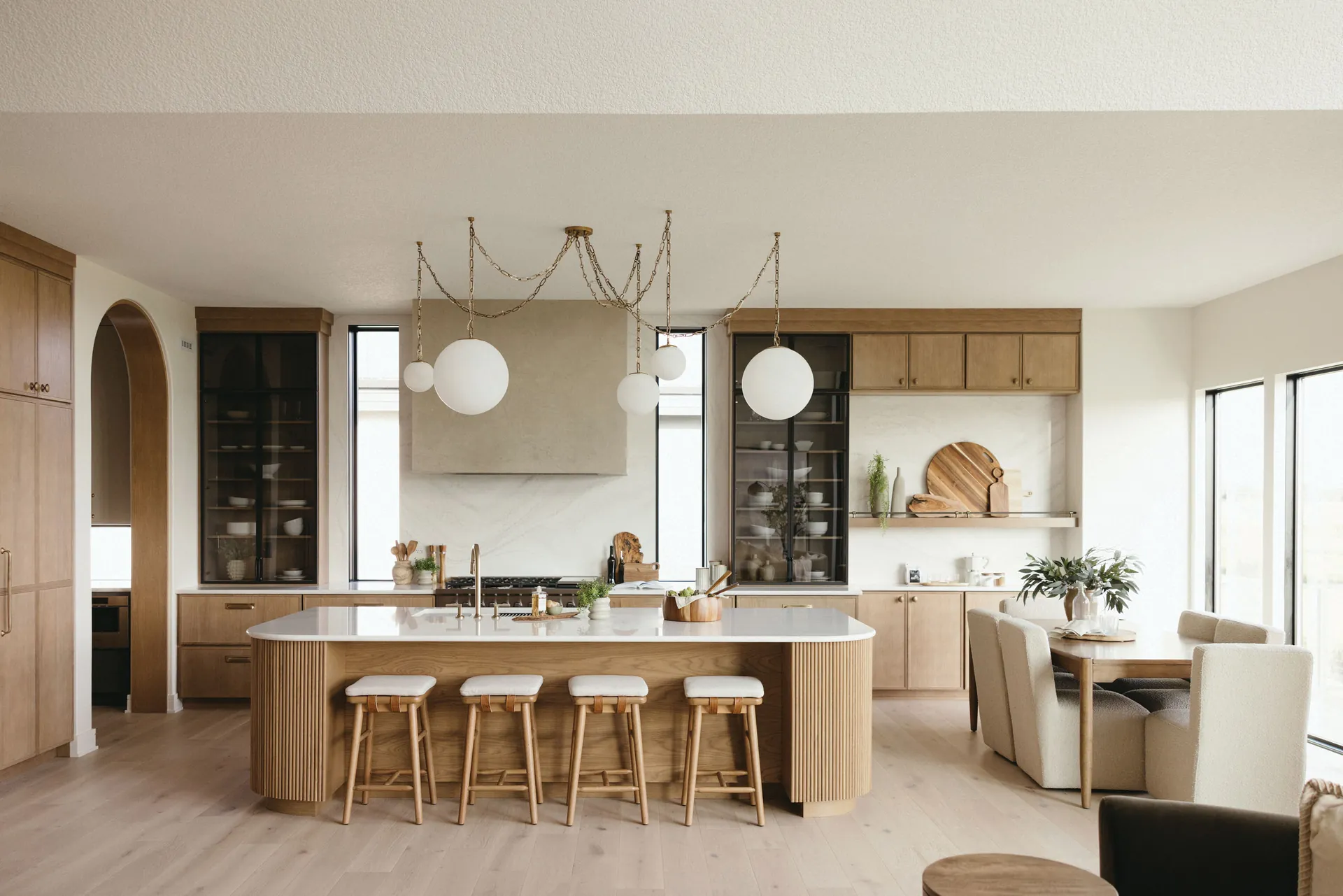
Bartow is the Polk County seat, about thirty minutes southwest of our Winter Haven showroom. It has three National Register historic districts, a downtown Main Street corridor, and newer subdivisions in South Bartow that look like the rest of modern Florida.
Those two kinds of homes call for different countertop conversations. A 1920s bungalow in the Northeast Bartow Residential District has nothing in common with a 2004 slab home on the south end of town. And both sit inside a climate that never really lets up. We've been family-owned in Winter Haven since 1962, and we install countertops in Bartow. Here is what we tell Bartow customers before they start picking slabs.
Quartz vs. granite: the Florida-humidity factor
Florida humidity is the detail most countertop conversations skip too quickly. Polk County summers run 75 to 90 percent relative humidity for months at a time. That air moves into every kitchen, every day. The material you choose either handles it quietly or asks something of you.
Quartz is the low-maintenance answer. It is an engineered stone, roughly 90 to 95 percent crushed quartz mineral bound with resin and pressed into uniform slabs. The resin makes quartz non-porous. Nothing soaks in: no water, no cooking oils, no red wine. Quartz never needs to be sealed. Wipe it down with mild dish soap and warm water and you are done. In a busy Bartow kitchen, that matters.
Granite is natural stone quarried in slabs. Every piece is unique, which is a large part of its appeal. It is also porous. An unsealed granite surface absorbs moisture and oils over time. In Florida kitchens, that is a real exposure. You need to seal granite at installation and reseal it every one to three years after that. The job takes thirty minutes and a $20 to $40 bottle of sealer. It is not difficult. But if you skip it for a few years, you can end up with permanent shadow stains from oil that soaked into the surface.
The practical summary for Bartow kitchens: quartz asks nothing of you after install. Granite asks that you stay current on sealing. Both are excellent choices when maintained correctly. The decision usually comes down to design preference and how you cook.
For the full side-by-side on durability, heat resistance, and price, see our quartz vs. granite guide.
Historic homes in Bartow: what reads correctly
Bartow's Northeast Bartow Residential, South Bartow Residential, and Downtown Commercial historic districts include homes built between the 1890s and the 1940s. Craftsman bungalows. Frame vernacular houses. Early Florida Colonial styles. These kitchens have a visual language rooted in natural materials, traditional profiles, and a patina that comes from age.
Countertop choice matters more in these homes than in new construction because the material reads against original woodwork, old-growth trim, and cabinets that may carry their own history. A very bright, perfectly uniform quartz in a stark white or ultra-modern vein pattern can look out of place in a kitchen where the original built-in pantry cabinet is still standing.
Granite works naturally in Bartow's historic kitchens. Its depth, movement, and earthy warmth fit the architectural period without fighting it. The edge profile matters too. An ogee edge, a classic bullnose, or a simple beveled edge reads as period-appropriate. A mitered waterfall edge that looks stunning in a contemporary new construction can feel wrong in a 1925 bungalow.
That does not mean quartz is off the table in a historic home. Some quartz lines carry enough warmth and visual complexity to work well in older kitchens. A veined quartz in cream, warm gray, or a soft earth tone can complement the original trim without fighting it. The key is bringing samples into the actual room and seeing them against the existing surfaces before you commit. A sample that looks warm in the showroom can look cold under the specific light in your kitchen.
When we do a free estimate in one of Bartow's historic neighborhoods, we look at the original trim profiles, the cabinet finish, and the room's light before we make a material recommendation. The goal is a kitchen that looks like it belongs in the house, not a renovation that announces itself.
Cambria and premium quartz: when the step up is worth it
Not all quartz is the same. Cambria is a US-made quartz brand that sits above most standard quartz lines in three ways: design range, warranty, and build quality.
Cambria is made in Le Sueur, Minnesota. Every slab is manufactured in the US, which matters to some customers and affects lead times (shorter and more predictable than imported slabs). Cambria offers a lifetime limited warranty, which covers the slab against defects for as long as you own the home. Most standard quartz brands warranty for 10 to 15 years.
The design catalog is wide. Cambria offers well over 200 designs, including several that convincingly replicate the look of Calacatta marble, Carrara marble, and rare granites at a fraction of the material cost and without marble's fragility. For Bartow's historic homes, the warmer Cambria designs, particularly the collections with soft veining in cream, gold, and brown tones, can be a strong fit.
The honest difference between Cambria and a standard quartz brand is visible in person. The slab surfaces tend to be denser, the colors more complex, and the designs less mass-market. If you are doing a full kitchen where the countertop is a centerpiece, Cambria is worth a serious look. If you are doing a utility kitchen, a rental, or a secondary bathroom where budget is the driver, a standard quartz brand does the job well.
We carry Cambria in our Winter Haven showroom. Come in and see full slab sections in person. A four-inch sample does not show veining and movement the way a large display piece does.
Laminate countertops: where they make sense
Laminate countertops are not what they were twenty years ago. Modern laminate has improved significantly in surface durability, edge treatment, and design variety. There are matte finish laminates that read convincingly at a glance. There are laminates printed with realistic stone patterns that hold up better in hard use than early versions did.
Laminate is still a budget option and should be understood as one. It will scratch under hard use in a way granite and quartz do not. It cannot be refinished. But for the right situation, it is a smart and practical choice.
Where laminate makes sense in Bartow: rental properties where turnover and replacement costs matter more than longevity. Laundry rooms and utility areas where the surface takes heavy use and no one is spending time admiring it. Budget remodels where the goal is a clean, functional kitchen at a price point that works. Secondary bathrooms, especially in older homes where the layout may change again in a few years.
Where laminate does not make sense: primary kitchen countertops in a home you plan to sell or that you want to maintain real value in. Any surface with a sink cutout where moisture exposure is high over time. Historic homes in Bartow where the surface reads alongside original woodwork that deserves a better material neighbor.
Our full breakdown of the category is in the laminate countertops guide.
Common questions
What countertop material works best in Bartow, FL homes?
It depends on the home and how you cook. For Bartow's historic districts, granite is usually the strongest fit. Its natural warmth and depth complement older architecture, and with traditional edge profiles it reads period-appropriate without fighting the original details. For newer construction in South Bartow, quartz is the most practical choice. It handles Florida humidity without any sealing requirement and cleans up easily in active family kitchens. Cambria is worth considering for either home type when design and long-term quality are both priorities. Come into the Winter Haven showroom and walk through slabs with us. We'll match the material to the actual home.
How much do countertops cost in Bartow, FL?
We quote on site because countertop pricing depends on the size of the kitchen, the material, the edge profile, the number of cutouts, and the fabricator's current schedule. As a general frame: laminate typically runs $20 to $50 per square foot installed. Standard quartz and granite usually fall in the $50 to $100 per square foot range installed, depending on color and complexity. Premium quartz brands like Cambria typically run higher. Exotic granite slabs can go higher still. Most Bartow kitchen countertop projects we do land in the $3,000 to $8,000 range for a standard kitchen footprint. A full kitchen countertop and a cabinet job coordinated together can be paid for over time with our special financing, subject to credit approval. See the financing page or ask when we come out for the free estimate.
Does Florida humidity damage granite countertops?
Not if the granite is sealed properly and that seal is maintained. Florida's humidity is a factor with granite because granite is porous. Moisture can work into an unsealed surface over time, and cooking oils, acidic foods, and wine can leave permanent stains in stone that has lost its seal. The fix is simple: seal at installation, reseal every one to three years, and test the seal periodically by dripping water on the surface. If the water beads, the seal is holding. If it soaks in or darkens the stone, time to reseal. A $20 to $40 bottle of sealer and thirty minutes keeps the granite in good shape indefinitely. Quartz, being non-porous, does not share this concern at all.
Do you install countertops in Bartow's historic district homes?
Yes. We do countertop and cabinet work in Bartow's historic neighborhoods. The work in older homes requires attention to a few things standard new-construction installs skip: walls that may not be square, original trim profiles worth preserving, and material and edge choices that fit the architectural period rather than fighting it. We do a full site measure at the free estimate. For historic homes, we document the room as it actually is and match the install plan to the real conditions. Whether you're replacing countertops alongside cabinets or just the counters on their own, the process starts with a visit. Contact us to schedule.
More countertop tips
Have a project of your own?
Free in-home estimates across Polk County.