
Flooring Tips
How to Remove Hard Water Stains and Soap Scum From Floors
Chalky white film from Florida well water? How to clear hard water stains, limescale, and soap scum off tile, stone, vinyl, laminate, and wood.
- Published
- April 22, 2026
- Author
- Blackburn's Interiors, Winter Haven, FL
- Updated
- August 3, 2026
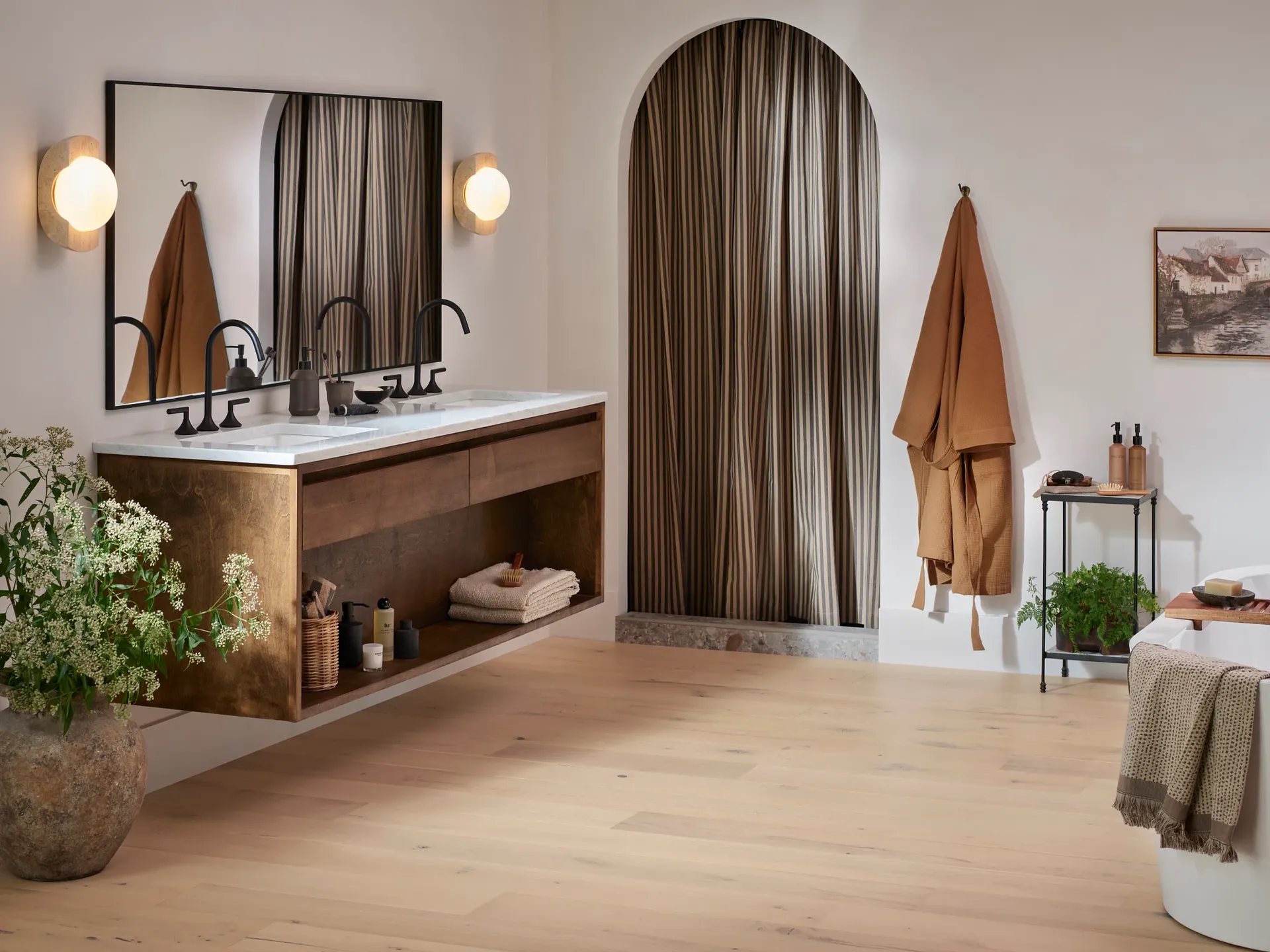
If your home runs on well water, you know the chalky white film that creeps across tile and shows up as soap scum in the bathroom. We have been a family flooring shop in Winter Haven since 1973, and hard water is one of the most common Polk County complaints, because so many homes here pull from a well. The good news is the film wipes off easily if you catch it fresh. The trap is reaching for vinegar, which is the worst thing you can do to grout and stone. Here is the safe method for every floor.
Want the quick steps for your exact surface? Our StainSolver hard water reference lays them out side by side. Below is the full walkthrough, including the real fix for Florida homes.
Wipe It Dry Before It Cakes On
Hard water is dissolved minerals. While the water is wet, the film wipes right off, but once the water evaporates, those minerals bond to the surface and harden into limescale that takes a real scrub. So the single best habit is to dry-wipe the floor after a spill or a mop, especially with well water. A quick pass with a dry towel saves you a deep clean later.
Hard Water on Tile and Grout
Tile is where hard water shows most, and the key is treating the tile and the grout differently:
- Dry sweep first to clear grit.
- On the glazed tile face, use a tile-and-grout limescale remover or a buffered descaler labeled safe for porcelain. Wet the tile, apply to a small section, let it dwell a few minutes, scrub with a white nylon pad, and rinse well.
- Clean the grout lines with an alkaline cleaner like Spic and Span and a stiff nylon brush, then rinse. Alkaline lifts soap scum without harming the cement.
- For soap scum on the tile, a baking soda and water paste scrubbed with a nylon brush lifts it gently. Scum left sitting in a damp bathroom feeds growth, and then you are dealing with mold and mildew on the floor instead.
- Squeegee or towel the floor dry to keep new spots from forming.
Here is the rule that protects your grout: never let vinegar, lemon, or any acid sit on cement grout. Grout is cement-based, and acid dissolves it, so the grout crumbles and you may have to regrout. The Tile Council of North America says the same. Grout makers steer you away from acids because they attack the cement. Keep any acidic descaler on the glazed tile face only, and rinse it off fast.
Hard Water on Natural Stone
Stone needs acid-free care, full stop. Hard water and soap scum show as a dull or chalky film, so clean with a pH-neutral stone cleaner or a few drops of mild dish soap in warm water, rinse, and dry. For soap scum, use a stone-safe, non-acidic remover, or per the Natural Stone Institute, about a half cup of ammonia in a gallon of water, used sparingly. Light surface spots can be buffed away with dry super-fine steel wool. Never use vinegar, lemon, or any acid on marble, travertine, or limestone, which etches a permanent dull spot, and skip hydrofluoric-acid lime removers, which attack all stone, even granite.
Hard Water on Vinyl, Laminate, and Wood
These floors do not form true limescale, but hard water leaves a cloudy haze or spots. On luxury vinyl, which is waterproof, damp-mop with a vinyl-safe neutral cleaner and buff dry, since drying is what stops new spots. Laminate and hardwood are water-shy, so mist a neutral cleaner onto a barely-damp pad, not the floor, wipe with the grain, and dry at once. A film that keeps returning on these floors is usually built-up cleaner or hard water residue, so re-wipe with the right cleaner and a damp-then-dry pad until it clears. If what you see is a white ring or a cloudy patch sitting under the finish instead of a surface film, that is a different problem, and white rings and water stains on wood come out a different way. Never wet-mop or steam these, and skip wax and polish, which build the very film you are fighting.
Hard Water on Carpet
Hard water rarely stains carpet on its own. The usual problem is a stiff, whitish patch left when carpet is cleaned with hard or well water and the minerals dry in the fibers. Re-rinse it: blot with plain warm water, working outside in, and distilled water rinses cleaner if your tap is hard. Blot dry and run a fan. If the patch is still stiff, a little mild dish soap in cool water on a cloth, then a clean-water rinse, lifts it. Do not rub, which pushes residue deeper. Deep plush carpet styles hold the most mineral residue, so rinse those with distilled water and give them extra blotting time.
The Real Fix for Florida Homes
If the white film keeps coming back no matter how you clean, the source is your water. Many Polk County homes run on well water that is high in minerals and iron, and that mineral load is what dries into limescale on every floor and fixture. Cleaning treats the symptom. A water softener or an iron filter treats the cause and stops the film before it forms. It is the same advice we give for well-water rust stains, and it makes every floor in the house easier to keep clean.
What to Never Do
- Let acid sit on cement grout. It dissolves the grout and you may have to regrout.
- Use vinegar, lemon, or any acid on natural stone. It etches a permanent dull spot.
- Reach for a hydrofluoric-acid lime remover. It attacks all stone, even granite.
- Wet-mop or steam wood and laminate. Water swells the boards and core.
- Let hard water air-dry. The minerals bond and cake into limescale.
When It Is Time to Call Us
Most hard water film gives up to the right cleaner and a dry-off habit. Limescale baked deep into porous stone, or grout that has started to crumble, is a job for a pro to clean and reseal. That is us. Blackburn's has been family-owned since 1962, and our tile and stone flooring showroom in Winter Haven sits on Havendale, a short drive for most of Polk County. Come see the low-maintenance flooring made for well water, or ask for a free in-home measure. The installers we train and certify back every job with an industry-best residential labor warranty. Financing is available too, with approved credit. Thanks for thinking of our family. We know you had other choices.
Sources
- Natural Stone Institute, Care & Cleaning of Natural Stone (the half-cup-ammonia-per-gallon soap scum remedy and its use-sparingly caveat, plus the acid-etch warning for calcareous stone and hydrofluoric acid attacking all stone including granite)
- Tile Council of North America, Cleaning Grout (the grout-makers-warn-against-acids claim)
More flooring tips
Have a project of your own?
Free in-home estimates across Polk County.